

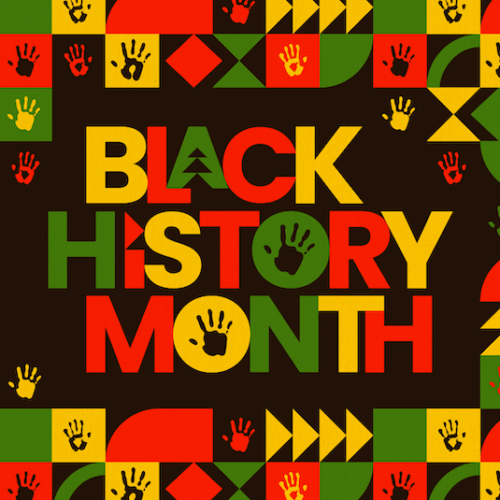
Black History Month was my favorite time of the school year.
For more than a decade on the South Side of Chicago, I lived my life by a school calendar, first as a teacher, then as a principal. Every day brought something real: joy and grief, brilliance and burden, laughter and loss. And every February, something shifted in the building. The air felt different. The students felt taller.
As a principal, I started each day with my students in Morning Meeting — a whole-school moment to set our intention before the day tried to set it for us. And in February, we began with a chant, in unison:
“My history is Black history. And one day I’ll make history.”
I can’t fully describe the pride I felt as a Black man in those moments or how hopeful I was for the future generations packed into that breakfast room. The chant wasn’t just a mantra. It was a declaration. A reminder that our children come from something, that they are something, and that they were never meant to be invisible.
Black History is as Old as American History
Black History Month matters because Black history isn’t a side chapter in the American story, it’s a foundation.
And in 2026, we’re also marking a century since historian Dr. Carter G. Woodson launched Negro History Week: an intentional act to preserve and uplift Black life and Black achievement in a country that routinely erased them. That week planted the seeds for what became Black History Month, and in 1976, President Gerald Ford formally recognized the national observance.
A hundred years later, we should be honest about what that means: Woodson’s work is still necessary. Black history is still being written, and the gaps between progress and reality are still wide enough to hurt.
In just the past 100 years, we’ve witnessed history as the United States elected its first Black president. And yet, as of February 2026, no Black woman has ever served as a U.S. governor.
We celebrated the first Black woman on the U.S. Supreme Court — Justice Ketanji Brown Jackson — sworn in 2022. And still, it was only 169 years ago that the Supreme Court infamously ruled in Dred Scott that Black people were not U.S. citizens and had no standing to claim protections in federal court.
That contrast is the point.
Black History Month is not only about what we’ve survived. It’s about how we keep naming the truth, even when the truth makes the country uncomfortable.
In Present Day America, Remembering Is Resistance
Here’s the reality: we are living in a time when teaching honest history is being challenged in new and organized ways, with policies of intimidation aimed at educators and institutions.
That matters for everyone, but it hits differently when you’re Black, because erasure is not theoretical. It is historical. It is strategic. And it is exhausting.
So yes, Black History Month is still important, not because we need a single month to prove our worth, but because the fight to keep our stories visible continues in real time.
And that’s also why I believe learning Black history can be more than education.
Learning Black History Is a Form of Mental Health Care
There’s a powerful truth I’ve seen in schools and in community spaces: when people know where they come from, they stand differently.
Engaging with Black history can give us a sense of belonging, a connection to elders, ancestors, thinkers, builders, and everyday people who made a way out of no way. It can remind us we are not alone. It can buffer us against a world that too often refuses to see our full humanity.
And Black communities have always understood care as something we build together — especially when systems fail to center our wellbeing. That’s why our healing has lived not only in clinics, but in barbershops and salons, in music, in church basements, in front porches, in food, in ritual, in laughter.
Even rest has a history here. Long before “self-care” became a trend, Black thinkers taught us that caring for ourselves is not indulgence, it’s survival. It’s preservation.
A Call to Action: Beyond February
If you’re Black, I want to say this plainly:
Keep learning about Black history to equip yourself.
Equip your spirit. Your language. Your sense of self. Your ability to recognize what’s happening around you. Equip your joy, too. Because understanding Black history is not just about the past. It’s a way to better understand the full perspective of American history and to care for yourself and others in the present.
Back in that breakfast room, when my students said, “One day I’ll make history,” they weren’t talking about fame. They were talking about the possibility.
Black History Month is a reminder that possibility is not imaginary; it’s inherent. And it’s also something we owe to each other.
So let’s honor Carter G. Woodson’s legacy the way he intended: not with a single celebration, but with sustained commitment.
Learn. Remember. Tell the truth. Care for yourself. Care for each other.
Get Involved
Ever thought about how your mental health journey could be the blueprint someone else needs? Tell your story on our blog and show the world what mental health mobilization looks like today. Find out how to submit your story on our website.