
More than a Moment: A Conversation with BIPOC Student Mental Health Leaders
During this roundtable discussion, students share their own mental health journeys and experiences as BIPOC individuals.
Read More“What Will People Say?”: Mental Health in Immigrant Families
July 24, 2025 — Mental health was never a topic that was brought up naturally in my house. In many immigrant households, there seems to be an unspoken understanding that struggles are meant to be endured, not expressed. When mental health is brought up, the topic is often quickly dismissed with a shrug and the familiar phrase: “What will people say?” That phrase, “log kya kahenge?”, carries weight. It’s not just about neighbors or relatives. It’s about preserving the image of strength, stability, and resilience that many immigrant families fought to build. But what happens when that image comes at the cost of our mental well-being? “I didn’t know how to explain I was hurting” I interviewed several high school students from immigrant families, all from different cultures, and each of them shared stories that mirrored my own. Sara, a Pakistani-American sophomore, told me, “When I first brought up that I was feeling anxious, my mom said that I should just pray more… It felt like my feelings didn’t count because they weren’t visible.” Another student, Luis, shared how his parents believed depression was a sign of weakness: “They told me I was being dramatic. But I struggled every day just to get out of bed.” Their stories highlighted a common thread: silence. In many immigrant communities, mental health isn’t dismissed out of cruelty, but out of a belief system where survival has always come first. Our parents and grandparents grew up in situations where therapy was rare, mental illness was misunderstood and stigmatized, and where vulnerability was dangerous. Why our elders think this way To understand the stigma, we have to first understand the history. For generations, mental health wasn’t something that could be safely acknowledged. In many parts of the world, mental health struggles were associated with shame, weakness, or isolation. Immigrants carried these beliefs with them, often unintentionally passing them down. For them, success meant security, education, and keeping the family together. Mental health was never part of their definition of success. But times are changing and so are we. How can we start the conversation So how do we shift the narrative without disrespecting our families or their values? Here are a few strategies that have helped me and my peers begin to build those bridges: 1. Start small and personal Instead of saying, “I think I’m depressed,” try starting with, “Lately I’ve been feeling really overwhelmed and tired.” Use words that feel less clinical and more emotional; it’s often easier for elders to relate to stress and exhaustion than to formal diagnoses. 2. Connect it to physical health Many immigrant families value physical health. Explaining how mental health affects sleep, appetite, energy, and the immune system can help build understanding. 3. Find a shared cultural value Whether it’s the importance of family, faith, or service, frame mental wellness as something that helps you show up stronger for those you love. Say something like, “Taking care of my mental health helps me be a better daughter/student/friend.” 4. Educate gently Share articles or stories that reflect your background. 5. Create space with others If it’s not safe to open up at home yet, find community elsewhere. School counselors, clubs, and online mental health spaces can offer validation and support until you’re ready to have those tougher conversations at home. I believe the cycle of silence ends with us. Our parents crossed oceans for a better life. Now it’s our turn to make sure that “better” includes emotional wellness. Let’s keep talking, even if it’s hard. Even if it feels awkward. Even if we hear “What will people say?”, because what we say matters too.
Read More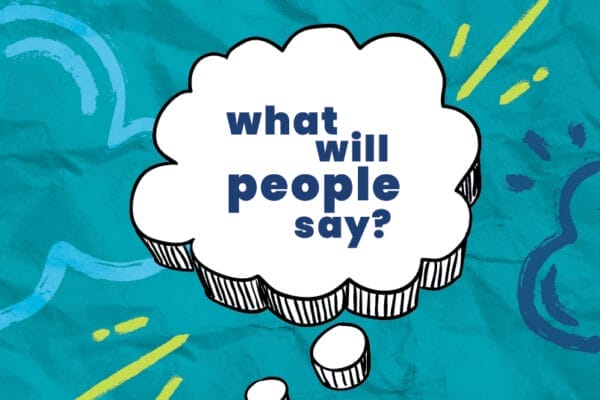
Three Ways to Support Transgender People’s Mental Health During Difficult Times
November 20, 2023 — As a transgender man, Transgender Day of Remembrance is a day that’s near and dear to my heart. For most transgender and gender non-conforming youth, it is one of the ways we honor our elders, peers, and history, even if we cannot come out. In 2023, we are honoring the 19 transgender and non-binary siblings […]
Read More
Mental Health in Schools: How to Support Students AND Educators
November 13, 2023 — As an educator in the classroom and a former principal on the South Side of Chicago, I’ve seen firsthand the challenges that students and staff alike face. American Education Week provides a crucial opportunity to shed light on an issue that continues to be ignored: the need to support the mental health of both students […]
Read More
Self-Care: What Is It and How Do I Do It? Making Self-Care Personal and Intentional
September 28, 2021 — Throughout the past year and a half, self-care has been a topic of discussion everywhere: from social media to college campuses to major media outlets. The pandemic has forced us to slow down, and during that time, many have discovered how beneficial daily acts of self-care can be. Now that many are transitioning to returning […]
Read More