
Built on Compassion: How Louisville High School is Growing Its Mental Health Community
March 23, 2026 — This month, our Chapter of the Month shines a light on how the Active Minds Louisville High School Chapter is creating a space where mental health conversations are real, open, and stigma-free. Since launching in 2023, the 80-member group has been all about supporting each other, speaking up, and making campus feel a little lighter. Louisville’s Chapter has quickly grown into a vibrant community of almost 100 members dedicated to advocating for student well-being. Rooted in the school’s mission of empowering young women to drive meaningful change, this student-led group is building a more compassionate campus through creative programming, peer support, and a shared commitment to making mental health a priority for all. From high-energy stress relievers to meaningful moments of reflection, Louisville’s Active Minds chapter keeps mental health support both engaging and accessible, finding small but impactful ways to help students manage stress and feel supported. Discover how they’re changing the game through our Q&A. Tell us about your school and chapter. Louisville High School is an all-girls College Prep Catholic high school founded in 1960. As part of Louisville’s mission of envisioning a world where women initiate change to enrich their communities, Active Minds/Mental Health Awareness Club has been a great addition to our campus climate. Our chapter was started with the main goal of advocating for the betterment of student’s mental health in our Louisville Community. Share something your chapter has done recently that you are proud of. We are proud of the range of activities and awareness we have provided to our school community. One of the more successful Wellness Wednesday events was when we hosted a “Just Dance” activity in partnership with the Counseling Department as a midweek mood boost to shake off some stress. We also implemented the “I wish Campaign” to our chapter and our student body so students could express their feelings to know their voice matters and to build a more compassionate community. Most recently, some of our chapter members hosted a booth at our school event “Louchella” as a fundraiser to donate back to Active Minds. At the fundraiser, we provided fidget coil rings and calming strips as a tool to support their mental health. Why is mental health important to your chapter and school? Mental health is important at our school, as stress can affect students differently, and we want to help students process their feelings in a healthy way. We want to create a sensitive and open environment for students to share their feelings without fear of judgement. How is your chapter making a difference on campus? Our chapter is making a difference on campus by providing students with initial breaks and methods to cope with stress by participating in the Wellness Wednesdays in collaboration with the Counseling Department. In addition to providing some tools, we spread mental health awareness to break the stigma by sharing quotes and educational videos. What advice would you give to someone thinking about joining or starting a chapter? Do it! Get involved and try to be routine in going to Chapter meetings. But don’t overwork yourself, your mental health matters just as much! What is a mental health mantra your chapter lives by? Aside from schoolwork and extracurriculars, students have other components of their lives that may be impacting their mental health, so lead with some grace. Acknowledging that mental health is important and how even though some mental illnesses are not seen, they matter just as much!
Read More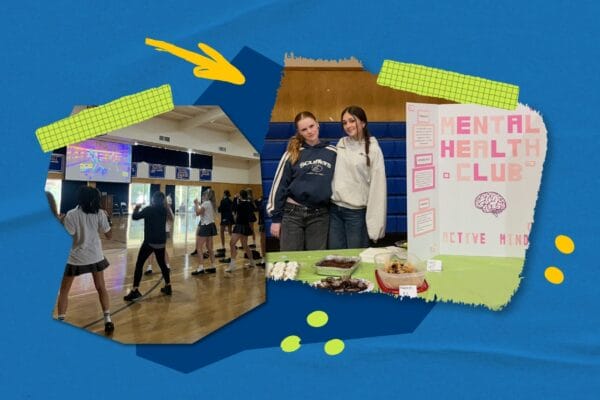
My First Chapter Meeting
September 12, 2025 — When I ran my chapter’s first meeting, I was an anxious wreck. I didn’t know how to run a meeting “properly” and was afraid of failure and judgment from my peers. I had decided to start an Active Minds chapter because I saw a need at my school for a dedicated space where students could feel supported, connect with others, and learn about mental health without judgment. As president, I felt the pressure of making sure my Active Minds chapter was the mental health space we had all been craving; I scattered around the classroom, in an attempt to make sure everything was perfect. It wasn’t until I settled down and took a deep breath that I realized my goal wasn’t to be perfect; it was to provide a space for my peers to feel as if they belonged and talk with them about the importance of mental health. I knew that if the chapter was going to be a supportive mental health space, the first meeting needed to set the right tone. I felt that focusing on appreciation would be a perfect first topic because of how it impacts our relationships and the way we view life. Before I began the meeting, I wanted to ensure that the people who attended not only felt welcomed, but as if they could come back if needed. To create a welcoming space, I baked and brought in one of my specialties, a tres leches cake, and made sure everyone had a slice. It was a hit! My vice president and I then introduced ourselves and used a slideshow to talk about the relevance of appreciation for mental health. After our icebreakers, which were a bit awkward as icebreakers usually are, it was time for our activity: writing appreciation letters! We set up a table of materials for people to make notes of appreciation for the supportive people in their lives; it was full of card templates, markers, and colored pencils. It was sweet to see that many of our members wrote cards dedicated to their friends who came to the meeting with them. While they were writing their cards, I went up to everyone, introduced myself personally, and started a conversation. This was an important step for me. I remember attending club meetings alone and feeling unwelcome, which discouraged me from returning. I wanted to make sure no one else felt that way. My goal was to form genuine relationships with our members and foster a sense of belonging for everyone. After my first chapter meeting, I was joyful, smiling from ear to ear. It went exactly the way I had hoped and gave me the confidence and reassurance I needed to continue leading that space. What I loved most about that first meeting was hearing how positively our chapter members received it. Knowing that people enjoyed the space I created for them warmed my heart and made me excited for the next meetings. I'm grateful for the encouragement my vice president and I received from our members. The most rewarding part was realizing that the support flowed both ways; our members were there for us just as much as we were there for them. We were building a COMMUNITY. Seeing familiar faces in our following meetings and realizing that we had regulars was one of the most rewarding feelings ever, and feeling that belonging is a highlight of every single meeting. Ready to Make a Difference in Your Community? If you're inspired by the idea of creating a welcoming and supportive community in your school, consider starting an Active Minds chapter. You have the power to make a real difference and help normalize conversations about mental health. Learn more about how to get started by visiting our website or checking out our recent blog post from the chapter team on how to start a chapter!
Read More
Active Connections
Learn about our engaging Peer Powered High School Curriculum, a FREE mental health resource for use in a club or general education setting.
Read More
“What Will People Say?”: Mental Health in Immigrant Families
July 24, 2025 — Mental health was never a topic that was brought up naturally in my house. In many immigrant households, there seems to be an unspoken understanding that struggles are meant to be endured, not expressed. When mental health is brought up, the topic is often quickly dismissed with a shrug and the familiar phrase: “What will people say?” That phrase, “log kya kahenge?”, carries weight. It’s not just about neighbors or relatives. It’s about preserving the image of strength, stability, and resilience that many immigrant families fought to build. But what happens when that image comes at the cost of our mental well-being? “I didn’t know how to explain I was hurting” I interviewed several high school students from immigrant families, all from different cultures, and each of them shared stories that mirrored my own. Sara, a Pakistani-American sophomore, told me, “When I first brought up that I was feeling anxious, my mom said that I should just pray more… It felt like my feelings didn’t count because they weren’t visible.” Another student, Luis, shared how his parents believed depression was a sign of weakness: “They told me I was being dramatic. But I struggled every day just to get out of bed.” Their stories highlighted a common thread: silence. In many immigrant communities, mental health isn’t dismissed out of cruelty, but out of a belief system where survival has always come first. Our parents and grandparents grew up in situations where therapy was rare, mental illness was misunderstood and stigmatized, and where vulnerability was dangerous. Why our elders think this way To understand the stigma, we have to first understand the history. For generations, mental health wasn’t something that could be safely acknowledged. In many parts of the world, mental health struggles were associated with shame, weakness, or isolation. Immigrants carried these beliefs with them, often unintentionally passing them down. For them, success meant security, education, and keeping the family together. Mental health was never part of their definition of success. But times are changing and so are we. How can we start the conversation So how do we shift the narrative without disrespecting our families or their values? Here are a few strategies that have helped me and my peers begin to build those bridges: 1. Start small and personal Instead of saying, “I think I’m depressed,” try starting with, “Lately I’ve been feeling really overwhelmed and tired.” Use words that feel less clinical and more emotional; it’s often easier for elders to relate to stress and exhaustion than to formal diagnoses. 2. Connect it to physical health Many immigrant families value physical health. Explaining how mental health affects sleep, appetite, energy, and the immune system can help build understanding. 3. Find a shared cultural value Whether it’s the importance of family, faith, or service, frame mental wellness as something that helps you show up stronger for those you love. Say something like, “Taking care of my mental health helps me be a better daughter/student/friend.” 4. Educate gently Share articles or stories that reflect your background. 5. Create space with others If it’s not safe to open up at home yet, find community elsewhere. School counselors, clubs, and online mental health spaces can offer validation and support until you’re ready to have those tougher conversations at home. I believe the cycle of silence ends with us. Our parents crossed oceans for a better life. Now it’s our turn to make sure that “better” includes emotional wellness. Let’s keep talking, even if it’s hard. Even if it feels awkward. Even if we hear “What will people say?”, because what we say matters too.
Read More