
Advocate for LGBTQ+ Young People: A Guide on How to Be an Active Ally
This guide is informed by LGBTQ+ young people and adult experts, and provides the everyday and long-term commitments we can each make to build kind, brave, and inclusive communities.
Read More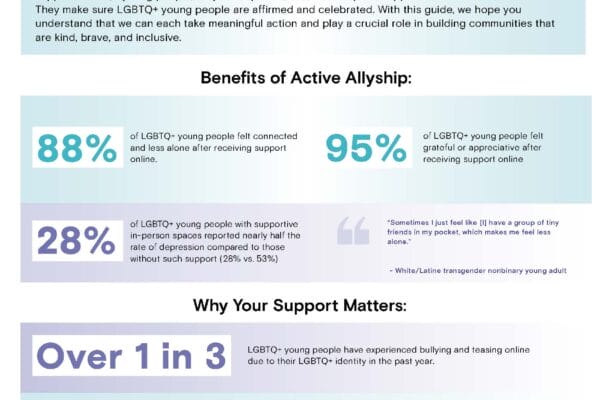
Online Safety for LGBTQ+ Young People: Resources to Enhance Technology and Platform Responsibilities
This guide provides key statistics from our research on LGBTQ+ young people’s experiences in online spaces, actionable strategies from focus groups, and key takeaways.
Read More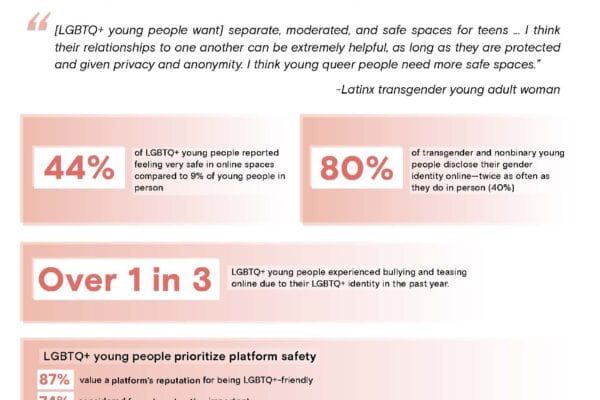
Support LGBTQ+ Young People: A Guide for Families to Listen, Learn, and Act
This guide offers practical, affirming steps that families can take to build safer, more supportive environments for LGBTQ+ young people.
Read More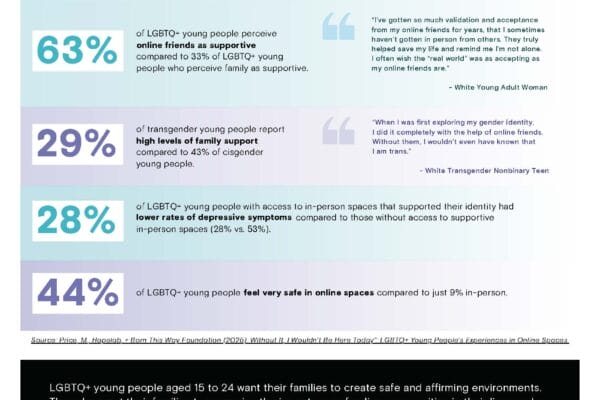
Coming Out Lessons and the Evolution of Self
October 11, 2025 — “Haha, isn’t that weird? I would never kiss a girl!” my middle school friend exclaimed after telling me about her friend who came out as lesbian. Silence was my answer as I thought to myself, “Kissing another girl? Hm... I wouldn't mind that actually.” Going to a private Christian school and being conditioned into thinking that same-sex relationships were “morally offensive”, I held these thoughts inside and never acted on them. My sheltered upbringing was shattered once I later met “real-life lesbians”. Talking with them broadened my perspective and opened a new path in my journey of self-discovery. Your First "Aha!" Moment Doesn’t Need to be Your Final Answer I began exploring my sexuality and proclaiming to my coworkers, "I am a lesbian!” Then I got a boyfriend and said, “Well... I’m just bisexual.” A few months later, “We broke up, and I am definitely a lesbian.” “So, you know how I said I was lesbian? Well, actually..." The cycle continued and the shame built. Why don’t I have figured out? (because surely a 16-year old would have their identity fully realized by then… right?). To me and my peers, “coming out” = “having it figured out” and I was nowhere close to meeting that social expectation; a shackling mentality. Lesson #1: An initial declaration of identity is a point on a map, not the final destination. Give yourself — and others — the grace to revise as you continue on the journey of finding yourself. The willingness to change your mind is a sign of growth and honest introspection, not failure. Authentic Self-Expression Precedes Self-Acceptance I shoved my shame deep within me, hoping to cover the cracks and bury it beyond where the light could shine. Despite that internal struggle, I began to act authentically. I cut my hair short and embraced more masculine clothes. I attended pride events and consumed LGBTQ+ media (seeing trans actors in the TV show Pose was transformative). As I began meeting new people, watching compelling stories on TV, and learning new ways to articulate my experience, the light broke through and I had a revelation.While I was acting with self-acceptance, I had not internalized it. I realized I didn't even accept myself, period. Deep inside, I was a wounded child whose sense of self was bound by many layers of shame. I shed the desperate need to label and hesitantly embraced a new mantra: I love who I love, and I am who I am. Lesson #2: True self-acceptance is an internal job. The most immediate thing you can do to start the process is to act authentically — even if you haven't named or rationalized why you're doing it. By stepping into those small acts of authentic expression (like the clothes and haircut), you create evidence for your mind that a different, truer self is possible. Start by doing what feels right, and the understanding of yourself will eventually catch up. Embrace the Evolution, Not the Conclusion Time passed, and I began college and therapy. My identity felt unstable, and a new crack appeared: my body felt foreign. I had to ask myself big questions. Who was I outside of the hyperfeminity I was conditioned into? Where did the “butch queer woman” end and the “I’m just a little guy” begin? I entertained the idea of trans-masculinity and adorned He/Him pronouns for the first time. It felt... liberating. I began to wear He/Him pins around campus, I changed my pronouns on my social media accounts, and I eventually started taking testosterone. Outside of intimate conversations I had with loved ones, I did not feel led to make any public declarations of my gender identity. This time, I approached coming out differently from my past experiences of the back-and-forth proclamations. For those that asked, I shared and to those that knew, knew. It was through this that I came to a critical realization: understanding yourself is a continuous practice. Those many layers and cracks I shamed myself for became fractals for the light to shine through. I embraced their hues and released the pressure to have myself "figured out". Through this, my inner child was freed to authentically be himself and the shackles that bound me fell to my feet. Lesson #3: Coming out is an ongoing process. Release the pressure to have yourself "figured out." Instead, find joy and strength in the ambiguity. Embrace the profound beauty of this continuous, often messy, journey of self-discovery. I am a gender nonconforming queer being and I am proud of who I am. Of course I still struggle with my self-image and, fortunately, I am still figuring myself out. But as I take this time to recognize National Coming Out Day, I celebrate my journey and hope today you’re able to embrace yours too.
Read More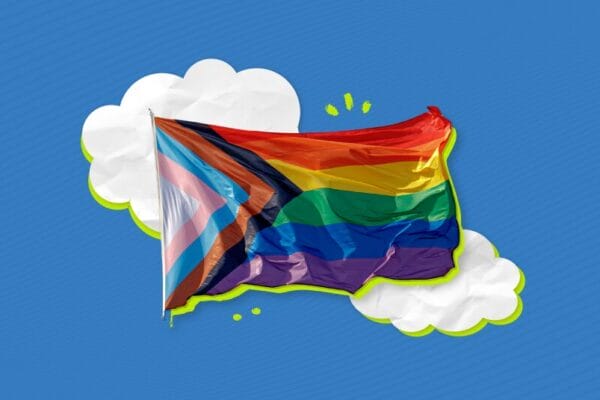
Gen Z Shares How to Support Mental Health Policy
April 4, 2023 — At Active Minds, we believe policy is key to enacting lasting mental health change – and students play a huge role in facilitating this change. Our new policy platform identifies core policies that we value as an organization and helps us determine what actions to take and legislation to speak out about. Last month, we […]
Read More
Three Ways You Can Center Mental Health in Your School
November 17, 2022 — With increasing urgency over the last few years, educators, school administrators, and even researchers have taken a deeper dive into what equity and inclusion truly looks like within the education system, specifically as it relates to the creation of school policies, initiatives, and programs that take place at the district level and within the walls […]
Read More
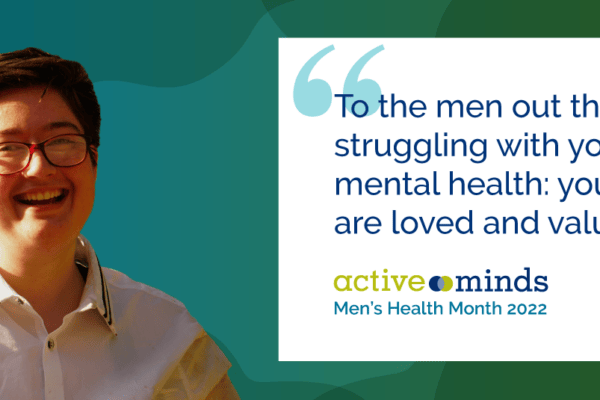
Ending the Stigma Around Men’s Mental Health as a Transgender Man
June 13, 2022 — Content Warning: This piece contains mentions of suicide statistics. Being perceived as less of a man when expressing emotion. Facing unrealistic stereotypes and expectations. Being made to feel like your mental health doesn’t matter, or that you can’t struggle with your feelings without being invalidated. As a transgender man, these are all experiences I’ve dealt […]
Read More