
Pre-Writing: Boundary Setting for Written Content

Pen, Paper, Boundaries: Safe Mental Health Writing for Public Impact
Writing about personal mental health experiences can create lasting impact, and requires careful consideration of your digital footprint, boundaries, and long-term wellbeing.
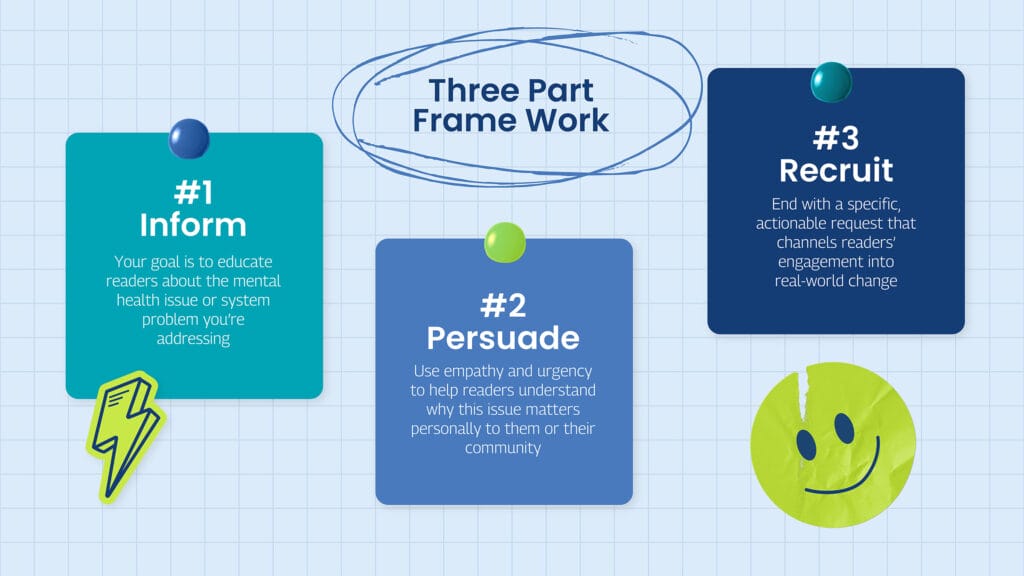
The Three-Part Framework for Mental Health Writing
Part 1: Inform
Building the Foundation
Your goal is to educate readers about the mental health issue or system problem you’re addressing.
Start by establishing credibility through facts, research, and context rather than diving immediately into personal trauma. Consider what compelling information would help readers understand the scope and importance of your cause.
Part 2: Persuade
Creating Emotional Connection
Use empathy and urgency to help readers understand why this issue matters personally to them or their community. This is where you can weave in personal experience strategically, connecting individual stories to broader systemic issues.
Part 3: Recruit
Clear Call to Action
End with a specific, actionable request that channels readers’ engagement into real-world change. Avoid vague calls like “raise awareness” – instead, direct readers to concrete actions that serve your advocacy goals.
Consider what level of engagement you can realistically manage:
- If you ask people to contact you directly, are you prepared for the volume of responses?
- If you’re promoting an event, do you have the capacity to organize it?
Platform Considerations & Digital Wellbeing

Publishing Options
You maintain more control over comments and can modify or remove content later. However, these platforms may have smaller reach, and personal blogs require more technical maintenance.
Greater reach and credibility, but you typically give up control over the content once published. Comments sections may be less moderated, and you usually can’t edit or remove the piece later.
Good middle ground with built-in relevant audience, but content may be archived and searchable long-term through school systems.
Managing Reader Responses
Written mental health content often generates intense reader responses, including people sharing their own trauma, seeking personal advice, or offering unsolicited suggestions. Prepare for this by setting clear boundaries about your role and availability.
Sustainable response strategies
Protecting Yourself from Harmful Feedback
Mental health writing can attract criticism from people who misunderstand mental illness, believe in harmful stereotypes, or have their own unprocessed trauma.
To prepare, consider these tips...
After Publication
Mental health articles, especially personal ones, tend to have longer lifespans than social media content. They may be shared in contexts you didn’t anticipate, referenced in academic work, or discovered by people years later. You may receive messages from readers months or years after publication.
Be Prepared For...
Final Considerations
Mental health writing can create meaningful change and help others feel less alone, but it should enhance rather than replace your personal support systems and professional mental health care. The most impactful mental health writers often maintain clear boundaries about what they share publicly while still being authentic and vulnerable in sustainable ways.
Remember that readers need advocates who model healthy boundaries and sustainable practices. Taking care of yourself is part of taking care of the mental health community.
Next Step? Take Action.
Estimated Action Time:
hoursWrite an article or OpEd about mental health to create meaningful change and help others feel less alone, but in a way that enhances rather than replaces your own support systems.
In this article
Related Resources