Built on Compassion: How Louisville High School is Growing Its Mental Health Community
March 23, 2026 — This month, our Chapter of the Month shines a light on how the Active Minds Louisville High School Chapter is creating a space where mental health conversations are real, open, and stigma-free. Since launching in 2023, the 80-member group has been all about supporting each other, speaking up, and making campus feel a little lighter. Louisville’s Chapter has quickly grown into a vibrant community of almost 100 members dedicated to advocating for student well-being. Rooted in the school’s mission of empowering young women to drive meaningful change, this student-led group is building a more compassionate campus through creative programming, peer support, and a shared commitment to making mental health a priority for all. From high-energy stress relievers to meaningful moments of reflection, Louisville’s Active Minds chapter keeps mental health support both engaging and accessible, finding small but impactful ways to help students manage stress and feel supported. Discover how they’re changing the game through our Q&A. Tell us about your school and chapter. Louisville High School is an all-girls College Prep Catholic high school founded in 1960. As part of Louisville’s mission of envisioning a world where women initiate change to enrich their communities, Active Minds/Mental Health Awareness Club has been a great addition to our campus climate. Our chapter was started with the main goal of advocating for the betterment of student’s mental health in our Louisville Community. Share something your chapter has done recently that you are proud of. We are proud of the range of activities and awareness we have provided to our school community. One of the more successful Wellness Wednesday events was when we hosted a “Just Dance” activity in partnership with the Counseling Department as a midweek mood boost to shake off some stress. We also implemented the “I wish Campaign” to our chapter and our student body so students could express their feelings to know their voice matters and to build a more compassionate community. Most recently, some of our chapter members hosted a booth at our school event “Louchella” as a fundraiser to donate back to Active Minds. At the fundraiser, we provided fidget coil rings and calming strips as a tool to support their mental health. Why is mental health important to your chapter and school? Mental health is important at our school, as stress can affect students differently, and we want to help students process their feelings in a healthy way. We want to create a sensitive and open environment for students to share their feelings without fear of judgement. How is your chapter making a difference on campus? Our chapter is making a difference on campus by providing students with initial breaks and methods to cope with stress by participating in the Wellness Wednesdays in collaboration with the Counseling Department. In addition to providing some tools, we spread mental health awareness to break the stigma by sharing quotes and educational videos. What advice would you give to someone thinking about joining or starting a chapter? Do it! Get involved and try to be routine in going to Chapter meetings. But don’t overwork yourself, your mental health matters just as much! What is a mental health mantra your chapter lives by? Aside from schoolwork and extracurriculars, students have other components of their lives that may be impacting their mental health, so lead with some grace. Acknowledging that mental health is important and how even though some mental illnesses are not seen, they matter just as much!
Read More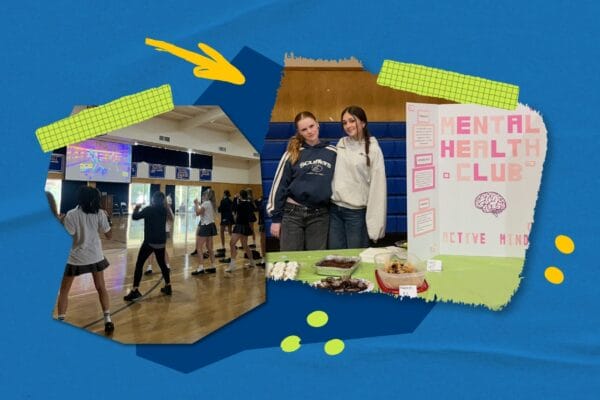
My History Is Black History, And One Day We’ll Make History
February 23, 2026 — Black History Month was my favorite time of the school year. For more than a decade on the South Side of Chicago, I lived my life by a school calendar, first as a teacher, then as a principal. Every day brought something real: joy and grief, brilliance and burden, laughter and loss. And every February, something shifted in the building. The air felt different. The students felt taller. As a principal, I started each day with my students in Morning Meeting — a whole-school moment to set our intention before the day tried to set it for us. And in February, we began with a chant, in unison: "My history is Black history. And one day I’ll make history." I can’t fully describe the pride I felt as a Black man in those moments or how hopeful I was for the future generations packed into that breakfast room. The chant wasn’t just a mantra. It was a declaration. A reminder that our children come from something, that they are something, and that they were never meant to be invisible. Black History is as Old as American History Black History Month matters because Black history isn’t a side chapter in the American story, it’s a foundation. And in 2026, we’re also marking a century since historian Dr. Carter G. Woodson launched Negro History Week: an intentional act to preserve and uplift Black life and Black achievement in a country that routinely erased them. That week planted the seeds for what became Black History Month, and in 1976, President Gerald Ford formally recognized the national observance. A hundred years later, we should be honest about what that means: Woodson’s work is still necessary. Black history is still being written, and the gaps between progress and reality are still wide enough to hurt. In just the past 100 years, we’ve witnessed history as the United States elected its first Black president. And yet, as of February 2026, no Black woman has ever served as a U.S. governor. We celebrated the first Black woman on the U.S. Supreme Court — Justice Ketanji Brown Jackson — sworn in 2022. And still, it was only 169 years ago that the Supreme Court infamously ruled in Dred Scott that Black people were not U.S. citizens and had no standing to claim protections in federal court. That contrast is the point. Black History Month is not only about what we’ve survived. It’s about how we keep naming the truth, even when the truth makes the country uncomfortable. In Present Day America, Remembering Is Resistance Here’s the reality: we are living in a time when teaching honest history is being challenged in new and organized ways, with policies of intimidation aimed at educators and institutions. That matters for everyone, but it hits differently when you’re Black, because erasure is not theoretical. It is historical. It is strategic. And it is exhausting. So yes, Black History Month is still important, not because we need a single month to prove our worth, but because the fight to keep our stories visible continues in real time. And that’s also why I believe learning Black history can be more than education. Learning Black History Is a Form of Mental Health Care There’s a powerful truth I’ve seen in schools and in community spaces: when people know where they come from, they stand differently. Engaging with Black history can give us a sense of belonging, a connection to elders, ancestors, thinkers, builders, and everyday people who made a way out of no way. It can remind us we are not alone. It can buffer us against a world that too often refuses to see our full humanity. And Black communities have always understood care as something we build together — especially when systems fail to center our wellbeing. That’s why our healing has lived not only in clinics, but in barbershops and salons, in music, in church basements, in front porches, in food, in ritual, in laughter. Even rest has a history here. Long before “self-care” became a trend, Black thinkers taught us that caring for ourselves is not indulgence, it’s survival. It’s preservation. A Call to Action: Beyond February If you’re Black, I want to say this plainly: Keep learning about Black history to equip yourself. Equip your spirit. Your language. Your sense of self. Your ability to recognize what’s happening around you. Equip your joy, too. Because understanding Black history is not just about the past. It’s a way to better understand the full perspective of American history and to care for yourself and others in the present. Back in that breakfast room, when my students said, “One day I’ll make history,” they weren’t talking about fame. They were talking about the possibility. Black History Month is a reminder that possibility is not imaginary; it’s inherent. And it’s also something we owe to each other. So let’s honor Carter G. Woodson’s legacy the way he intended: not with a single celebration, but with sustained commitment. Learn. Remember. Tell the truth. Care for yourself. Care for each other. Get Involved Ever thought about how your mental health journey could be the blueprint someone else needs? Tell your story on our blog and show the world what mental health mobilization looks like today. Find out how to submit your story on our website.
Read More
Advocacy Beyond Graduation: Introducing the 2026 Alumni Board
February 22, 2026 — We are proud to introduce the Alumni Board, a group of former chapter leaders dedicated to supporting young adults as they transition into the professional world. These changemakers haven't stopped their mental health advocacy work just because they’ve entered the workforce — they are continuing their involvement with Active Minds as they build their careers. With backgrounds ranging from social workers to HR professionals, these members are helping to guide Active Minds’ workforce development resources so that every student has the resources to transition their campus activism to every part of their post-graduation life. Meet the Alumni Board to see how these leaders are continuing their journey with mental health advocacy and Active Minds.
Read More
Rivier University Is Rewriting The Playbook For Student Athletes (And Beyond)
February 20, 2026 — This month, our Chapter of the Month highlights the incredible momentum at Rivier University. In just their first year on campus, these students have bridged the gap between the playing field and mental health. Through their leadership, they're teaching everyone that mental wellness is the true foundation of every student’s success. From their creative pumpkin smashing stress-relief event to hosting sports psychology seminars, they’ve sparked honest mental health conversations across the entire student body. Rivier is living proof that you don’t need a long history to make a massive impact — just the courage to begin. Discover how they’re changing the game through our Q&A. Tell us about your school and chapter. Rivier University is a small, close-knit campus in New Hampshire with a strong student athlete community. The Kyle Cares Active Minds Chapter was started last fall to promote mental health awareness at Rivier in an energetic, creative, and inclusive way. Share something your chapter has done recently that you are proud of. We hosted Dr. Jonathan Jenkins, a sports psychologist who works with the New England Patriots and Red Sox, to speak to our athletes. Around 150 athletes attended, making it one of the largest mental health programs for student athletes at Rivier. Why is mental health important to your chapter and school? Mental health is important to our chapter because it affects academic success, athletic performance, and personal well-being. We want Rivier students to understand that caring for their minds is just as important as caring for their bodies. How is your chapter making a difference on campus? Our chapter is making a difference by thinking outside the box and reaching students who might not attend traditional mental health events. Through creative programs like rage room pumpkin smashing and large presentations, we are reducing stigma and starting honest conversations. What advice would you give to someone thinking about joining or starting a chapter? You will never regret trying to make positive change. Start small, stay consistent, and focus on what your campus cares about. There is nothing more rewarding than helping your peers feel supported. What is a mental health mantra your chapter lives by? Any effort to create positive change helps tip the scales. We believe that making a difference does not require perfection, only the courage to begin.
Read More
Dismantling Mental Health Disparities: Meet the 2026 Emerging Scholars
January 28, 2026 — The 2026 Emerging Scholars Fellowship is finally here and we are so excited for the change they are making! Supported by the Scattergood Foundation and Macy’s, this program mobilizes students to dismantle mental health disparities in BIPOC communities. The Emerging Scholars Fellowship provides funding, mentorship, and a supportive scholar network to student researchers to complete independent mental health projects and take action on any recommended findings. Get to know the 2026 Emerging Scholars and explore the perspectives they’re bringing to their work. Read through these introductions to meet the students and learn about the research projects they are leading to drive change in their communities.
Read More
How My 48-Hour Run Brought the Community Together for Mental Health
January 23, 2026 — The Challenge On July 5th, starting at midnight, I began running four miles every four hours for 48 hours straight. It’s called the 4x4x48 challenge — a test of endurance well-known in the ultrarunning world. To support the event, I invited friends, family, and neighbors to join me — some ran a few laps, others walked and cheered from the sidewalk, and many gathered in front of my house to hang out, encourage one another, and keep the energy going throughout the 48 hours. Why was I doing this? Why put myself through so much? Because mental health matters. Why I Choose to Support Active Minds Since starting ultrarunning in early 2023, I’ve spent countless hours and thousands of miles on trails. The biggest lesson I’ve learned? The mind is far more powerful than we realize. This challenge wasn’t just about me. It was about all of us. The challenge created a space where people could run (or walk, or simply show up) for something bigger than themselves. Friends reconnected, neighbors bonded, and new faces brought fresh energy. In the end, the encouragement and support we gave each other mattered more than the miles themselves. That’s why I partnered with Active Minds to complete this challenge. Active Minds’ mission aligns perfectly with my personal beliefs: break down stigma, spark conversation, and remind people they’re not alone. Focusing on improving the mental wellness of students and young adults through community support What I Learned About a week after the challenge, a neighbor asked me: “At what point was it the hardest?” At first, I thought it had to be the end — those final runs when I was completely exhausted and sleep-deprived. But after a moment of reflection, I realized the hardest moment wasn’t the end. It was the beginning. At midnight on July 5th, I stepped outside alone into the cold, dark night. I had no idea how I would feel in the hours ahead. I didn’t know if people would support my effort — or if anyone would even show up. I was 48 miles from the “finish line” and completely uncertain about how the weekend would unfold. Yes, starting with those thoughts was the hardest part. Then something incredible happened. After that first lonely run, people began to show up. First two. Then five. By the end, we had a consistent 10+ people joining, cheering, and running beside me. As the challenge went on, and the support around me grew, the weight of the effort somehow got lighter. New faces brought new energy. Laughter, conversations, and encouragement distracted me from the pain I felt in my feet. What started as a personal test of endurance turned into something much more powerful: a shared experience of resilience, community, and care. I finished the final leg not just with pride in what I had done, but with a deep sense of gratitude for the people who showed up — and for the reminder that we’re never truly alone in what we’re going through. Taking Your First Step One of the most powerful things this challenge reinforced for me is that community doesn’t just help us get through hard things — it helps us move important missions forward. When we join together around mental health, we expand what’s possible. And with organizations like Active Minds, there are so many meaningful ways to take part. You can raise money to fuel mental health education and peer-to-peer support. You can start an Active Minds chapter at your school or encourage your community to create safe spaces for conversation and connection. You can mobilize the people around you — friends, coworkers, neighbors — to take mental health seriously and show up for one another. No matter how you participate, it all begins with one simple step: choosing to act. Choosing to care. Choosing to be part of something bigger than yourself. That first step creates momentum, and momentum creates change. Often, mental health challenges don’t always have a clear finish line. Like the 4x4x48, they require persistence, vulnerability, and support. We often move forward with uncertainty — not knowing where we’re headed, how we’ll feel, or what obstacles we’ll face. But we keep going anyway. If you’re feeling inspired to take your own first step, explore how you can support Active Minds and make a real impact.
Read More
How the Changing Seasons Can Impact Your Mental Health
January 10, 2026 — The winter brings with it holiday cheer and cozy sweaters, but if you’d rather hibernate until it’s over, you’re not being dramatic. The colder weather and shorter days can and sometimes do impact your mental health negatively. It’s common to feel more tired and gloomy, which is why the term “winter blues” is so popular. For some students, the season can be especially hard, as it often lines up with the start of a new semester and all the stress that comes with those transitions. You may feel unmotivated to attend class or even spend time with friends. Here’s how the shift into winter can affect your headspace, as well as practical ways to boost your mood. Ways Seasonal Changes Can Influence Your Mental Health As the mornings get darker and the temperature drops, getting out of bed may take more effort than usual. It’s easy to brush it off as laziness, but don’t beat yourself up too much. Research shows that the changes during fall and winter can affect the chemicals in your brain and the way your body functions: Lower serotonin levels: Shorter daylight hours reduce serotonin, which is the chemical in your brain that helps regulate your mood. Circadian rhythm disruption: The circadian rhythm — or the body’s natural sleep-wake cycle — is primarily influenced by light. Since sun exposure is low during the winter, your body may not receive the signal to stay awake and alert. Overproduction of melatonin: Melatonin is a hormone that helps control sleep. The brain begins producing this hormone as daylight fades. Those with winter-pattern seasonal affective disorder (SAD) produce more of it, causing you to feel sleepy and sluggish much of the time. While seasonal depression can be associated with the lack of sunlight, there are other factors to consider, as well. Isolation is one of them. Winter can also make your world feel smaller as the cold keeps you indoors, making you prone to social isolation and loneliness. Both of these conditions can increase your risk of depression and anxiety. Another way seasonal changes can influence your mental health is through a lack of physical activity. The flu season often overlaps with fall and winter, so even if you want to push yourself to exercise, it can be harder to stay consistent. As activity slows down, mood often follows. Many people don’t realize how much they rely on being outdoors until winter hits. Your body needs movement and sunlight to keep your head clear. When both become less accessible, you might feel sad and slow. Signs the Seasonal Changes Negatively Affect Your Mental Health If you feel sadder and more drowsy than usual, it could be a sign that the seasonal change is affecting your mood. It is normal to feel a little down as the seasons change from summer to fall and fall to winter. In fact, 38% of Americans experience a decline in mood during the winter. But for some people, seasonal changes can cause much more than just winter blues. It can snowball into a diagnosable condition known as Seasonal Affective Disorder (SAD), often referred to as seasonal depression. The most common symptoms include feeling sad and hopeless, having low energy, oversleeping, and losing interest in activities that used to bring you joy. Some people also experience changes in appetite, like craving carbs, which may lead to weight gain. Although anyone can get the winter blues, SAD is more likely to happen to those with a personal or family history of depression – it’s also more common in women and young people. How to Beat the Winter Blues You can’t change the season, but you can help beat the winter blues. Here are three practical tips to help you through the colder months: Go outdoors and soak up some sun: Being outdoors when the sun is out can increase your body’s natural production of vitamin D. Plus, it can improve your immune function, thanks to the substances called phytoncides that the plants release into the air. Spend time with friends and family: The urge to stay home and wrap yourself in blankets may be strong during the winter, but resist the temptation to isolate. Social connection is important for your mental health. Make plans to meet friends for coffee or organize a little get-together with your loved ones. Engage in physical activity: The air can sting in the winter, so you may feel reluctant to engage in physical activity. However, various studies have shown that regular movement is linked to lower risks of depression, so try walking to the library instead of driving or running in the morning before class. If the season hits you harder than you’re comfortable with, speaking to a mental health professional can be helpful. Sometimes, you just need the right tools to manage the seasonal change so the cold months feel less overwhelming. You Don’t Have to Face Seasonal Changes Alone The transition between seasons can be difficult, but it’s normal. You can support yourself through it by understanding how the changes affect you and taking small steps that make the colder months feel lighter. Remember — there’s no shame in reaching out to the people you love or getting professional help.
Read More
Ins and Outs for Prioritizing Mental Health in 2026
January 1, 2026 — Welcome to 2026! It’s January 1st, and we are officially calling it: this is the year of collective care. If there’s one thing we learned last year, it’s that we’re stronger when we share our stories. That’s why we’re starting the year with a reminder that healing doesn't happen in isolation; it happens when we show up for one another. To put this into practice, we looked to our community. We know that facing a new year can sometimes feel overwhelming, so we wanted to lean on our network for inspiration as we manifest what we want to center and release what no longer serves us in the New Year. From our national staff to our incredible student network, we’ve gathered the 'Ins' we are embracing and the 'Outs' we are officially leaving behind in 2025 to help inspire your own intention setting for 2026. From protecting our peace to finding our voice, here are the intentions we are embracing together.
Read More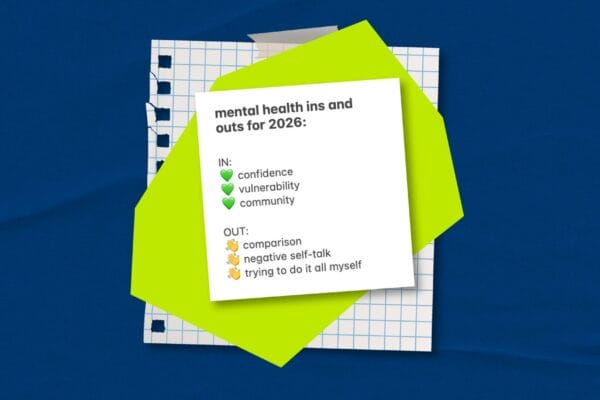
See How Chapter of the Month CCHS Used 100 Carnations to Spark a Movement
December 15, 2025 — Meet the Cumberland County High School Active Minds Chapter, a group in Crossville, TN, committed to showing their peers that "it’s okay not to be okay." With a goal to provide a safety net for their 1,000 students, they recently launched the "You’ve Been Bloomed" initiative, using carnations to visualize support and spark connection across campus. From their first meeting with over 100 attendees to their monthly movie nights, check out how this chapter is ensuring no one has to face their battles alone. Tell us about your school & chapter Our school is Cumberland County High School and we are located in Crossville, TN. We have roughly 1,000 students on campus and our school is big on traditions and community, but at the same time deals with a lot of mental health needs. We have 2 main goals: 1. To provide a safety net for our peers so that no matter what they are facing, they know that we will be here to help them. 2. Show everyone that it's ok to not be ok and break the shame that clouds over mental health needs. Share something your chapter has done recently that you're proud of! A few weeks back, we purchased over 100 carnations as a club and attached a note to them that said, "You've Been Bloomed! - The CCHS Active Minds Chapter wanted to let you know that you are loved!" At our morning meeting, we discussed how much weight people carry and hide behind a smile every day. We talked about the youth depression and suicide rates and how 1 in 10 teens have seriously thought about or attempted to end their lives and then we counted out groups of 10 so they could put a visual representation to that statistic. They were all tasked to take a carnation and hand it to a stranger, a friend, an adult, or anyone that crossed their path that day who looked like they could use a smile. It was absolutely amazing to see the flowers pass from person to person as the school day played out. Some kept their flower because they were the person who needed it, and they took a 2nd one to hand out. Some took several because they had friends who were battling things at home, some still walk around with the note attached to their backpacks or taped to their Chromebooks, and all of them were excited to go and share some kindness. 'Aaron Daenell — Active Minds & FBLA Advisor' Do you have a favorite chapter memory? "I loved giving flowers to help people not feel alone." Anthony — Member' "My favorites are the movie nights we have together every month!" 'Othniel — Member' "My favorite so far was our 1st meeting of the year when over 100 kids showed up and wanted help others." 'Aaron Daenell — Active Minds & FBLA Advisor' What’s a mental health mantra or a short piece of advice your chapter lives by? Behind every strong person is a story that gave them no choice, and one day that story will be a survival guide for someone else. 'Aaron Daenell — Active Minds & FBLA Advisor'
Read More
Winter Blues? Chapter Ideas for Community Care
December 10, 2025 — As the days grow shorter and the weather turns colder, many of us may begin to experience low energy, difficulty concentrating, withdrawal from hobbies or social activities, excessive sleeping, feelings of isolation, and depression. This time of year can be challenging, so let’s make sure we’re taking gentle care of ourselves and of one another. We’re providing some tips to support your own well-being and foster connection within your chapter this winter. The experiences described above could be Seasonal Affective Disorder (SAD). If you think you might have SAD, please reach out to your local or school mental health resources for support. A Few Simple Ways To Support Your Well-Being Step outside: Soak in natural daylight whenever possible. Keep a cozy routine: Consistent sleep and small comforts go a long way. Stay connected: Reach out to friends, family, or your Active Minds chapter. Stay physically active: Even a few stretches or a short walk can lift your spirits. Ask for support: If things start to feel overwhelming, reach out to others for support. Chapter Gathering Ideas To Boost Your Chapter's Mood DIY Hot Cocoa Party: Make your own cocoa with fun toppings like marshmallows, cinnamon, or chocolate chips while fostering connection. Movie Time: Cozy up and watch a feel-good movie that can bring laughter and joy. Games & Puzzles Together: Enjoy card games, board games, or puzzles in a relaxed, friendly space. Crafting Hour: Spend time coloring, collaging, knitting, etc, during a free period or after school in a calm, welcoming space Fresh Air Walks: Enjoy daylight and stretch your legs with friends on a short group walk If you or someone you know needs extra support, explore links to crisis support and national resources on our website. Thank you for bringing connection and care to your campus communities. Your efforts make a difference, especially during times when so many of us need warmth and support.
Read More
What 22 Years of Student Advocacy Looks Like
December 8, 2025 — When Alison Malmon founded Active Minds in 2003, she initiated a ripple effect of change that continues to expand over two decades later. By using her voice to break the silence surrounding mental health, she created a space where thousands of students could eventually find their own footing, find their community, and find their power to mobilize around mental health. My story is just one example of that ripple effect in action, turning a moment of personal need into a lifelong purpose of leading the mental health movement. My Journey From Mental Health Advocate to Mental Health Professional My advocacy journey truly began in my freshman year of college. I come from a background where mental health was stigmatized and rarely discussed. But the independence of college offered me the autonomy to explore what I was feeling and address my mental health. As I navigated my own struggles, I realized two things: culturally competent care was hard to find, and there were absolutely no student organizations dedicated to mental health on my campus. Rather than discouraging me, these gaps fueled a desire not only to understand my own needs but also to create that space for others. This was the start of my transition to becoming informed — realizing I had the control to educate myself and the passion to ensure no one else had to face those barriers alone. That awareness transformed into action during my sophomore year when I discovered an emerging Active Minds Chapter on my campus. I was scared, but I worked up the courage to speak with the organizers and get involved, and that choice launched me into mental health mobilization work that defined my college experience. Before I knew it, my engagement deepened as I became a member of my chapter’s executive team, later becoming President, where I realized the true impact of our work. We built such a strong reputation as a safe space that other student organizations, including Greek life, started coming to us to collaborate. That was the moment I realized I had become a mental health champion, and that our advocacy was reshaping the culture on my campus and in my community. Today, I have moved from a student leader to a mental health professional. In my full-time role at a mental health nonprofit, I now have the privilege of supporting young mental health advocates through programming that guides students through their own mobilization journeys. My work is no longer centered on my own advocacy, but on building the infrastructure for others to find theirs. Just as Active Minds created a space that allowed me to grow, I now work every day to create those same spaces for the next generation of mental health advocates. By giving the students we support today the resources and confidence to become the changemakers of tomorrow, we are sustaining a movement much bigger than any of our individual efforts. Want To Take the Next Step on Your Mental Health Advocacy Journey? You don’t have to be an expert to make a difference — you just have to be brave enough to start. Check out three ways you can get involved with Active Minds: Create a safe space for your peers to discuss mental health by starting an Active Minds chapter at your school. Apply for programs like the Mental Health Advocacy Academy and the Active Minds Institute and implement a mental health project in your community. Sign up for our newsletter to get the latest webinars, engagement opportunities, and mental health resources sent directly to your inbox.
Read More
Feeling Burned Out Before Finals? Here’s How to Fix It
December 6, 2025 — It’s 2 a.m., your eyes are burning from staring at your laptop, and you're running on your second energy drink. The project still isn't done, and it feels like your brain is barely hanging on. If you’ve ever had a night like that, you’re not alone. Burnout is something many students experience, and it's not just about being tired. It's the kind of exhaustion that creeps in slowly and makes everything feel harder to do than it should be. I’ve been there too, and I want to talk about what it is, how to spot it, and what you can actually do to feel better. What Burnout Really Feels Like Burnout goes way beyond just being sleepy after a late night. It’s physical, emotional, and mental exhaustion, all mixed together. According to the Mayo Clinic, burnout can show up in different ways, such as: Feeling tired all the time, even after a full night of sleep Feeling stressed, stuck, or disconnected Struggling to stay motivated, even doing things you usually enjoy Not performing well in school, even when you try Being short with people or just wanting to be alone For many students, burnout can often come from trying to juggle too much. Between classes, extracurriculars, sports, jobs, and trying to have a social life, it can feel like there's never enough time or energy. My Burnout Story During my sophomore year, I said yes to everything. I was in clubs, competitions, honor societies, and constantly studying. I told myself that being busy was good, that I was being productive. But after a few months, I started waking up every day feeling completely drained. I wasn’t excited about the things I used to love. I kept pushing through, thinking it would pass. It didn’t. Eventually, I reached a point where even small things like answering emails or doing homework felt overwhelming. That’s when I realized this wasn’t just stress. It was burnout. What Helped Me Manage It Burnout doesn’t go away overnight, but there are things that can help you get back on track. Here’s what worked for me: 1. I started saying no This was hard at first, but I had to remind myself that doing less doesn't mean I'm doing worse. I dropped one activity and didn’t feel guilty about it. 2. I set boundaries I stopped doing homework past a certain time and made sure to take short breaks while studying. It made my time more focused and gave myself space to relax. 3. I reached out Talking to someone made a huge difference. Whether it's a parent, friend, counselor, or teacher, just saying “I’m not okay” took some of the weight off. 4. I made time for things I enjoy I started going to the gym again, playing tennis, and watching shows without feeling guilty. These little things helped me feel recharged. 5. I learned more about what was going on Learning more about burnout helped me to overcome my own experiences with it. You can check out articles like this one from Oxford Learning for tips on preventing burnout in high school. It’s helpful for high school students — and even for parents — trying to understand what’s going on. How You Can Catch Burnout Early The best way to address burnout is to catch it before it gets harder to manage. Keep an eye out for signs like constant tiredness, low motivation, or just not feeling like yourself. The APA’s research shows that teens are feeling more stress than ever, and ignoring it doesn’t make it go away. Burnout doesn't mean you're lazy or failing. It means your body and mind are asking for a break. School should be a challenge, but it shouldn’t leave you feeling miserable every day. You don’t have to be in survival mode all the time. Take a deep breath. Step back when you need to. And remember that your mental health matters just as much as your grades.
Read More