What Loss Inspires: A Mental Health Advocacy Institute Story
April 27, 2026 — Loss has a way of reshaping not only how we see the world, but also how we choose to move through it. During my freshman year of college, a friend died by suicide, an experience that fundamentally altered my sense of purpose. As co-captains on the basketball team, she taught me how to advocate for others and lead with purpose. Grieving her loss, I simultaneously felt a profound need to aid and prevent others from experiencing similar tragic losses. This became the foundation of my commitment to mental health advocacy. In the time that followed, I sought out ways to turn that commitment into action. I joined my university’s counseling services outreach program, where I worked to connect students with mental health resources and decrease stigma surrounding mental health. The next year, through the Active Minds Mental Health Advocacy Institute, I expanded my involvement to a broader level, engaging in initiatives that addressed both access and policy. Through these experiences, I learned that advocacy often begins with small, intentional steps. Mental health is still surrounded by stigma, and many individuals struggle in silence. I came to understand that simply asking someone how they are really doing can be powerful. Creating spaces where people feel seen and heard is not always easy, but it is essential. One of the most meaningful aspects of my time with the Institute has been updating the 988 Suicide and Crisis Lifeline on student mobile IDs, increasing access for 194,000 students. Being part of an initiative that resulted in a tangible, lasting impact showed me that advocacy can extend beyond conversation and into real systemic change. My work in outreach also revealed how barriers such as lack of awareness, fear of judgment, and limited access to care prevent many students from seeking help. These experiences reinforced my belief that education and accessibility are key components of prevention. At the same time, my involvement in national advocacy efforts highlighted the importance of addressing structural issues, including cost, provider shortages, and cultural stigma. Advocacy is not a separate part of my life; it has become the lens through which I approach everything I do. It shapes how I interact with others, how I respond to challenges, and how I define meaningful impact. My friend’s legacy continues to guide me, reminding me why this work matters. If you are considering getting involved in mental health advocacy, start where you are. You do not need to have all the answers to make a difference. What matters is your willingness to listen, to learn, and to act. Your voice has the power to create change. 🩷💚 Apply to this cycle of the Active Minds Mental Health Advocacy Institute by May 25, 2026, for the upcoming 2026-2027 academic year!
Read More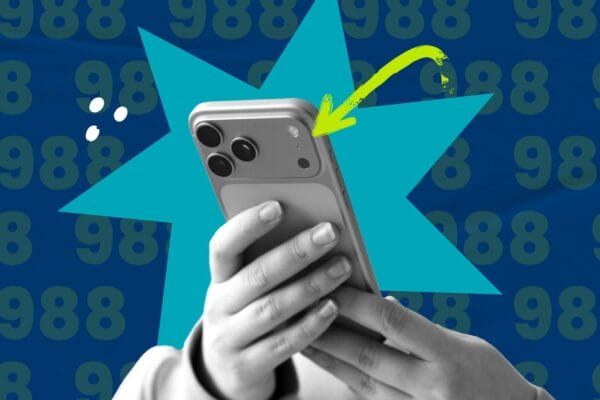
Mental Health Advocacy Institute: Change Starts with You and Happens Here
April 27, 2026 — Young people are defined by change; the first 25 years of a person's life are hallmarked by moving grades, starting different schools, learning what you like, realizing what you don’t, and experiencing the world, all while growing into yourself. Change is hard, and making change can be harder, but who is more qualified to do it than dedicated youth and young adults? When mobilizing for mental health, it’s young people at the forefront of the movement; they are the visionaries behind a kinder, more empathetic world where resources are available, and stigma has been dismantled. How can we help young people turn their ideas into action? Active Minds created the Mental Health Advocacy Institute with the purpose of supporting college students in practically implementing their big ideas when it comes to mental health on their campuses. This is a paid, year-long virtual mental health advocacy program for 70 students from colleges and universities across the country, under the guidance of Active Minds and the direction of an on-campus steering committee. The Fall is focused on using evidence-based strategy to formalize an action plan that addresses a mental health issue facing their campus, and the Spring is for implementation. Challenges facing campuses can include a lack of existing resources, and underutilization of resources, disparities, academic pressure, loneliness, and more. Active Minds connects students with strategies that are proven to be effective, from peer education to skills training interventions for stress management. With the Active Minds Mental Health Advocacy Institute, you can start creating change. Apply to this cycle of the Active Minds Mental Health Advocacy Institute by May 25, 2026, for the upcoming 2026-2027 academic year! Eligibility Requirements Between 18-25 years of age Currently enrolled at a U.S. college or university and located within the United States Graduating no sooner than May 2027 Not studying abroad from September – December or from February – April during the program Have been enrolled at their current institution for at least one full academic year
Read More
How to Stay Calm and Focused During Finals Week
April 9, 2026 — Finals week can feel like everything hitting at once. Multiple exams, large amounts of material, and pressure to perform can quickly become overwhelming. When stress builds, it becomes harder to focus, easier to procrastinate, and tempting to push mental health aside. What helps most is not a perfect routine; it is having a few simple tools you can use in the moment to stay calm and keep moving forward. Break Studying Into Smaller Targets One of the biggest reasons students feel overwhelmed during finals is that they look at everything they have to do at once. “Study for biology” or “review all of history” feels too large to start. Instead, break your work into smaller, specific targets. For example: Review two chapters Complete ten practice problems Rewrite one set of notes This reduces the mental friction of starting. Once you begin, it is much easier to continue. Breaking work into smaller goals also prevents last-minute cramming, which can be one of the biggest sources of stress during finals. Use a Breathing Reset When Stress Spikes During finals, stress can build quickly, especially when you feel stuck or overwhelmed. In those moments, trying to push through can often make things worse. A simple reset can help. One of the most effective techniques is a breathing method called the cyclic sigh: Take a deep inhale through your nose Immediately take a second short inhale Slowly exhale through your mouth until your lungs are empty This type of breathing helps calm your nervous system and reduce stress in seconds. Research from Stanford found that short, structured breathing practices can significantly reduce anxiety and improve mood, with cyclic sighing showing particularly strong effects. As a co-founder of StayMindful, a mental health app designed for students, I’ve seen similar results. In student testing, after a short guided breathing exercise, over 100 students reported feeling 4 out of 5 calmer on average, from not calm to extremely calm. Study in Focused Rounds, Not Endless Marathons Many students try to study for hours without stopping, especially during finals week. This often leads to burnout and reduced focus. Instead, work in focused rounds. Choose one task, give it your full attention, and then take a short reset. During that break: Stand up Walk around Stretch Do a quick breathing exercise Avoid turning breaks into long periods of scrolling, which can make it harder to return to work. Working in structured rounds allows you to maintain higher focus and get more done in less time. Protect Your Mood During Finals Week Finals week is not just a test of knowledge; it is also a test of consistency and mindset. When students start to feel discouraged or overwhelmed, it becomes much harder to stay productive. Small positive inputs can make a difference: A short reset A reminder that you are making progress A moment to step back and breathe At StayMindful, we send daily motivational quotes and short mental health content to help students stay consistent with these habits. The goal is not to eliminate stress completely, but to make it manageable so you can keep moving forward. It is also important to remember that your grades do not define your worth. Active Minds emphasizes that students are more than their academic performance, especially during high-pressure times like finals week.
Read More
What Emotional Resilience Looks like To Me
April 9, 2026 — I’ve always loved Solange Knowles. Not just for Cranes In The Sky (though that song plays like gospel when I’m in my feelings), but because of the raw, unfiltered truth she delivers through her music. In Cranes, she sings about trying to drown out pain through every coping mechanism we’re taught to idolize: shopping, working, crying, even changing her hair. She did it all. And still, she felt everything. It wasn’t numbness she was singing about; it was exhaustion. A bone-deep kind of weariness that isn’t necessarily big, but still weighs down your chest. I didn’t expect that to hit me the way it did. But emotional pain? It’s quiet like that. It doesn’t always arrive in sobs or breakdowns. Sometimes, it just lingers. A sort of ineffable type of feeling. And eventually, like Solange, you realize that healing doesn’t come from running. It comes from stopping. From feeling. From rebuilding, piece by piece, breath by breath. That’s what resilience has looked like for me, and trust me, it wasn’t cute. I was born in Washington D.C., but I was raised in Italy, and eventually I moved from Italy to rural Georgia when I was eight. I didn’t know the language. I didn’t understand the culture. And for a long time, I didn’t even recognize the version of myself I had to become to survive. I was the only African boy in a sea of Southern drawls and tight-knit friend groups that spanned years. People laughed at my accent, butchered my name (as if pronouncing Dom-uh-NICK Mim-uh-BANG is the hardest task in the world), and asked me if I was “really American.” I remember reading aloud in class and hearing snickers when I tripped over words. Not because I didn’t know what they meant, but because I had only ever seen them written, never said aloud. I stayed quiet for years. Even after I learned the language, I couldn’t shake the shame that had already dug itself in. That’s the thing about resilience: when it starts forming in silence, it hardens differently. I thought the only way to prove I belonged was to overperform. To show up everywhere—to be louder, better, more prepared, more impressive. I joined every club, led every project, and tried to become undeniable. I ran for leadership in an organization that quite literally shaped who I am today. Not once. Twice. And I lost both times. Not quietly, either. I campaigned at conferences with thousands of attendees and read a speech out to those same attendees. And both times, I had to clap for someone else as the room erupted in applause for them. It was public. It was humbling. And it was painful. But here’s the thing: I kept going in the organization and stayed involved, regardless of whether or not I was on the state board for it. And that’s resilience. Not perfection. Not ever failing. Just... refusing to stay down. So what is emotional resilience, really? According to the American Psychological Association, resilience is “the process and outcome of successfully adapting to difficult or challenging life experiences.” It’s not something that you’re naturally born with; it’s something you build over time (APA, 2022). So if you've ever felt like a mess after a rejection or a failure, guess what? You’re not broken, you're human. Here’s how I started building mine: Feel First, Fix LaterI used to think I had to “bounce back” instantly. Now I know better. Resilience starts with sitting in your feelings. Labeling them. Talking about them. According to the National Institutes of Health, acknowledging emotions and processing them (instead of bottling them up) is linked to better long-term mental health outcomes (NIH, 2021). It’s okay to say, “This really hurts.”That’s not weakness. That’s step one. Build a Soft LandingThere’s a myth that strong people are self-sufficient. That we “tough it out” alone. But Harvard research says otherwise. One supportive relationship—a teacher, a parent, a friend—can be the biggest predictor of a young person’s ability to recover from adversity (Harvard, 2021). My bounce-back crew includes my AP Literature teacher, Miss Davenport, my mom, and my unserious but wise friend Akshaaya. Together, they’ve talked me off more metaphorical cliffs than I can count. Find your people. Let them in. Redefine What "Losing" MeansThose elections I lost? At first, they felt like public proof that I didn’t belong. But eventually, they became reminders that worth isn't tied to a title. I learned how to organize, how to connect with people, and how to speak from the heart without a script. I learned to lead without a title. And weirdly enough, I’ve had more impact from the sidelines than I ever thought possible. Resilience taught me that worth doesn’t come from applause. It comes from the “why” behind the work. Let Humor Heal YouThere’s science to back this up: researchers from the Mayo Clinic say that laughter reduces stress, improves mood, and even strengthens your immune system (Mayo Clinic, 2021). And sometimes? The only thing between you and a breakdown is a well-timed meme. I’ve made Canva powerpoints titled “Why I Shouldn’t Have Trusted the Process” and voice-noted myself mid-cry just to laugh at it later. It works. (Not always. But more often than not, it does.) Resilience isn’t linear. Some days, you feel like you’re floating above it all — like the cranes in Solange’s sky. Other days, you’re stuck in the mud of everything going wrong. But you are still here. And that’s enough. So if you’re in the middle of your own comeback story, I hope you take this as permission to feel everything, rest when you need to, and keep rising: quietly or loudly, slowly or all at once. Your bounce-back era isn’t coming. It’s already in motion. And when you look back, you’ll be proud you didn’t give up.
Read More
Student ID Cards: A Lifeline for College Students
Your student ID card is more than just plastic—it’s a key to campus life, unlocking doors, meals, and library books. But what if it could do even more?
Read MoreBuilt on Compassion: How Louisville High School is Growing Its Mental Health Community
March 23, 2026 — This month, our Chapter of the Month shines a light on how the Active Minds Louisville High School Chapter is creating a space where mental health conversations are real, open, and stigma-free. Since launching in 2023, the 80-member group has been all about supporting each other, speaking up, and making campus feel a little lighter. Louisville’s Chapter has quickly grown into a vibrant community of almost 100 members dedicated to advocating for student well-being. Rooted in the school’s mission of empowering young women to drive meaningful change, this student-led group is building a more compassionate campus through creative programming, peer support, and a shared commitment to making mental health a priority for all. From high-energy stress relievers to meaningful moments of reflection, Louisville’s Active Minds chapter keeps mental health support both engaging and accessible, finding small but impactful ways to help students manage stress and feel supported. Discover how they’re changing the game through our Q&A. Tell us about your school and chapter. Louisville High School is an all-girls College Prep Catholic high school founded in 1960. As part of Louisville’s mission of envisioning a world where women initiate change to enrich their communities, Active Minds/Mental Health Awareness Club has been a great addition to our campus climate. Our chapter was started with the main goal of advocating for the betterment of student’s mental health in our Louisville Community. Share something your chapter has done recently that you are proud of. We are proud of the range of activities and awareness we have provided to our school community. One of the more successful Wellness Wednesday events was when we hosted a “Just Dance” activity in partnership with the Counseling Department as a midweek mood boost to shake off some stress. We also implemented the “I wish Campaign” to our chapter and our student body so students could express their feelings to know their voice matters and to build a more compassionate community. Most recently, some of our chapter members hosted a booth at our school event “Louchella” as a fundraiser to donate back to Active Minds. At the fundraiser, we provided fidget coil rings and calming strips as a tool to support their mental health. Why is mental health important to your chapter and school? Mental health is important at our school, as stress can affect students differently, and we want to help students process their feelings in a healthy way. We want to create a sensitive and open environment for students to share their feelings without fear of judgement. How is your chapter making a difference on campus? Our chapter is making a difference on campus by providing students with initial breaks and methods to cope with stress by participating in the Wellness Wednesdays in collaboration with the Counseling Department. In addition to providing some tools, we spread mental health awareness to break the stigma by sharing quotes and educational videos. What advice would you give to someone thinking about joining or starting a chapter? Do it! Get involved and try to be routine in going to Chapter meetings. But don’t overwork yourself, your mental health matters just as much! What is a mental health mantra your chapter lives by? Aside from schoolwork and extracurriculars, students have other components of their lives that may be impacting their mental health, so lead with some grace. Acknowledging that mental health is important and how even though some mental illnesses are not seen, they matter just as much!
Read More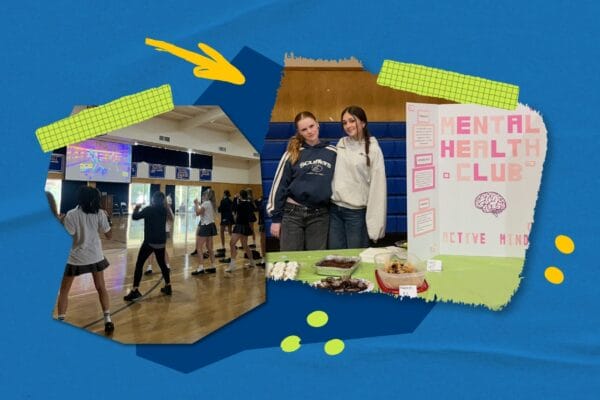
Finding Joy: You’re Never Too Old to Play
March 20, 2026 — Sitting in my dorm room, bored and alone, I realized that the only thing keeping me there was myself. What I needed was fun, and if fun wasn’t going to find me inside Heritage Commons Residence Hall, I’d have to find it. Then it hit me – jump rope. I ordered one online and asked a friend if she would go out and swing it with me. We walked out to the promenade, an area on Clark Atlanta University Campus where students congregate, and began swinging the long, colorful rope. Slowly, we caught the interest of our fellow students. The promenade felt transformed and was more reminiscent of a childhood school yard than a university walk. For the first time in over 10 years, it felt like we were playing together at recess, and the small joys reserved for kids in elementary school were ours again, only now we’re not just “big kids,” we are young adults. It was fun and a reminder that growing up doesn’t have to mean missing out. One student came over and told me how much they loved what we were doing and encouraged us to keep it up – so I did just that. An afternoon of boredom turned into one of community and play, from this, my startup Big Kids Inc. was born. Big Kids Inc. is an organization that hosts engaging, playful events for adults like field days, dodgeball tournaments, picnics, and more. We believe that the key to relieving stress and building community nurtures our inner child. One of our most powerful wellness tools is play, and now, as a Junior in college and a year into this journey, I know more than ever that play is my purpose. How You Can Incorporate Play Into Your Routine It is imperative that we live our lives to the fullest, which is why it’s a mission of mine to play often and boldly like when I was young. In the practice of lifestyle, I routinely find myself incorporating games into my everyday life. I enjoy word-searches in the campus library and asking friendly faces to play with me. Instead of letting the fear of rejection define my choices, I let the possibility of connection motivate me. Making friends on the playground seemed so simple as a child. My goal is to bring the playground to young adults, whether that’s in the form of a jump rope on the promenade or a word search in the library. Host a game night: Play board games and enjoy spending time with people you love. Play cards: Be bold! Get yourself a stack of uno cards or playing cards and ask people in shared community spaces like your college student center or library to play a quick game of cards with you. Go to the park: Spend time at a local park with your friends and have fun on the swings and slides like when you were a kid. Get Involved Ever thought about how your mental health journey could be the blueprint someone else needs? Tell your story on our blog and show the world what mental health mobilization looks like today. Find out how to submit your story on our website.
Read More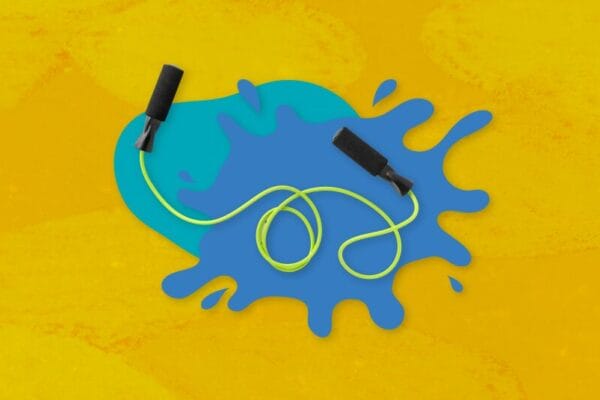
Transform Your Campus
Support mental health and academic success through college leave of absence policies. Learn how to evaluate, improve, and create “leave of” and “return from” absence policies using allies and stories from students who have been affected.
Read More