Finding Healing on the Front Burner
March 30, 2026 — Healing doesn’t always happen in big moments. Sometimes it happens in quiet places where we gather what we have and do the best we can.
Read More
selfsea
A web app co-designed with young people to provide youth with safe, inclusive, evidence-based, and identity-affirming health resources and information.
Read More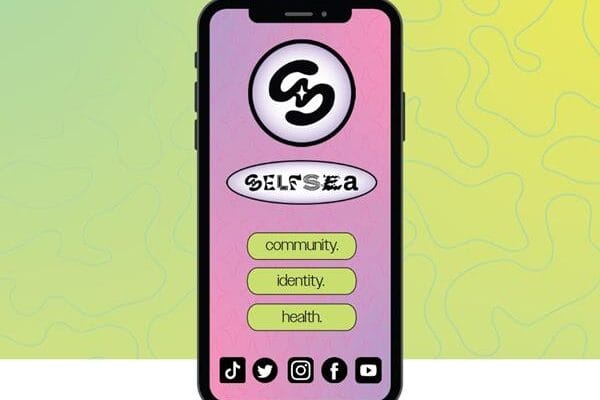
Student ID Cards: A Lifeline for College Students
Your student ID card is more than just plastic—it’s a key to campus life, unlocking doors, meals, and library books. But what if it could do even more?
Read MoreFrom Story to Screen: Responsible Mental Health Video Creation
Video content can powerfully humanize mental health struggles, but it also exposes you to intense scrutiny and permanent documentation of vulnerable moments. This guide helps you create impactful videos while protecting your digital wellbeing.
Read More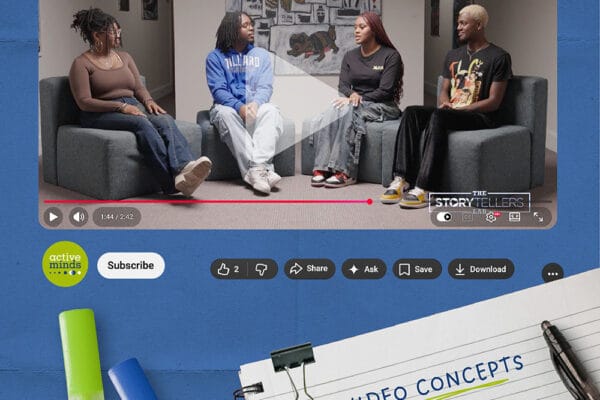
Being Young in the Age of AI
Discusses a youth-led forum called "CTRL + Future" that brought together young people from 12 countries to discuss responsible AI development.
Read More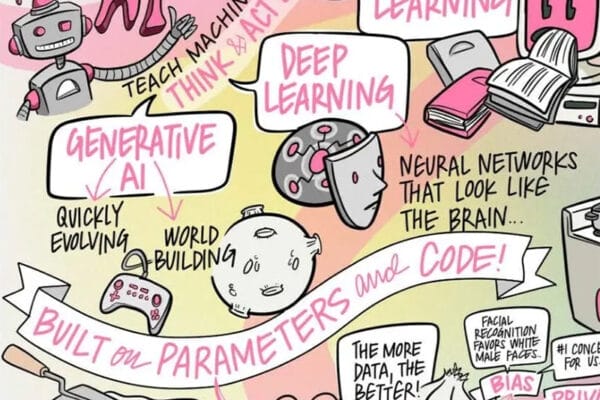
Pen, Paper, Boundaries: Safe Mental Health Writing for Public Impact
Writing about personal mental health experiences can create lasting impact, and requires careful consideration of your digital footprint, boundaries, and long-term wellbeing.
Read More
Building Mental Health Movements Online While Protecting Your Peace
Social media campaigns can amplify your mental health advocacy, but they can also drain your energy and expose you to negativity. This guide helps you create impactful campaigns while protecting your digital wellbeing.
Read More
Smart Digital Advocacy for Youth
Share your mental health story strategically and safely online, and with the right approach, your story can build better mental health systems for everyone.
Read More
Built on Compassion: How Louisville High School is Growing Its Mental Health Community
March 23, 2026 — This month, our Chapter of the Month shines a light on how the Active Minds Louisville High School Chapter is creating a space where mental health conversations are real, open, and stigma-free. Since launching in 2023, the 80-member group has been all about supporting each other, speaking up, and making campus feel a little lighter. Louisville’s Chapter has quickly grown into a vibrant community of almost 100 members dedicated to advocating for student well-being. Rooted in the school’s mission of empowering young women to drive meaningful change, this student-led group is building a more compassionate campus through creative programming, peer support, and a shared commitment to making mental health a priority for all. From high-energy stress relievers to meaningful moments of reflection, Louisville’s Active Minds chapter keeps mental health support both engaging and accessible, finding small but impactful ways to help students manage stress and feel supported. Discover how they’re changing the game through our Q&A. Tell us about your school and chapter. Louisville High School is an all-girls College Prep Catholic high school founded in 1960. As part of Louisville’s mission of envisioning a world where women initiate change to enrich their communities, Active Minds/Mental Health Awareness Club has been a great addition to our campus climate. Our chapter was started with the main goal of advocating for the betterment of student’s mental health in our Louisville Community. Share something your chapter has done recently that you are proud of. We are proud of the range of activities and awareness we have provided to our school community. One of the more successful Wellness Wednesday events was when we hosted a “Just Dance” activity in partnership with the Counseling Department as a midweek mood boost to shake off some stress. We also implemented the “I wish Campaign” to our chapter and our student body so students could express their feelings to know their voice matters and to build a more compassionate community. Most recently, some of our chapter members hosted a booth at our school event “Louchella” as a fundraiser to donate back to Active Minds. At the fundraiser, we provided fidget coil rings and calming strips as a tool to support their mental health. Why is mental health important to your chapter and school? Mental health is important at our school, as stress can affect students differently, and we want to help students process their feelings in a healthy way. We want to create a sensitive and open environment for students to share their feelings without fear of judgement. How is your chapter making a difference on campus? Our chapter is making a difference on campus by providing students with initial breaks and methods to cope with stress by participating in the Wellness Wednesdays in collaboration with the Counseling Department. In addition to providing some tools, we spread mental health awareness to break the stigma by sharing quotes and educational videos. What advice would you give to someone thinking about joining or starting a chapter? Do it! Get involved and try to be routine in going to Chapter meetings. But don’t overwork yourself, your mental health matters just as much! What is a mental health mantra your chapter lives by? Aside from schoolwork and extracurriculars, students have other components of their lives that may be impacting their mental health, so lead with some grace. Acknowledging that mental health is important and how even though some mental illnesses are not seen, they matter just as much!
Read More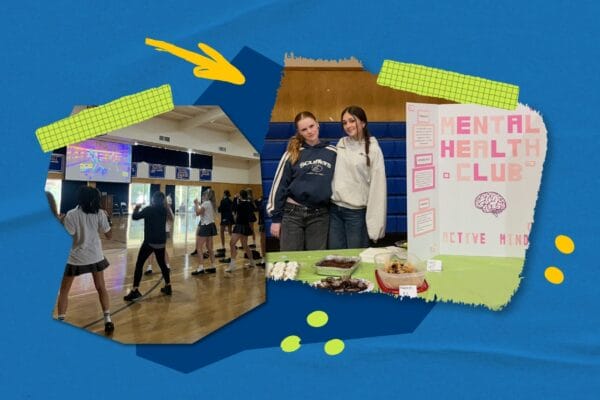
Wellness Starts With Togetherness
March 22, 2026 — Our lack of community is slowly killing us – to the point that governments and think tanks feel the need to intervene. The “Loneliness Epidemic” was described as a public health crisis by the Surgeon General in 2023. Organizations ranging from NPR to the National Institute of Health have commented on the widespread, systemic rise in chronic social isolation. The health risks of this unabating loneliness include cardiovascular disease, dementia, stroke, depression, anxiety, and premature death, according to Essential Partners, a nonprofit dedicated to supporting community and interpersonal relationships. What does a doctor prescribe to assuage the ache of isolation? It’s not a fever or a sore throat that would have you debating the merits of acetaminophen vs ibuprofen; it’s a subjective but very real disconnection from community. It’s in how we treat ourselves and others that we find the remedy. In the 2023 U.S. Surgeon General’s Advisory on the Healing Effects of Social Connection and Community, experts named the prescription to loneliness: social connection. They laid out a six-pillar plan Strengthen Social Infrastructure in Local Communities Enact Pro-Connection Public Policies Mobilize the Health Sector Reform Digital Environments Deepen Our Knowledge Build a Culture of Connection How Can We Implicitly Build Community? One of the most effective ways to combat the loneliness epidemic is to show up for the people in your life and to ask them to show up for you. Ask friends for a ride to the airport or bring an extra coffee to class for the person who sits next to you – build community by being someone others can rely on and, in return, you can rely on them. Individualism is healthy in doses, but the beauty of being “inconvenienced” is being lost. It is a good thing to look at what’s good for your people as contributing to your own best interest, not because it’s an act of direct self-service but because it builds resilience in relationships. We should all cultivate a healthy sense of self, independent from external judgment, but not at the expense of consideration for the people we share space with – share community with. It all starts with seeing inconvenience as a privilege, both to give and receive. When you have a trip to the store planned, ask people what they could use – take something off of their plate, even if it adds a little more to yours. Ask people to carpool even if it’s out of their way; the rapport is worth the detour. Fold laundry or do chores you know your friends don’t like to do when you visit, noticing a full trash bag and taking it with you when you go leaves a sense of care in your wake. Hang out with people when they ask at the last minute. Spontaneity doesn’t equal disrespect; lean into the appreciation of sharing time with your people, even if it’s not entirely on your terms. Get Involved Ever thought about how your mental health journey could be the blueprint someone else needs? Tell your story on our blog and show the world what mental health mobilization looks like today. Find out how to submit your story on our website.
Read More
Finding Joy: You’re Never Too Old to Play
March 20, 2026 — Sitting in my dorm room, bored and alone, I realized that the only thing keeping me there was myself. What I needed was fun, and if fun wasn’t going to find me inside Heritage Commons Residence Hall, I’d have to find it. Then it hit me – jump rope. I ordered one online and asked a friend if she would go out and swing it with me. We walked out to the promenade, an area on Clark Atlanta University Campus where students congregate, and began swinging the long, colorful rope. Slowly, we caught the interest of our fellow students. The promenade felt transformed and was more reminiscent of a childhood school yard than a university walk. For the first time in over 10 years, it felt like we were playing together at recess, and the small joys reserved for kids in elementary school were ours again, only now we’re not just “big kids,” we are young adults. It was fun and a reminder that growing up doesn’t have to mean missing out. One student came over and told me how much they loved what we were doing and encouraged us to keep it up – so I did just that. An afternoon of boredom turned into one of community and play, from this, my startup Big Kids Inc. was born. Big Kids Inc. is an organization that hosts engaging, playful events for adults like field days, dodgeball tournaments, picnics, and more. We believe that the key to relieving stress and building community nurtures our inner child. One of our most powerful wellness tools is play, and now, as a Junior in college and a year into this journey, I know more than ever that play is my purpose. How You Can Incorporate Play Into Your Routine It is imperative that we live our lives to the fullest, which is why it’s a mission of mine to play often and boldly like when I was young. In the practice of lifestyle, I routinely find myself incorporating games into my everyday life. I enjoy word-searches in the campus library and asking friendly faces to play with me. Instead of letting the fear of rejection define my choices, I let the possibility of connection motivate me. Making friends on the playground seemed so simple as a child. My goal is to bring the playground to young adults, whether that’s in the form of a jump rope on the promenade or a word search in the library. Host a game night: Play board games and enjoy spending time with people you love. Play cards: Be bold! Get yourself a stack of uno cards or playing cards and ask people in shared community spaces like your college student center or library to play a quick game of cards with you. Go to the park: Spend time at a local park with your friends and have fun on the swings and slides like when you were a kid. Get Involved Ever thought about how your mental health journey could be the blueprint someone else needs? Tell your story on our blog and show the world what mental health mobilization looks like today. Find out how to submit your story on our website.
Read More
Your Spring Mental Health Reset: 3 Simple Self-Care Habits to Try This March
March 5, 2026 — March is that in-between moment. Winter burnout is real, the semester schedule is in full swing, and everyone is waiting for the energy that spring is supposed to bring. If you’ve been feeling a little off, you’re not alone. The good news? A mental health reset doesn’t have to mean a complete life overhaul. Sometimes it’s the small, consistent habits that make the biggest difference. Here are three simple ways to reset and prioritize your mental health this month. 1. Start a 10-Minute “Daily Check-In” You don’t need a full journaling routine or a perfectly curated morning ritual. Just give yourself 10 minutes a day to check in with yourself. Try this: Write down one thing you’re stressed about One thing you’re grateful for One thing you’re looking forward to It helps clear mental clutter and makes your emotions feel more manageable. If journaling isn’t your thing, a quick voice memo to yourself works, too. 2. Touch Grass (Seriously) Spending time outside can seriously boost your mood and energy. And no, it doesn’t have to be a full nature hike. Simple ways to do it: Take a 10–15 minute walk between classes Sit outside while studying Meet a friend for a walk instead of another coffee shop hang Fresh air, sunlight, and a short break from screens can help reset your mind more than you think. 3. Create One “No-Pressure” Hour Each Week We’re all juggling a lot: school, work, social lives, and the constant noise of social media. Give yourself one hour each week where productivity doesn’t matter. This could look like: Watching a comfort show Doing a creative hobby (drawing, music, crafting) Reading something that isn’t for class Cooking a new recipe The rule: no guilt, no multitasking, no pressure to post about it. Your Reset Doesn’t Have to Be Perfect Self-care on social media can look like elaborate routines and aesthetic wellness trends, but real mental health care is often much simpler. Small habits done consistently—checking in with yourself, getting outside, and making time to recharge—can help you feel more grounded as the season changes. Spring is about new beginnings. Think of this month as your reminder that even small resets can help you bloom. Get Involved Ever thought about how your mental health journey could be the blueprint someone else needs? Tell your story on our blog and show the world what mental health mobilization looks like today. Find out how to submit your story on our website.
Read More