February is often called the month of love, but it is also nationally recognized as Black History Month. It is a time to reflect on moments of pride, like Dr. Martin Luther King Jr.’s “I Have a Dream” speech, as well as the ongoing harm Black communities continue to face. One of those spaces is healthcare, a system where "care" often feels like a misnomer. For many Black patients, cold white walls aren't just unwelcoming; they are reminders of a system that frequently fails to see our full humanity. These experiences are not just history — they are happening now. A big contributor to these disparities is the lack of Black healthcare providers. While Black people make up about 13% of the U.S. population, only about 5% of physicians and a staggering 4% of psychologists identify as Black. This representation gap creates a massive barrier to access. When we do seek help, we are often met by providers who do not share our lived experiences, allowing unconscious bias to reinforce harmful misconceptions, including the false belief that Black people experience less pain. To be clear: this is a myth — and a very dangerous one. There are several other myths that have long shaped healthcare experiences for Black patients, including: The belief that Black people have thicker skin The belief that Black people have less sensitive nerve endings The belief that Black people’s blood coagulates (changes) faster The belief that Black individuals are more capable of handling trauma without professional mental health intervention All of these claims are false. Yet despite efforts to educate newer generations of healthcare professionals, the damage caused by these myths has already been deeply rooted in medical systems. Because of these misconceptions, Black patients often face: Racial bias in medical decision-making Harmful characterizations of their tone and behavior as aggressive Reduced access to appropriate pain management Providers overlooking or minimizing pain Underestimation of the severity of medical conditions These outcomes are not accidental. They are the result of systemic bias that continues to affect patient care. As a student pursuing medicine, I have witnessed the impact of these myths firsthand in clinical observations. Hospitals are places where I feel hope and excitement, but many Black patients experience something very different. Instead of comfort, they carry feelings of distrust, fear, and disappointment. These emotions are shaped by repeated experiences of being unheard or dismissed. Because of this history, many Black patients: Feel uncomfortable fully disclosing symptoms, in part out of fear of being labeled unstable Avoid seeking care due to fear of bias Worry they will not be taken seriously Face stigma surrounding mental health treatment These obstacles overlap and reinforce one another, creating a cycle that discourages care and worsens outcomes. Personally, I am fortunate to have access to Black medical professionals in my community, access that has made a difference in how safe and supported I feel in healthcare spaces. That access is the difference between feeling "seen" and feeling "processed." However, this is not the reality for everyone, which is why speaking openly about Black experiences in healthcare is one of the most important steps toward change. The gradual increase in the number of Black providers offers hope for the future. One day, healthcare will reflect teams of providers from many backgrounds, not just white coats on white faces. Until then, community care reminds Black patients that they are worthy of equal treatment. This Black History Month, don't just look back — help write the next chapter. If you’ve felt unheard in the exam room or dismissed by a counselor, know that your experience is real and the treatment you received is not okay. When we share our stories and support one another in finding culturally competent care, we create a ripple effect that challenges systemic bias. By reclaiming the narrative around Black bodies and creating safe spaces where we are truly heard, we move closer to a healthcare system rooted in dignity and equity. Did you know that you can share your story on the Active Minds blog? Visit our website to learn more — your words could be exactly what someone needs to hear.

BIPOC Mental Health Article

Caregiving is a weighted word — especially for Gen-Z, now at the forefront of family care. For me, it brings up many feelings, like frustration and stress. A caregiver supports a loved one through physical help, emotional care, or financial aid. The role is deeply personal. For some, it's a cultural expectation, making it a big part of who they are. For others, it's an unavoidable duty, something that they didn’t have much say in.  Caring.com reported that about 72% of Gen-Z plan to provide some type of care for their parents. And for those who are already providing care, this can be not only a physically and economically exhausting job, but also a mentally taxing one. Young adults already manage school, work, and social life; caregiving is one more responsibility piled on their plates. This all can cause social isolation, academic burnout, and professional struggles.   Gen-Z is quickly becoming the new face of family caregiving, often influenced by cultural or familial responsibility. I invited two fellow Gen-Z caregivers, Jorge Alvarez (a full-time professional) and Carolyn Dao (a full-time student), to share their unique experiences with me through a series of Q&As. Learn more about them below!  What does providing caregiving for your family mean to you, and what does it look like? Jorge: For me, caregiving isn’t just about stepping into a role you didn’t expect, but doing so, surely, out of love, but often out of necessity. I became a caregiver for my mom in less than 24 hours, without much preparation, after she had a major surgery. I supported her with everything from bathing and feeding her to coordinating appointments; all while adjusting to adulthood and living on my own for the first time. It was overwhelming, but it taught me how important it is to have plans for caregiving or at least know where to find resources and learn more about what support systems exist for us.  How has your view on caregiving evolved throughout your experiences with it? Carolyn: Before I started taking care of my grandparents, I thought that mainly older adults did it as a full-time job. But growing up, my dad, aunts, and uncles would all pitch in to assist my grandparents. I thought that I could be a kid for a little longer. However, I realized that being a caregiver can start at any age. Caregiving allowed me to have an early look at how adults manage to balance all sorts of things, and taught me how to balance out caregiving, school, and mental health.   Research has shown that caregiving for a family member can bring up a lot of complex emotions. What feelings have come up for you in your caregiving journey?  Jorge: I’ve felt love and gratitude, but also resentment, guilt, exhaustion, and fear. There were moments when I felt like I had to put my life on pause, and that was hard to accept. I constantly questioned if I was doing enough or doing it “right.” I felt guilty and anxious when I couldn’t help. It’s a deeply human experience that pushes you to confront your limits while trying to protect someone else’s dignity, while prioritizing your own mental health and well-being. What support has been helpful in processing your feelings and taking care of your mental health throughout your experiences with caregiving? Are there any resources that you think are missing to better support caregivers? Carolyn: Having open conversations with those I trust helped me carry the weight on my shoulders. They allowed me to speak my mind while understanding the situation I was in. While there are support systems out there for adult caregivers, there are not many for Gen-Z ones, as they are just as capable and experience the [same] emotions.  Caregiving is a difficult, yet often unrecognized, job that impacts the mental health of young adults. Active Minds recognizes that caregiving duties significantly impact the mental health of young adults. That’s why we encourage you to join us for our upcoming caregiving workshop — either to learn about caregiving or share your own challenges and experiences as a caregiver.  Let’s work together to identify and shape resource ideas for Gen-Z caregivers like you and me. Register today to join us for a workshop on caregiving on Thursday, November 13th at 7:00 PM ET!


Self Care Article

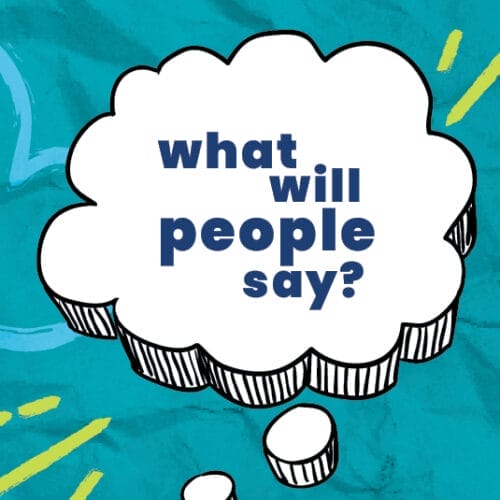
Mental health was never a topic that was brought up naturally in my house. In many immigrant households, there seems to be an unspoken understanding that struggles are meant to be endured, not expressed. When mental health is brought up, the topic is often quickly dismissed with a shrug and the familiar phrase: “What will people say?” That phrase, “log kya kahenge?”, carries weight. It’s not just about neighbors or relatives. It’s about preserving the image of strength, stability, and resilience that many immigrant families fought to build. But what happens when that image comes at the cost of our mental well-being? “I didn’t know how to explain I was hurting” I interviewed several high school students from immigrant families, all from different cultures, and each of them shared stories that mirrored my own. Sara, a Pakistani-American sophomore, told me, “When I first brought up that I was feeling anxious, my mom said that I should just pray more… It felt like my feelings didn’t count because they weren’t visible.” Another student, Luis, shared how his parents believed depression was a sign of weakness: “They told me I was being dramatic. But I struggled every day just to get out of bed.” Their stories highlighted a common thread: silence. In many immigrant communities, mental health isn’t dismissed out of cruelty, but out of a belief system where survival has always come first. Our parents and grandparents grew up in situations where therapy was rare, mental illness was misunderstood and stigmatized, and where vulnerability was dangerous. Why our elders think this way To understand the stigma, we have to first understand the history. For generations, mental health wasn’t something that could be safely acknowledged. In many parts of the world, mental health struggles were associated with shame, weakness, or isolation. Immigrants carried these beliefs with them, often unintentionally passing them down. For them, success meant security, education, and keeping the family together. Mental health was never part of their definition of success. But times are changing and so are we. How can we start the conversation So how do we shift the narrative without disrespecting our families or their values? Here are a few strategies that have helped me and my peers begin to build those bridges: 1. Start small and personal Instead of saying, “I think I’m depressed,” try starting with, “Lately I’ve been feeling really overwhelmed and tired.” Use words that feel less clinical and more emotional; it’s often easier for elders to relate to stress and exhaustion than to formal diagnoses. 2. Connect it to physical health Many immigrant families value physical health. Explaining how mental health affects sleep, appetite, energy, and the immune system can help build understanding. 3. Find a shared cultural value Whether it’s the importance of family, faith, or service, frame mental wellness as something that helps you show up stronger for those you love. Say something like, “Taking care of my mental health helps me be a better daughter/student/friend.” 4. Educate gently Share articles or stories that reflect your background. 5. Create space with others If it’s not safe to open up at home yet, find community elsewhere. School counselors, clubs, and online mental health spaces can offer validation and support until you’re ready to have those tougher conversations at home. I believe the cycle of silence ends with us. Our parents crossed oceans for a better life. Now it’s our turn to make sure that “better” includes emotional wellness. Let’s keep talking, even if it’s hard. Even if it feels awkward. Even if we hear “What will people say?”, because what we say matters too.

High School Article

As a transgender man, Transgender Day of Remembrance is a day that’s near and dear to my heart. For most transgender and gender non-conforming youth, it is one of the ways we honor our elders, peers, and history, even if we cannot come out. In 2023, we are honoring the 19 transgender and non-binary siblings who passed due to transphobia and hate. The uncertainty of being accepted by our family, friends, school, and more can bring up a lot of emotions and mental health concerns, especially in our transgender and gender non-conforming youth, who are the recent target of political agendas.  Transgender Day of Remembrance can be a trigger of anxiety, depression (especially feelings of hopelessness and worthlessness), trauma (if a transgender or non-binary individual experienced discrimination or been “outed”), and stress. I remember as a teenager starting to realize that I am not cisgender, thinking, “With so many trans and non-binary people being killed, does that mean someone will do that to me too? Do I want to accept these parts of me knowing that there are such hateful people in this world?” What I did not realize then was my power and voice in living authentically and true to my gender identity.  As this day can bring up a lot, I want to share three ways that allies can support transgender individuals' mental health and be an advocate on this day: Donate to transgender-affirming non-profits. Active Minds, The Trevor Project, Local LGBT Centers, the Human Rights Campaign, and Transgender Law Center are great places to consider as they have paved the way to support Transgender identities. Money is power and can lead to substantial support.  Learn about A.S.K. If a transgender or non-binary person opens up to you about this heavy subject, and you are not sure what to say, Active Minds’ everyday tool goes a long way and can provide the structure for you to be supportive.  Affirm our identities and boundaries. A reminder that you are there for us and see us as our true selves can help reduce some of the pain. Allow us space to experience today without us having to educate. Google is a great resource if you are unsure of what a term means or curious about transition! Additionally, sharing our posts with permission and simply respecting a transgender or non-binary individual’s decision to or not to come out are great ways to show solidarity. Allow us to decide who knows what parts of us.  If you are a transgender or non-binary individual, I encourage you to continue living your truth (granted, if it is safe to). When I attended Camp Pride this summer, one of the messages I took away was that by simply existing, we have so much power and a chance to use our voice. You deserve to embrace your identity. You deserve to speak your truth. And you deserve all the love, kindness, and support while doing so. Today can be a lot, so here are three ways transgender and non-binary individuals can support their own mental health today:  Limit social media/technology usage. Limiting my usage has helped me significantly. Being faced with the news or consistent posts about this day can sometimes increase some of those negative experiences and feelings. Taking a break for the day on social media or technology may help to give you more opportunities to live in the moment and experience more positive feelings.  Increase self-care. Treat yourself with compassion and support today, and maybe take that extra shower or bath, wear your favorite clothes, journal, take a needed nap, or watch a favorite affirming TV show. Whatever you enjoy, you deserve to amplify that today.  Connect with affirming people. There are many ways to connect with others in the Transgender or non-binary community, even if you are not out yet. If you have allied and affirming friends or a family member, maybe send them a text or give them a call. Finding ways to be around others who are willing to support you is a great way to reduce feelings or urges of isolation and alone. While today is a stark reminder that we have a long way to go before the world is more accepting of the transgender and non-binary communities, we have the chance to continue the progress we have already made. Today we remember the 19 transgender people lost in 2023, the 47 in 2022, and each year before that due to transphobia. And we celebrate the transgender and non-binary individuals with us, knowing that they deserve to live their truth loud and proud.

Self Care Article

As part of BIPOC (Black, Indigenous, and People of Color) Mental Health Month, Active Minds’ manager of next-gen initiatives Alicia Elms sat down with three young adult mental health advocates to discuss fostering equitable advocacy within mental health, the importance of normalizing conversations about well-being, and where they plan to go in the future as they continue to work in mental health. View the full recorded event here, and continue reading to learn more about what each participant shared during their time on the panel:  Brandon Bond is a second-year master’s candidate at the University of Michigan completing a Master’s of Public Health in health behavior and health education and a Master’s of Social Work in global social work practice. As a member of the 2022 Emerging Scholars Fellowship cohort, he explored men’s mental health, particularly how barbershops, a staple of the Black community, can create a safe and welcoming space for those who might not otherwise feel comfortable discussing their mental health. For Brandon, the focus comes from shifting the availability of relevant mental health resources, particularly for college students. He recalled the familiar phrase “Hurt people hurt people,” and discussed his effort to change it to “Healed people heal people.”  Providing intentional spaces and programs for everyone, particularly BIPOC men, on college campuses will give young adults the chance to address and take care of their mental health and in turn, be part of the solution to improving mental health for everyone.  Saharra Dixon is a first-year doctoral student in the community health education program at the University of Massachusetts Amherst. Like Brandon, she was a member of the 2022 Emerging Scholars Fellowship cohort who used digital storytelling as a critical narrative intervention to explore the experiences of Black women with body-focused repetitive behaviors like hair-pulling and skin picking and the impact this can have on their mental health. She expanded on the importance of those involved in mental health advocacy, particularly from the BIPOC community, taking care of themselves first, saying, “What I’m seeing now are a lot of folks, especially folks who are either interested or committed to doing the social justice and advocacy work, and making real change really wanting to be well so that they can continue to the good fight.” Sahara’s message is an important one, reminding us to prioritize taking care of each other and ourselves if we are to continue the important work of creating and maintaining an equitable and inclusive mental health movement. Sophia Shieh is a recent graduate of Boston College who is now continuing to pursue her education at Oxford University before joining Columbia University to begin her master’s program in the fall. A recipient of the inaugural Emerging Scholars Nash Family Scholarship, she plans to eventually pursue a Ph.D. in clinical or community psychology to continue learning from and amplifying the voices of those whom she serves through a community participatory framework. In her current clinical work and experiences, Sophia, like Saharra, emphasized the importance of social justice and advocacy in mental health. “There’s more emphasis on how social justice is inseparable from mental health,” said Sophia of how the framing of mental health is changing as we continue to explore the disparities present between various groups and identities.  The conversation was robust and energizing and shared numerous opportunities to reflect on our understanding of mental health for BIPOC individuals. Saharra shared a thought that should stay with us not only during BIPOC Mental Health Month but far beyond: “Therapy is only as helpful as it can be, as long as we address the root causes…”. Individuals’ mental health should remain a priority, but also must continue to focus on community care, addressing the disparities found in oppressed communities regarding stigma and access to treatment, and supporting the next generation of mental health leaders who are living this work.  Learn more about the Emerging Scholar Fellowship program, supported by the Scattergood Foundation for Behavioral Health and Avi and Sandra Nash, here, and about the Emerging Scholars Nash Family Scholarship, made possible by generous support from Avi and Sandra Nash, here. 

BIPOC Mental Health Article
Your Voice is Your Power logo by Active Minds

A collection of mental health resources for youth and young adults who are looking to begin or grow as a mental health leader.

YVYP Resource Hub