

What Emotional Resilience Looks like To Me
April 9, 2026 — I’ve always loved Solange Knowles. Not just for Cranes In The Sky (though that song plays like gospel when I’m in my feelings), but because of the raw, unfiltered truth she delivers through her music. In Cranes, she sings about trying to drown out pain through every coping mechanism we’re taught to idolize: shopping, working, crying, even changing her hair. She did it all. And still, she felt everything. It wasn’t numbness she was singing about; it was exhaustion. A bone-deep kind of weariness that isn’t necessarily big, but still weighs down your chest. I didn’t expect that to hit me the way it did. But emotional pain? It’s quiet like that. It doesn’t always arrive in sobs or breakdowns. Sometimes, it just lingers. A sort of ineffable type of feeling. And eventually, like Solange, you realize that healing doesn’t come from running. It comes from stopping. From feeling. From rebuilding, piece by piece, breath by breath. That’s what resilience has looked like for me, and trust me, it wasn’t cute. I was born in Washington D.C., but I was raised in Italy, and eventually I moved from Italy to rural Georgia when I was eight. I didn’t know the language. I didn’t understand the culture. And for a long time, I didn’t even recognize the version of myself I had to become to survive. I was the only African boy in a sea of Southern drawls and tight-knit friend groups that spanned years. People laughed at my accent, butchered my name (as if pronouncing Dom-uh-NICK Mim-uh-BANG is the hardest task in the world), and asked me if I was “really American.” I remember reading aloud in class and hearing snickers when I tripped over words. Not because I didn’t know what they meant, but because I had only ever seen them written, never said aloud. I stayed quiet for years. Even after I learned the language, I couldn’t shake the shame that had already dug itself in. That’s the thing about resilience: when it starts forming in silence, it hardens differently. I thought the only way to prove I belonged was to overperform. To show up everywhere—to be louder, better, more prepared, more impressive. I joined every club, led every project, and tried to become undeniable. I ran for leadership in an organization that quite literally shaped who I am today. Not once. Twice. And I lost both times. Not quietly, either. I campaigned at conferences with thousands of attendees and read a speech out to those same attendees. And both times, I had to clap for someone else as the room erupted in applause for them. It was public. It was humbling. And it was painful. But here’s the thing: I kept going in the organization and stayed involved, regardless of whether or not I was on the state board for it. And that’s resilience. Not perfection. Not ever failing. Just... refusing to stay down. So what is emotional resilience, really? According to the American Psychological Association, resilience is “the process and outcome of successfully adapting to difficult or challenging life experiences.” It’s not something that you’re naturally born with; it’s something you build over time (APA, 2022). So if you've ever felt like a mess after a rejection or a failure, guess what? You’re not broken, you're human. Here’s how I started building mine: Feel First, Fix LaterI used to think I had to “bounce back” instantly. Now I know better. Resilience starts with sitting in your feelings. Labeling them. Talking about them. According to the National Institutes of Health, acknowledging emotions and processing them (instead of bottling them up) is linked to better long-term mental health outcomes (NIH, 2021). It’s okay to say, “This really hurts.”That’s not weakness. That’s step one. Build a Soft LandingThere’s a myth that strong people are self-sufficient. That we “tough it out” alone. But Harvard research says otherwise. One supportive relationship—a teacher, a parent, a friend—can be the biggest predictor of a young person’s ability to recover from adversity (Harvard, 2021). My bounce-back crew includes my AP Literature teacher, Miss Davenport, my mom, and my unserious but wise friend Akshaaya. Together, they’ve talked me off more metaphorical cliffs than I can count. Find your people. Let them in. Redefine What "Losing" MeansThose elections I lost? At first, they felt like public proof that I didn’t belong. But eventually, they became reminders that worth isn't tied to a title. I learned how to organize, how to connect with people, and how to speak from the heart without a script. I learned to lead without a title. And weirdly enough, I’ve had more impact from the sidelines than I ever thought possible. Resilience taught me that worth doesn’t come from applause. It comes from the “why” behind the work. Let Humor Heal YouThere’s science to back this up: researchers from the Mayo Clinic say that laughter reduces stress, improves mood, and even strengthens your immune system (Mayo Clinic, 2021). And sometimes? The only thing between you and a breakdown is a well-timed meme. I’ve made Canva powerpoints titled “Why I Shouldn’t Have Trusted the Process” and voice-noted myself mid-cry just to laugh at it later. It works. (Not always. But more often than not, it does.) Resilience isn’t linear. Some days, you feel like you’re floating above it all — like the cranes in Solange’s sky. Other days, you’re stuck in the mud of everything going wrong. But you are still here. And that’s enough. So if you’re in the middle of your own comeback story, I hope you take this as permission to feel everything, rest when you need to, and keep rising: quietly or loudly, slowly or all at once. Your bounce-back era isn’t coming. It’s already in motion. And when you look back, you’ll be proud you didn’t give up.
Read More
More than a Moment: A Conversation with BIPOC Student Mental Health Leaders
During this roundtable discussion, students share their own mental health journeys and experiences as BIPOC individuals.
Read MoreOverwhelmed? A Real Student’s Guide to Time That Doesn’t Suck
Feeling overwhelmed is normal—but manageable. Time management isn’t about being perfect; it’s about balance, small steps, and giving yourself room to breathe.
Read More
“What Will People Say?”: Mental Health in Immigrant Families
July 24, 2025 — Mental health was never a topic that was brought up naturally in my house. In many immigrant households, there seems to be an unspoken understanding that struggles are meant to be endured, not expressed. When mental health is brought up, the topic is often quickly dismissed with a shrug and the familiar phrase: “What will people say?” That phrase, “log kya kahenge?”, carries weight. It’s not just about neighbors or relatives. It’s about preserving the image of strength, stability, and resilience that many immigrant families fought to build. But what happens when that image comes at the cost of our mental well-being? “I didn’t know how to explain I was hurting” I interviewed several high school students from immigrant families, all from different cultures, and each of them shared stories that mirrored my own. Sara, a Pakistani-American sophomore, told me, “When I first brought up that I was feeling anxious, my mom said that I should just pray more… It felt like my feelings didn’t count because they weren’t visible.” Another student, Luis, shared how his parents believed depression was a sign of weakness: “They told me I was being dramatic. But I struggled every day just to get out of bed.” Their stories highlighted a common thread: silence. In many immigrant communities, mental health isn’t dismissed out of cruelty, but out of a belief system where survival has always come first. Our parents and grandparents grew up in situations where therapy was rare, mental illness was misunderstood and stigmatized, and where vulnerability was dangerous. Why our elders think this way To understand the stigma, we have to first understand the history. For generations, mental health wasn’t something that could be safely acknowledged. In many parts of the world, mental health struggles were associated with shame, weakness, or isolation. Immigrants carried these beliefs with them, often unintentionally passing them down. For them, success meant security, education, and keeping the family together. Mental health was never part of their definition of success. But times are changing and so are we. How can we start the conversation So how do we shift the narrative without disrespecting our families or their values? Here are a few strategies that have helped me and my peers begin to build those bridges: 1. Start small and personal Instead of saying, “I think I’m depressed,” try starting with, “Lately I’ve been feeling really overwhelmed and tired.” Use words that feel less clinical and more emotional; it’s often easier for elders to relate to stress and exhaustion than to formal diagnoses. 2. Connect it to physical health Many immigrant families value physical health. Explaining how mental health affects sleep, appetite, energy, and the immune system can help build understanding. 3. Find a shared cultural value Whether it’s the importance of family, faith, or service, frame mental wellness as something that helps you show up stronger for those you love. Say something like, “Taking care of my mental health helps me be a better daughter/student/friend.” 4. Educate gently Share articles or stories that reflect your background. 5. Create space with others If it’s not safe to open up at home yet, find community elsewhere. School counselors, clubs, and online mental health spaces can offer validation and support until you’re ready to have those tougher conversations at home. I believe the cycle of silence ends with us. Our parents crossed oceans for a better life. Now it’s our turn to make sure that “better” includes emotional wellness. Let’s keep talking, even if it’s hard. Even if it feels awkward. Even if we hear “What will people say?”, because what we say matters too.
Read More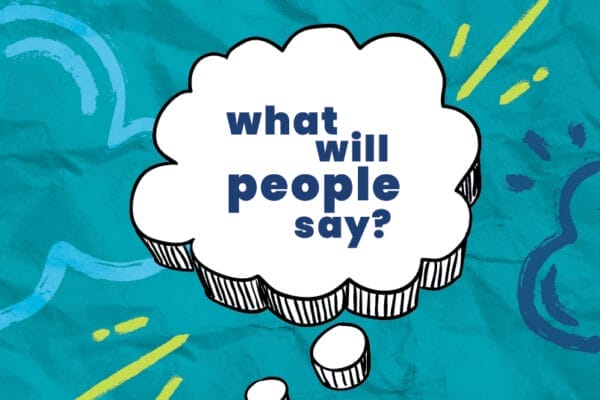
Stress & Anxiety
Understanding the basics of stress and anxiety, how to best manage these natural and protective responses, and when to seek help.
Read MoreOffering Help
Be there for a friend or loved one who is struggling with their mental health.
Read MoreNavigating Peer Pressure and Identity at School
The need to fit in—whether through appearance, behavior, or interests—is something almost everyone faces. This resource provides tips on how to handle peer pressure, and including setting boundaries and building a support network.
Read More
Turning Performance Anxiety Into Strength
Performance anxiety can arise in sports, arts, public speaking, tests, and more. It’s frustrating when nerves stop you from showcasing the effort you’ve put in, but you’re not alone in feeling this way.
Read More
Music Shapes Your Mental Health
This guide explores the emotional influence of music on mental health, and provides an activity worksheet for reflection on music and mood.
Read More
The Anxieties of Language Brokering
Many youth from immigrant households have to help translate sensitive information with family regarding topics like healthcare, law, and education, which can cause anxiety. This document shares resources and experiences from others to help aid those in these situations.
Read More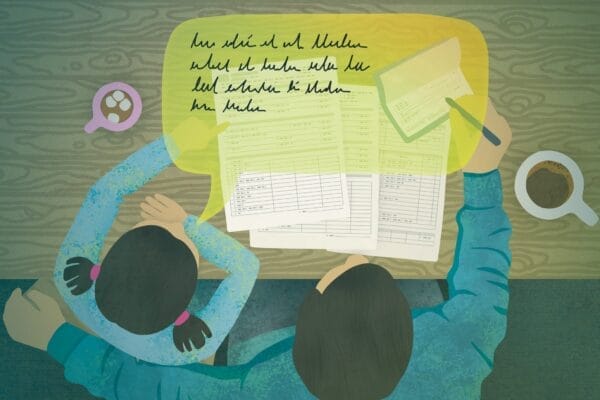
Three Ways to Support Transgender People’s Mental Health During Difficult Times
November 20, 2023 — As a transgender man, Transgender Day of Remembrance is a day that’s near and dear to my heart. For most transgender and gender non-conforming youth, it is one of the ways we honor our elders, peers, and history, even if we cannot come out. In 2023, we are honoring the 19 transgender and non-binary siblings […]
Read More
Mental Health in Schools: How to Support Students AND Educators
November 13, 2023 — As an educator in the classroom and a former principal on the South Side of Chicago, I’ve seen firsthand the challenges that students and staff alike face. American Education Week provides a crucial opportunity to shed light on an issue that continues to be ignored: the need to support the mental health of both students […]
Read More