

From Campus to Capitol Hill: Youth Push Congress to Transform Mental Health Care as Active Minds Advances Its Bipartisan Federal Bill — the Campus Lifeline Act
May 5, 2026 — The Campus Lifeline Act aims to expand access to campus mental health resources, and increase visibility of the 988 Lifeline among young adults.
Read More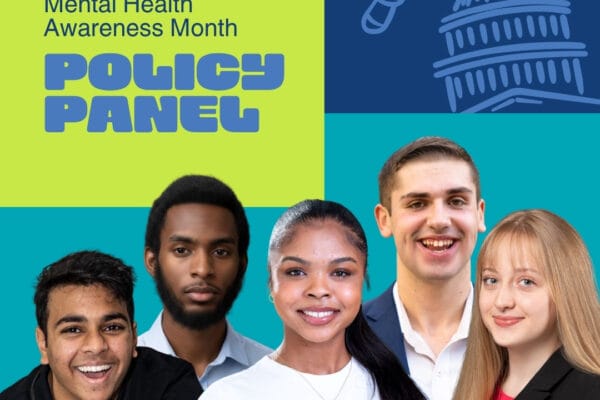
What Loss Inspires: A Mental Health Advocacy Institute Story
April 27, 2026 — Loss has a way of reshaping not only how we see the world, but also how we choose to move through it. During my freshman year of college, a friend died by suicide, an experience that fundamentally altered my sense of purpose. As co-captains on the basketball team, she taught me how to advocate for others and lead with purpose. Grieving her loss, I simultaneously felt a profound need to aid and prevent others from experiencing similar tragic losses. This became the foundation of my commitment to mental health advocacy. In the time that followed, I sought out ways to turn that commitment into action. I joined my university’s counseling services outreach program, where I worked to connect students with mental health resources and decrease stigma surrounding mental health. The next year, through the Active Minds Mental Health Advocacy Institute, I expanded my involvement to a broader level, engaging in initiatives that addressed both access and policy. Through these experiences, I learned that advocacy often begins with small, intentional steps. Mental health is still surrounded by stigma, and many individuals struggle in silence. I came to understand that simply asking someone how they are really doing can be powerful. Creating spaces where people feel seen and heard is not always easy, but it is essential. One of the most meaningful aspects of my time with the Institute has been updating the 988 Suicide and Crisis Lifeline on student mobile IDs, increasing access for 194,000 students. Being part of an initiative that resulted in a tangible, lasting impact showed me that advocacy can extend beyond conversation and into real systemic change. My work in outreach also revealed how barriers such as lack of awareness, fear of judgment, and limited access to care prevent many students from seeking help. These experiences reinforced my belief that education and accessibility are key components of prevention. At the same time, my involvement in national advocacy efforts highlighted the importance of addressing structural issues, including cost, provider shortages, and cultural stigma. Advocacy is not a separate part of my life; it has become the lens through which I approach everything I do. It shapes how I interact with others, how I respond to challenges, and how I define meaningful impact. My friend’s legacy continues to guide me, reminding me why this work matters. If you are considering getting involved in mental health advocacy, start where you are. You do not need to have all the answers to make a difference. What matters is your willingness to listen, to learn, and to act. Your voice has the power to create change. 🩷💚 Apply to this cycle of the Active Minds Mental Health Advocacy Institute by May 25, 2026, for the upcoming 2026-2027 academic year!
Read More
Mental Health Awareness Month Youth Panel
The panel of youth and young adult advocates will be encouraging Members of the Hill and viewers of the livestream to learn about 988 awareness and GLS.
Read More
How Policy Impacts Mental Health
Reach out to your representatives, share your mental health story, and stay informed on mental health-related legislation.
Read MoreMore than a Moment: A Conversation with BIPOC Student Mental Health Leaders
During this roundtable discussion, students share their own mental health journeys and experiences as BIPOC individuals.
Read MoreCarrying More Than History: Discrepancies in Black Healthcare
February 9, 2026 — February is often called the month of love, but it is also nationally recognized as Black History Month. It is a time to reflect on moments of pride, like Dr. Martin Luther King Jr.’s “I Have a Dream” speech, as well as the ongoing harm Black communities continue to face. One of those spaces is healthcare, a system where "care" often feels like a misnomer. For many Black patients, cold white walls aren't just unwelcoming; they are reminders of a system that frequently fails to see our full humanity. These experiences are not just history — they are happening now. A big contributor to these disparities is the lack of Black healthcare providers. While Black people make up about 13% of the U.S. population, only about 5% of physicians and a staggering 4% of psychologists identify as Black. This representation gap creates a massive barrier to access. When we do seek help, we are often met by providers who do not share our lived experiences, allowing unconscious bias to reinforce harmful misconceptions, including the false belief that Black people experience less pain. To be clear: this is a myth — and a very dangerous one. There are several other myths that have long shaped healthcare experiences for Black patients, including: The belief that Black people have thicker skin The belief that Black people have less sensitive nerve endings The belief that Black people’s blood coagulates (changes) faster The belief that Black individuals are more capable of handling trauma without professional mental health intervention All of these claims are false. Yet despite efforts to educate newer generations of healthcare professionals, the damage caused by these myths has already been deeply rooted in medical systems. Because of these misconceptions, Black patients often face: Racial bias in medical decision-making Harmful characterizations of their tone and behavior as aggressive Reduced access to appropriate pain management Providers overlooking or minimizing pain Underestimation of the severity of medical conditions These outcomes are not accidental. They are the result of systemic bias that continues to affect patient care. As a student pursuing medicine, I have witnessed the impact of these myths firsthand in clinical observations. Hospitals are places where I feel hope and excitement, but many Black patients experience something very different. Instead of comfort, they carry feelings of distrust, fear, and disappointment. These emotions are shaped by repeated experiences of being unheard or dismissed. Because of this history, many Black patients: Feel uncomfortable fully disclosing symptoms, in part out of fear of being labeled unstable Avoid seeking care due to fear of bias Worry they will not be taken seriously Face stigma surrounding mental health treatment These obstacles overlap and reinforce one another, creating a cycle that discourages care and worsens outcomes. Personally, I am fortunate to have access to Black medical professionals in my community, access that has made a difference in how safe and supported I feel in healthcare spaces. That access is the difference between feeling "seen" and feeling "processed." However, this is not the reality for everyone, which is why speaking openly about Black experiences in healthcare is one of the most important steps toward change. The gradual increase in the number of Black providers offers hope for the future. One day, healthcare will reflect teams of providers from many backgrounds, not just white coats on white faces. Until then, community care reminds Black patients that they are worthy of equal treatment. This Black History Month, don't just look back — help write the next chapter. If you’ve felt unheard in the exam room or dismissed by a counselor, know that your experience is real and the treatment you received is not okay. When we share our stories and support one another in finding culturally competent care, we create a ripple effect that challenges systemic bias. By reclaiming the narrative around Black bodies and creating safe spaces where we are truly heard, we move closer to a healthcare system rooted in dignity and equity. Did you know that you can share your story on the Active Minds blog? Visit our website to learn more — your words could be exactly what someone needs to hear.
Read More
“What Will People Say?”: Mental Health in Immigrant Families
July 24, 2025 — Mental health was never a topic that was brought up naturally in my house. In many immigrant households, there seems to be an unspoken understanding that struggles are meant to be endured, not expressed. When mental health is brought up, the topic is often quickly dismissed with a shrug and the familiar phrase: “What will people say?” That phrase, “log kya kahenge?”, carries weight. It’s not just about neighbors or relatives. It’s about preserving the image of strength, stability, and resilience that many immigrant families fought to build. But what happens when that image comes at the cost of our mental well-being? “I didn’t know how to explain I was hurting” I interviewed several high school students from immigrant families, all from different cultures, and each of them shared stories that mirrored my own. Sara, a Pakistani-American sophomore, told me, “When I first brought up that I was feeling anxious, my mom said that I should just pray more… It felt like my feelings didn’t count because they weren’t visible.” Another student, Luis, shared how his parents believed depression was a sign of weakness: “They told me I was being dramatic. But I struggled every day just to get out of bed.” Their stories highlighted a common thread: silence. In many immigrant communities, mental health isn’t dismissed out of cruelty, but out of a belief system where survival has always come first. Our parents and grandparents grew up in situations where therapy was rare, mental illness was misunderstood and stigmatized, and where vulnerability was dangerous. Why our elders think this way To understand the stigma, we have to first understand the history. For generations, mental health wasn’t something that could be safely acknowledged. In many parts of the world, mental health struggles were associated with shame, weakness, or isolation. Immigrants carried these beliefs with them, often unintentionally passing them down. For them, success meant security, education, and keeping the family together. Mental health was never part of their definition of success. But times are changing and so are we. How can we start the conversation So how do we shift the narrative without disrespecting our families or their values? Here are a few strategies that have helped me and my peers begin to build those bridges: 1. Start small and personal Instead of saying, “I think I’m depressed,” try starting with, “Lately I’ve been feeling really overwhelmed and tired.” Use words that feel less clinical and more emotional; it’s often easier for elders to relate to stress and exhaustion than to formal diagnoses. 2. Connect it to physical health Many immigrant families value physical health. Explaining how mental health affects sleep, appetite, energy, and the immune system can help build understanding. 3. Find a shared cultural value Whether it’s the importance of family, faith, or service, frame mental wellness as something that helps you show up stronger for those you love. Say something like, “Taking care of my mental health helps me be a better daughter/student/friend.” 4. Educate gently Share articles or stories that reflect your background. 5. Create space with others If it’s not safe to open up at home yet, find community elsewhere. School counselors, clubs, and online mental health spaces can offer validation and support until you’re ready to have those tougher conversations at home. I believe the cycle of silence ends with us. Our parents crossed oceans for a better life. Now it’s our turn to make sure that “better” includes emotional wellness. Let’s keep talking, even if it’s hard. Even if it feels awkward. Even if we hear “What will people say?”, because what we say matters too.
Read More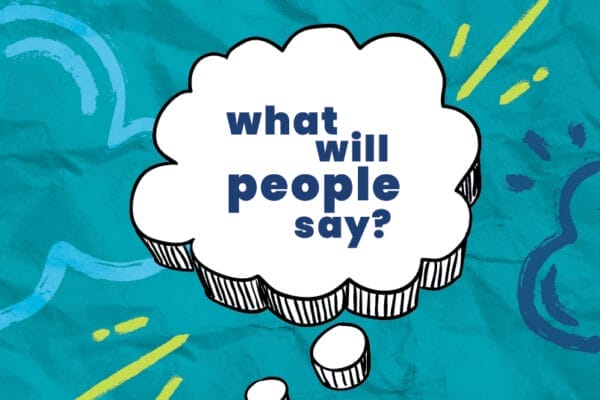
Mental Health Statistics
Key data supporting the need to change the conversation around mental health.
Read More
Supporting Others During Treatment
How to support a friend or family member who has started treatment for a mental health issue.
Read MoreReferral Resources
Support is closer than you think. Here are some ideas for where to go when you or a friend needs help.
Read MoreStress & Anxiety
Understanding the basics of stress and anxiety, how to best manage these natural and protective responses, and when to seek help.
Read MoreOffering Help
Be there for a friend or loved one who is struggling with their mental health.
Read More