
The Campus Lifeline Act aims to expand access to campus mental health resources, and increase visibility of the 988 Lifeline among young adults
WASHINGTON, D.C. — As the United States continues to grapple with a youth mental health crisis, Active Minds, the nation’s leading nonprofit mobilizing youth and young adults to transform mental health norms, has secured the introduction of the Campus Lifeline Act, the first-ever Active Minds-authored federal bill focused on strengthening youth and young adult mental health support on college campuses.
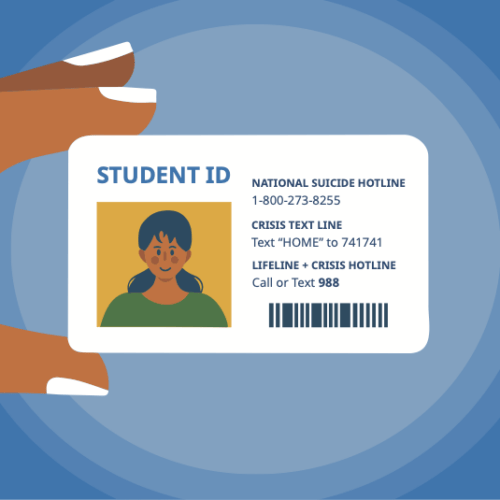
The Campus Lifeline Act, introduced in Congress on May 4, marks a major milestone for Active Minds as its first authored federal legislation. What began as a student-led idea from an Active Minds chapter at the University of Dayton a decade ago, is now gaining traction at the federal level, reflecting a broader push to make mental health support as visible and accessible as physical health resources. Led by Reps. Houchin (R-IN), Trahan (D-MA), Valadao (R-CA), and Pocan (D-WI), the bipartisan bill advances two core priorities: expanding access to mental health crisis resources by including the 988 Suicide & Crisis Lifeline on newly-issued student ID cards, and increasing federal investment in youth-informed mental health strategies on college campuses.
At the same time, there are signs of meaningful progress. Suicide rates among young people have dropped markedly since the launch of the 988 Suicide & Crisis Lifeline. A recent study published in JAMA found an estimated 11% decline in youth suicide deaths — representing thousands of lives saved — following the introduction of the nationwide crisis line. These findings highlight the life-saving potential of making 988 visible and accessible wherever young people are.
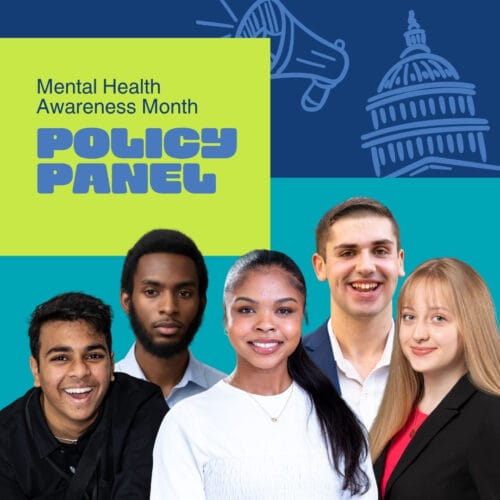
To mark the introduction of the Campus Lifeline Act and elevate youth-led policy solutions, Active Minds is hosting a congressional briefing today on youth-led policy solutions. The briefing, titled “Advancing 988 and Peer Support: Youth Voices Take the Lead on Capitol Hill,” convenes youth advocates, Congressional staff, and mental health leaders to spotlight solutions that prioritize prevention, access, and peer support.
While recent federal appropriations have helped direct funding toward mental health, legislation like the Campus Lifeline Act is critical to creating lasting, systemic change — ensuring that support for young people is not temporary, but built into the foundation of how campuses respond to mental health.
“We have a responsibility to make sure young people know where to turn in a moment of crisis,” said Rep. Houchin. “During Youth Mental Health Awareness Week, I’m proud to introduce the Campus Lifeline Act to expand access to the 988 Lifeline and strengthen support on campuses. This bill promotes early intervention, student engagement, and life-saving mental health resources. It’s our goal to make sure every young person knows help is available.”
“Every young person deserves access to compassionate, lifesaving mental health care when they need it most,” said Congresswoman Lori Trahan. “I was proud to lead the Garrett Lee Smith Reauthorization Act to strengthen and expand suicide prevention programs for young people, and this bipartisan legislation builds on that work by increasing awareness of and access to these vital services. By leveraging the reach of the 988 Suicide & Crisis Lifeline, we can connect more teens and young adults with the support they need, ensure they know help is available, and reach more young people before a crisis becomes a tragedy.”
Youth have long been excluded from decisions that directly impact their mental health — even as the urgency of the crisis remains staggering. Despite record levels of awareness around mental health, youth do not have a seat at the table, designing and creating the very programs and solutions that affect them. The results are devastating, as care remains out of reach for many youth, with 67% of young adults with mental health symptoms not receiving treatment, and fewer than 20% of youth with diagnosable conditions are supported.
At the same time, the scale of the challenge is growing. One in three youth lives with a diagnosable mental health condition, with 75% of conditions emerge by age 24. Yet systems remain largely reactive—even as suicide is the second leading cause of death among youth in the United States ages 10–34, and it is the third leading cause of death globally among individuals ages 15–29. [source: CDC]
The reality is that support often begins long before a crisis—and often outside of formal systems. Sixty-seven percent of youth say they would turn to a friend first when they’re struggling, effectively making youth the de facto mental health system. Youth are also under-resourced, with nearly 70% reporting they don’t feel equipped to help.
This disconnect — between where support begins and where systems intervene — highlights a critical opportunity to shift toward prevention, equipping youth with the tools, resources, and confidence to support one another. At the same time, youth engagement itself is part of the solution: those involved in advocacy report higher levels of purpose and connection, even as 32% of youth report anxiety and 37% report depression. [source: 2024-2025 Healthy Minds Study] Together, this reinforces a clear truth: youth voice is not only essential to driving change, it is central to improving mental health outcomes.
“Youth and young adults are championing a new era of mental health on the front lines of mental health support, yet our system still waits for crisis,” said Alison Malmon, Founder & Executive Director of Active Minds. “That’s why policies like the Campus Lifeline Act matter — they reflect solutions youth and young adults are already designing and leading.”
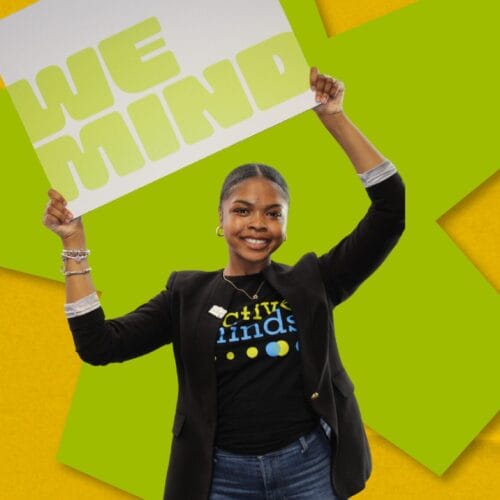
Building on this momentum, Active Minds is also launching We Mind, a national campaign grounded in a simple idea: when youth unite around mental health, they can’t be ignored. From campus organizing to federal advocacy, youth are increasingly shaping how mental health is understood, and how systems respond. This briefing underscores a broader shift: youth are not only experiencing the gaps in the mental health system, they are actively working to fix them and to shape mental health laws and legislation, including efforts like the Campus Lifeline Act.
“Youth-informed policy is not only powerful, it’s necessary. The best policies and laws are shaped by those with firsthand experience who understand both the challenges and the solutions,” said Anika Rahman, Director of Policy at Active Minds. “We are grateful to Representatives Houchin (R-IN), Trahan (D-MA), Valadao (R-CA), and Pocan (D-WI) for recognizing the importance of youth-led solutions and for their bipartisan leadership on the Campus Lifeline Act. What began as a youth-led initiative to place 988 on the back of student ID cards on campuses has now grown into the introduction of federal legislation with the potential to create nationwide change. Awareness and education around mental health resources are vital, and when youth and young adults lead, they help create solutions that are practical and accessible.”
What if help was always in reach? One example of this shift is the growing momentum behind expanding the visibility of the 988 Suicide & Crisis Lifeline, embedding it into everyday environments like student ID cards. Alongside increased federal investment in youth mental health, including funding for the 988 Lifeline and the Garrett Lee Smith Youth Suicide Prevention Program, these efforts signal a move from awareness to action, and from crisis response to prevention.
Youth advocates participating in the briefing bring both lived experience and policy insight to the conversation, underscoring how youth are not only navigating the mental health system, but actively working to improve it.
- Carson Domey, a student advocate from the University of Texas and Executive Director of the Coalition for Student Wellbeing, an organization dedicated to bridging the gap between students and decision-makers through advocacy, collaboration, and education. Working at the state and federal levels, Carson is helping lead efforts to integrate the 988 Suicide & Crisis Lifeline into student ID cards nationwide, an idea that originated with students and is now gaining traction in Congress. After losing a friend to suicide, Domey shifted his focus to removing barriers to care and strengthening mental health resources for youth.
- Naomi Hines, a youth leader and founder of an Active Minds chapter at Bowie State University, has turned her lived experience into advocacy, working to expand access to care and build peer-driven support systems on campus and in her community, also she is also the Founder and CEO of the Acts of Kindness Project, a service based initiative focused on uplifting underserved communities through outreach and engagement.
- Michael Landu brings a personal perspective shaped by his own experiences with depression, anxiety, and loneliness, and is passionate about ensuring that students navigating complex challenges, from financial stress to housing instability, have access to accessible, visible mental health resources like 988.
- Amy Senkerik is an undergraduate student at Barrett, the Honors College at Arizona State University, studying Biological Sciences and Global Health. Amy is involved in her community through the ASU Counseling Services Outreach Team, the Active Minds Mental Health Advocacy Institute, the American Foundation for Suicide Prevention Campus Walk Team, the Refugee Education and Clinic Team, and as an Emergency Medical Technician. Amy has neuroscience research experience at the Mayo Clinic, Cedars Sinai, Harvard Medical School/Boston Children’s Hospital, and Fulbright Canada.
- Ayaan Moledina is a 17-year-old Pakistani-American high school junior in Austin, Texas. He now serves as the Federal Policy Director at Students Engaged in Advancing Texas or SEAT, a movement of youth developing transferable skills and demonstrating youth visibility in policymaking by seeking a seat at the table. He spearheads local action, grassroots organizing efforts, and state and federal legislation touching issues ranging from mental health, suicide prevention, and youth civic engagement to education, racial justice, and gun violence prevention. Given his lived experiences with mental health, he is passionate about providing resources to struggling youth and expanding suicide prevention resources for students across the country.
“For most youth, support doesn’t start with a professional — it starts with a friend,” said Carson Domey, a student advocate on the panel. “But we’re often expected to navigate those moments without the tools we need. Expanding access to resources like 988 and making them visible in everyday spaces is a simple step that can make a life-saving difference.”
As Congress continues to address the youth mental health crisis, today’s briefing makes clear: the most effective solutions are those informed, and led, by youth themselves.
- Watch Policy Briefing Live: The congressional briefing will be live-streamed at https://streamyard.com/watch/bjUUd4dkBh6G
- Call to Action: Urge your member of Congress to support the Campus Lifeline Act by taking action today. Click here to complete the quick action alert, it takes less than 2 minutes.
To learn more about Active Minds, visit activeminds.org.
High-resolution images for editorial use are available here.