Active Minds Blog
Sharing stories, actionable ideas, and topics on mental health
Sharing stories, actionable ideas, and topics on mental health
So you want to come to Active Minds Hill Day + Mental Health Conference 2026? That is amazing! Whether you're a first-time attendee or a returning advocate, the experience of being surrounded by hundreds of young people who care deeply about mental health is genuinely unlike anything else. However, we do recognize that a possible hurdle, especially as a student on budget, is having the financial resources to attend. The good news is that there are funding possibilities available to you that may not be on your radar. Here are four ideas for finding the resources needed to make the trip happen: 2. Tap Your School's Student Activity Fund Here's something a lot of students don't realize - your tuition might already include a student activity or co-curricular fee. That money goes into a fund specifically designed to support student development, including attending conferences. Most schools have a formal process for requesting these funds, often through a student government office or dean of students. You'll typically need to submit a short proposal explaining what the conference is, what you'll learn, and how it connects to your campus community. The Active Minds Hill Day + Mental Health Conference checks every one of those boxes. Start early, since these requests often have deadlines and review periods. 3. Ask Your Academic Department Your major department likely has a student development or professional development budget and attending a nationally recognized conference absolutely qualifies. Reach out to your department chair, academic advisor, or a faculty member you're close with. Frame it around how the conference connects to your field of study, whether that's psychology, public health, social work, education, or really any major that intersects with student wellbeing. You don't need to have it all figured out. A simple, genuine email asking about available funding goes a long way. 4. Connect With Your Campus Active Minds Chapter or Wellbeing Club If your campus has an Active Minds chapter, this is your first call. Campus organizations receive institutional funding, and many use it specifically to support members in attending conferences related to their mission. If there's no Active Minds chapter, reach out to any mental health, wellness, or advocacy club on your campus as the overlap is strong, and they may be able to sponsor your registration or co-fund your travel. This is also a great way to build relationships before you arrive and potentially coordinate a group trip (which comes with a 20% group registration discount for five or more people). 5. Look Into Crowdfunding and Community Support Don't underestimate the people around you. Platforms like GoFundMe make it easy to share your story and raise money from friends, family, and your broader community. If you explain why you're going and your passion for mental health advocacy, what you hope to bring back to your campus or community, people often want to help. You can also reach out to local businesses, community organizations, or mental health nonprofits in your area that might sponsor a student attendee. A brief, heartfelt pitch about your advocacy work and the impact of attending can open more doors than you would expect. Funding a conference trip takes a little effort and some planning, but the resources are out there. The Active Minds Hill Day + Mental Health Conference 2026 is worth it and we hope to see you there. To learn more about the Active Minds Hill Day + Mental Health Conference 2026, visit activeminds.org/conference.
Grief hit me like a wave that never went back out to sea. There were mornings I didn't want to get out of bed. Nights I wondered why I was still here when they weren't.
The Active Minds Student Advisory Committee (SAC) is made up of young adult leaders who represent the Active Minds student voice nationally through media and other student forums. They also advise Active Minds national staff on student engagement, community building, program planning, Chapter engagement and management, National Conference planning, and program promotion. Powered by youth and young adults, the SAC is an integral part of the mental health work being done by thousands of Gen Z activists across the country. We’re excited for you to “meet” our 2026-2027 Student Advisory Committee cohort below. Kailani Goggans (she/her) is a student at Salem College studying Psychological Science & Public Health. She is deeply passionate about community care, advocacy, and wellness. On campus, she serves as President of Active Minds Salem College, Students for Reproductive Freedom, & Siblings Demand Justice. Through her work, she supports, educates, and inspires her peers to get involved in their community and use their voices. Kailani's academic and professional interests include attending medical school and obtaining her MD & master's in public health to bridge medical practice with community policy and action. In her free time, she enjoys indoor cycling, playing with her animals, and playing video games Dionisio (Dio) Taitano-Samora (he/they) is a student at Colorado State University Pueblo majoring in Public Health with minors in Spanish and Leadership Studies. He strives to utilize his experience as a first-generation Chicano-CHamoru student and his background with advocacy organizations, such as Young Invincibles and The Hub for Youth Centered Engagement, to create a more just education system for students of color. As of now, he also serves on Young Invincibles’ Youth Advisory Board for Colorado to advance policies that support young adults' mental health, access to healthcare, and the workforce. In the future, he aims to conduct research on access to STEM education and its connection to public health to advocate for health equity. Outside of academics, he enjoys hiking, trying new recipes, and language learning. Rhea Makkuni (she/her) is a student at Johns Hopkins University studying Molecular and Cellular Biology and Computer Science. She conducts research in the PALS Lab at the Johns Hopkins School of Medicine, applying artificial intelligence to the study of mood disorders. On campus, she serves as President of the Johns Hopkins chapter of Active Minds, where she leads local, community-based mental-health efforts that offer insight into global mental-health challenges, including limited continuity of care, fragmented systems, stigma, and barriers to navigating available resources. In her free time, Rhea enjoys biking, chatting nonstop with her friends, singing, and dancing! Amy Senkerik (she/her) is a student at Barrett, the Honors College at Arizona State University, majoring in Biological Science and in Global Health with a certificate in Evolutionary Medicine. She is deeply passionate about advocacy, suicide prevention, mental health, and public health. On campus, she works closely with the American Foundation for Suicide Prevention and on the outreach team for ASU’s Counseling Services. Last year, she was in the Active Minds Mental Health Advocacy Institute and spoke at the Active Minds Congressional Briefing in May. In addition to mental health advocacy, she leads the Refugee Education and Clinic Team, works as an Emergency Medical Technician, and conducts cancer-neuroscience research at the Mayo Clinic and Cedars-Sinai. She has interned at Harvard Medical School and as a Fulbright Scholar at the University of Toronto in summer research programs. Amy has a passion for advocacy across individual, community, and systemic levels and hopes to work as a physician at the intersection of mental health, research, clinical practice, and policy. In her free time, Amy likes to run, rock climb, travel, and spend time with her loved ones. She ran the 2024 TCS New York City Marathon and has studied global health abroad in Australia. Arjun Nair (he/him) is a student at Virginia Commonwealth University studying Biology in the Guaranteed Medical Admissions Program. He serves as President of Active Minds at VCU, where he works to reduce stigma surrounding mental health, introduce students to self-care practices, and strengthen student engagement in mental health advocacy. Professionally, Arjun is interested in advancing compassionate care and support for people with substance use disorders, as well as HIV prevention within substance use treatment settings. He currently serves on the Student Advisory Board of the American Academy of HIV Medicine and is involved in research examining substance use, behavioral health, and access to HIV prevention and care. As a member of the Active Minds National Student Board, Arjun hopes to strengthen connections among campus chapters and empower youth and young adults to become mental health champions in their own communities. Ivanna Sintes-Klein (she/her) is a student at The University of Texas at Austin majoring in Health Promotion and Behavioral Science with a minor in Health Communication. She is deeply passionate about mental health, leadership, health advocacy, and creating communities where people feel supported, heard, and empowered. At UT Austin, she is the Chapter Founder and President of Teddy Bear Hospital USA at UT, a national non-profit that uses play to help children ease the anxiety that's associated with going to the doctor while promoting health education and empathy. She also serves as a Longhorn SHARE Support Specialist, where she leads a community centered around the belief that we do not have to carry the burdens of others alone, while completing training in peer support, mental health first aid, and connecting students with resources. Ivanna was also appointed through UT Student Government as a Student Government representative on the Student Health Advisory Committee, where she is excited to contribute a student perspective to conversations surrounding campus health and mental health. Before transferring to UT Austin, Ivanna attended Texas State University, where she founded and led Bobcat C.A.R.E. (Creating Awareness, Resiliency, and Empowerment), the first mental health advocacy organization, which was named Organization of the Year during her time as President. Through these experiences, she has developed a strong passion for making mental health support more accessible and creating spaces where students feel comfortable asking for help. In her free time, she loves to play pool and write poetry. If you have any questions about how you can work with your community’s representative in taking action for mental health, please contact chapters@activeminds.org.
Three years ago, I came out as a lesbian. Spoiler alert — that is no longer the label I identify with. And that's okay. But for a long time, I didn’t think it was okay. And that fear of “misidentifying,” of coming out and then changing my mind, of just being what I perceived as wrong, kept me isolated, and my mental health suffered because of it. As a teenager, I kept my true feelings hidden for so long out of fear that I only had one shot to “come out,” and that if I prescribed to the wrong label my true identity would never be seen as legitimate. It was only once I recognized how unfair this was to myself that I was able to overcome my anxiety about coming out and live each day fully and freely, knowing that nothing was stopping me from evolving how I described my identity if I needed to. I had all the classic 14-year-old steps leading up to my coming out: making that one friend who swore to be my “platonic” soulmate, finding the LGBTQ+ section in my local library, deleting my history after searching up the fated “Am I Gay?” quiz, and finally, realizing that I did in fact want to date women. This brings us to the part in the story where I would come out: all sparkles and rainbows, maybe even with a choreographed dance to the sweet, sweet tunes of Diana Ross. Alas, I did not. Being a teenager facing the confession of my newfound sexuality to the world, I had a myriad of worries: Would my family be okay with it? How does one communicate with other lesbians? “Yes, I am one of you. Please approach me.”? How do I balance masculine and feminine influences in my clothing to feel comfortable? Will I forever have to feel awkward walking past the bra section in Target? And yet, despite all these concerns, the thing that kept me cozied up in the closet for so long was a simple four words. “What if I’m wrong?” It kept me up at night and distracted me from math class upon math class; this possibility plagued every potential thought I had about coming out. For someone just hearing that y=mx+b for the first time, figuring out how I was to identify for the rest of my life was a bit of a daunting task. I had no idea how to overcome the anxiety that felt intertwined with publicly coming out. I questioned myself along this line for a long time before I decided to rip off the BandAid. I finally got tired of watching Pride parades from the sidelines, and the furnished, cozy home I’d built in the closet started to get lonely. Only once this feeling finally outweighed my fear did I decide to come out. Following my coming out, these worries faded more and more every day. I dated women, went to Pride events, and finally got comfortable with my identity. That was, until quite a while later, I met this guy. And lo and behold, it turns out I could have feelings for a man as well. Horrifying, I know. A man! Here I was, having already gone through the trials in convincing everyone in my life that how I identified was real for me, and the situation just… changed. It was hard not to feel like I was back at square one — riddled with anxiety and unsure how to overcome the fear of coming out again. See, when a fifth grader learns multiplication, it is true. Seven years later, when the same kid discovers the terrifying world of calculus, the rules of multiplication are still true; they just also know more math now. Or, someone's favorite animal could be an elephant for 20-plus years. But then, one day, they learn about this fascinating species of jellyfish that they completely adore. In these situations, no one laughs at them and points. No one says, “Oh, haha, she got more information, and therefore her headspace adapted? Now her favorite animal is a Jellyfish? Lame!” So tell me, why is that any different from how people identify? Three years ago, I came out as a lesbian. Then I grew and changed, learned more about myself, and now I identify more with the general term of queer. This flux and the nonspecific label I choose to use now do not make my current sexuality any less legitimate. Discovery is one of the basic parts of humanity. It’s what keeps life interesting, keeps life beautiful. We ought not to be afraid to keep our lives beautiful, whether that means coming out once, twice, or a hundred times. And for those who may know someone struggling to overcome the anxiety they’ve associated with coming out, be there for them. Having someone in your corner makes a massive difference. So, for all my fear about coming out and being “wrong,” it turns out that this fear was truly just change wrapped up in a big scary trench coat all along. But I’m not mad about it. For now, I get to sit in front of my computer and write: You can love who you are now and still one day love who that becomes. Read More
I was fourteen years old when I was introduced to the space of mental health advocacy. At this time, I began training to become a hotline listener at Teen Line, a peer crisis line in Los Angeles. I was fascinated by this organization that not only served youth but actively centered their engagement. After all, youth are often quieted and discredited in the mental health space despite youth-led advocacy and peer support being necessities in erasing taboos and improving the current landscape. Teen Line broadened my understanding of advocacy, centralizing young people at the front lines, and transformed how I viewed mental health support. Without this psychoeducational and stigma-reducing program, I would have never pursued professional help for my own mental health or a professional career in mental health. Having worked with many phenomenal mental health organizations, educational spaces, and legislative initiatives over the years, I have found that speaking openly about mental illness is not restricting or shameful but instead helps to erase the stigma about mental health that has persisted for generations. Youth are intrinsically motivated to be youth mental health advocates because we are the ones directly experiencing the youth mental health crisis. We are incentivized to learn and advocate because we care for our own well-being and the well-being of our loved ones. At fourteen, I came to the mental health space with a deep-rooted passion for people, specifically, understanding people without taking on a “savior” or problem-solving role. My heart has been continuously postured towards advocacy from a human-centered approach ever since. I did not know at fourteen that I would be nineteen years old, holding space representing youth at the nation’s first Youth Mental Health Youth Action Forum at the White House. I speak openly about mental health among organizations, schools, lawmakers, and loved ones (while ensuring compassionate, sensitive, and proper language) because I understand how vulnerability breeds vulnerability. This openness is a prevalent theme among the Gen Z community, starkly contrasted with previous generations when discussing mental health. Older generations have much deconstruction to do as they have more years of misconceptions and taboos around mental health to unlearn. Gen Z is extremely receptive to discussing mental health, a concept I have witnessed during my almost seven years in youth mental health and suicide prevention work. When a topic is stigmatized and harmfully marked by silence throughout history, there comes a point where society can no longer ignore it. Furthermore, Gen Z is more socially oriented and focused on systemic activism paired with individual work in the mental health space. Youth mental health advocacy is unparalleled because: Mental health advocacy counteracts barriers to help-seeking. Mental health advocacy creates tangible pathways for youth in social impact and career trajectories to become empowered and equipped to support themselves, support others, and better the future. Advocating for changes in mental health legislation allows systemic and underlying issues to be comprehensively addressed rather than solely treating symptoms of a larger societal experience. However, it is not enough for Gen Z to share and reach out to older generations. Older generations are responsible for creating collaborative opportunities for youth to be at the forefront of work. Young people are hurting. This should not be stated in an overly alarmist or fatalistic way but in a real one. It can feel helpless attempting to produce hope while reconciling the overarching state of mental health with personal experiences. I believe in validating this reality but am boundlessly prompted towards channeling this care for the greater good. Caring hurts and can be a burden, but I think this burden is a form of strength that can sustain our work and provide us with a “why” as we navigate the complexities of life. I have experienced many ways in which advocacy has been a protective factor in my mental health. Often, individuals relegate the mental health field to one that lacks hope, but I fervently posit that it is perhaps the space where I have seen, felt, and experienced hope the most. I see hope when legislation around mental health education, treatment access, and crisis services is improved. I see hope when I see cultural stigmas and mental health taboos broken down in my Middle Eastern family, where they become more receptive to asking for help. I see hope when individuals across campus ask me about my Active Minds Chapter on campus and how they can get involved. Being a mental health advocate is a title I embrace with gratitude and care. It pushes me to be a perpetual learner and active agent in my interactions, community, and the larger world. Humanity and unity must be prioritized as central for current and future mental health efforts. We cannot dismiss the personhood of mental health, the emotionality of mental health, and the stigmas, prejudices, and discrimination enacted upon those experiencing mental health issues. Read More
Welcome our fall 2023 interns, some of our community’s biggest champions for mental health! Each semester, the class of interns at Active Minds plays an integral role in everything from program development, marketing and communications, fundraising and development, and so much more. We couldn’t do our work without our interns, and our team at Active Minds is excited for our community to meet them and see their hand in all of the work we do over the coming months. Alissa Kato (Research and Evaluation) 1. Where are you from? A few different places, but most recently, Orange County, CA! 2. Where do you (or did you) go to school, and what is/was your major? I am attending Boston University and pursuing an MPH with an emphasis in community health, mental health, and substance use. 3. What department are you interning for, and what do you hope to learn this semester? Research and Evaluation! I am a returning intern from the summer, so this semester, I hope to continue expanding my data analysis skills. 4. Describe your perfect day. This is a tough one! I think my perfect day would be spent outdoors, like going hiking or skiing all day and finishing the day with a big dinner with family and/or friends. 5. What is your dream job? My dream job is to be a travel photographer or Influencer! 6. Why did you want to intern for Active Minds? I wanted to intern for Active Minds because I am passionate about mental health advocacy for young adults. I was particularly drawn to Active Minds because of their desire to help center young adult voices in the conversations about their mental health. I am also interested in developing and strengthening my ability to analyze data that supports mental health programming. 7. What is your favorite inspirational quote? Hmm... I don't necessarily have a favorite inspirational quote. But, a quote I have liked most recently is, "Be curious, not judgmental.” Caroline Ross (Graphic Design) 1. Where are you from? I am from Fairfax, VA. 2. Where do you (or did you) go to school, and what is/was your major? I attended George Mason University and received my BFA in graphic design this past summer. 3. What department are you interning for, and what do you hope to learn this semester? I am the graphic design intern for the Marketing and Communications team. This semester, I hope to grow as a designer, colleague, and advocate for mental health! 4. Describe your perfect day. My perfect day is being curled up on the couch with my cat Archie, watching HGTV, or sketching on my iPad while sipping a coffee (bonus points if it’s raining). 5. What is your dream job? My dream job is to be a successful, influential graphic designer. No matter where I am employed, I want to use my creative powers to create a positive change. 6. Why did you want to intern for Active Minds? As both an artist and mental health advocate, Active Minds has given me the opportunity to create influential designs to change the conversation around mental health. 7. What is your favorite inspirational quote? “Everything you lose is a step you take.” — Taylor Swift. Hermella Moses (Community Programs) 1. Where are you from? I am from Alexandria, VA. 2. Where do you (or did you) go to school, and what is/was your major? I go to Virginia Commonwealth University, majoring in health, physical education, and exercise science with a health science concentration. 3. What department are you interning for, and what do you hope to learn this semester? I’m interning for the Community Programs Department. 4. Describe your perfect day. A perfect day for me would start with a great workout session followed by breakfast at my favorite brunch spot (Ted's Bulletin). Then, I would spend the rest of my day doing my favorite hobbies, like reading, sewing, and painting, either by myself or with my friends. Lastly, I would end my night with dinner and a movie with my family. 5. What is your dream job? My dream job is to be a content creator. 6. Why did you want to intern for Active Minds? I have always been passionate about mental health. Active Minds is an accessible organization focused on mental health and reducing stigmas around many issues that aren't spoken much about aligned with my beliefs. After looking more into the organization, I knew I wanted to be part of it and also learn more ways to address and help people struggling with mental health. 7. What is your favorite inspirational quote? “There is no failure. Either you win, or you learn.” Imani Kerre-Mongi (Community Fundraising) 1. Where are you from? I’m from Hopkins, MN. 2. Where do you (or did you) go to school, and what is/was your major? I am a sophomore at American University majoring in international studies and minoring in sociology. 3. What department are you interning for, and what do you hope to learn this semester? I am currently interning for the Development team as a Community Fundraising Intern. Since this is my second time interning for this department, I hope to develop my professional skills by looking deeper into the fundraising process, learning how to better craft emails and messages for past, potential, or current fundraisers, and generally bettering my analytical and communication skills. 4. Describe your perfect day. As someone who enjoys venturing around the city, my perfect day would consist of thrifting (probably at the Georgetown Flea Market), buying myself some boba, and sitting by the water listening to music by my favorite artists, Ivan Ave or Cleo Sol. 5. What is your dream job? I hope to one day work as a diplomat combatting terrorism abroad or for the United Nations, specifically the United Nations International Children's Emergency Fund (UNICEF), as I hope to give back to my community in Africa by working with underprivileged youth. 6. Why did you want to intern for Active Minds? I got into mental health advocacy towards the end of my high school journey, and ever since then, I felt a strong attachment to advocating for mental health awareness. Being able to intern for Active Minds allows me to learn first-hand how conversations surrounding mental health can be more accessible for various communities, which relates to my goals of working with youth in conflict areas. 7. What is your favorite inspirational quote? "Just keep swimming," by Dory from the animation “Finding Nemo.” I spend a lot of my free time rewatching cartoons I used to love as a child, and I feel like this quote can be applied to real-life situations, especially during times of stress. Jadon Demeritte (NextGen Initiatives) 1. Where are you from? I’m from Nassau, Bahamas. 2. Where do you (or did you) go to school, and what is/was your major? I am a junior public health and medical technology major at Hartwick College in Oneonta, NY. 3. What department are you interning for, and what do you hope to learn this semester? I am interning with the NextGen Initiatives Team this semester. I am excited to grow personally and professionally. I look forward to networking within the mental health field and learning how to articulate my creativity through oral and written communication. 4. Describe your perfect day. My skin is glistening in the sun. My curls are flowing in the ocean breeze. Summer Time by Vybz Kartel is blasting from the speaker. My friends and I are giggling and talking while admiring the view of the crystal clear waters. Sand is everywhere, but it does not matter because I am at the beach, my favorite place on earth. 5. What is your dream job? I am still working on what my dream job is, but I know that my dream job allows me to flourish and learn new information. My dream job has a welcoming atmosphere. It is filled with appreciation and has a healthy work-life balance. 6. Why did you want to intern for Active Minds? I left the Active Minds 2023 Mental Health Conference inspired and eager to be more involved with the organization. I wanted to be a part of a community where young people’s experiences, thoughts, and ideas are amplified and supported. 7. What is your favorite inspirational quote? "We can't plan life. All we can do is be available for it." — Lauryn Hill. Liah Lawson (Policy) 1. Where are you from? I am from Atlanta, GA. 2. Where do you (or did you) go to school, and what is/was your major? I attend the University of Virginia, majoring in public policy and minoring in Indigenous studies. 3. What department are you interning for, and what do you hope to learn this semester? I’m interning for the Policy Team, and I hope to continue learning how to mobilize youth efficiently and effectively and how to talk to legislators. 4. Describe your perfect day. I am a warm-weather girl, so any day spent in the sun is already on its way to being perfect. I would love to be at a lake, a waterfall, or another body of water, having a picnic with my best friend. 5. What is your dream job? My dream job would be to be a policy analyst or program associate for a non-profit organization revolving around mental health, criminal justice, or reproductive justice. 6. Why did you want to intern for Active Minds? I have been passionate about mental health for a long time and saw this as an opportunity to engage in the mental health policy realm from the nonprofit sector. I wanted to enact change and learn more about the intersection of nonprofits and policy implementation. 7. What is your favorite inspirational quote? "Don't walk in front of me; I may not follow. Don't walk behind me; I may not lead. Walk beside me and be my friend." Michelle Kim (Communications) 1. Where are you from? I’m from San Diego, CA. 2. Where do you (or did you) go to school, and what is/was your major? I attend the University of California, Santa Barbara, double majoring in psychological and brain sciences and communication. 3. What department are you interning for, and what do you hope to learn this semester? I’m interning for the Communications Team and am thrilled to join the team that brings the stories we highlight to life. I enjoy writing, so being able to channel this passion into mental health advocacy is really exciting! I hope to learn more about SEO, brand identity, and understand what it takes to uphold Active Minds’ mission of helping the youth. 4. Describe your perfect day. My perfect day would start with me eating chicken and waffles for breakfast, hanging out with my sister and mom, and then going to eat sushi on the beach and watch the sunset. 5. What is your dream job? My dream job would be in brand marketing or creative direction in the entertainment industry. 6. Why did you want to intern for Active Minds? Active Minds is an organization that aligns with my values of empowerment for young people, and being able to intern here gives me a chance to be a part of that. Being able to change the narrative and stigma surrounding mental health has always been something I’ve stood for, and I’m happy to do it alongside the Communications team. 7. What is your favorite inspirational quote? "Doubt kills more dreams than failure.” Morgan Chochon (Development) 1. Where are you from? I am from Omaha, NE. 2. Where do you (or did you) go to school, and what is/was your major? I am a junior at American University and am majoring in International Studies. 3. What department are you interning for, and what do you hope to learn this semester? I am interning with the Development Team and hope to learn about how to effectively communicate with donors. 4. Describe your perfect day. My perfect day would start off with a long walk and a big plate of pancakes. I would spend my morning and afternoon reading, journaling, and buying new plants. Then, I would grab an early dinner with my friends and catch up with them. 5. What is your dream job? My dream job would be working at a nonprofit whose mission I care about! 6. Why did you want to intern for Active Minds? I applied for an internship at Active Minds because I wanted to be a mental health advocate, but I did not know where to start. I hoped to learn more about what the organization was doing to support youth mental health. Now, I feel confident about starting conversations surrounding mental health and want to help spread awareness about mental health resources. 7. What is your favorite inspirational quote? My favorite inspirational quote is, "Trust the seeds you are planting.” Stephani Clark (Social Media) 1. Where are you from? I’m from Chino Hills, CA. 2. Where do you (or did you) go to school, and what is/was your major? I’m attending Howard University and majoring in psychology with a TV/film minor. 3. What department are you interning for, and what do you hope to learn this semester? I’m interning for the Social Media Team. I hope to learn to use social media as a valuable resource for spreading mental health awareness! 4. Describe your perfect day. A perfect day for me is waking up before 12, heading to the beach, and relaxing. It would include an activity such as painting, tanning, or just floating in the ocean. I would eat a toasted sandwich while listening to Sublime, Jhene Aiko, or Cleo Sol. I would stay until sunset and hopefully see some dolphins. Then, I'd head home listening to Sade just in time for dinner with my friends and family. 5. What is your dream job? My dream job is to become a therapist/TV personality who cultivates healthy conversations surrounding mental health awareness. 6. Why did you want to intern for Active Minds? I wanted to intern for Active Minds because, as an advocate for mental health and therapy, I want to work for an organization that has been a pioneer in the quest to eliminate the stigma surrounding mental health awareness. 7. What is your favorite inspirational quote? "If they don't give you a seat at the table, bring a folding chair." — Shirley Chisholm. Zulema Reyes (Partnerships) 1. Where are you from? I’m from Santa Ana, CA. 2. Where do you (or did you) go to school, and what is/was your major? I’m part of the University of Notre Dame class of 2023 and studied sociology and entrepreneurship. 3. What department are you interning for, and what do you hope to learn this semester? I’m part of the Development Team! I hope to learn more about getting brands and sponsors to work with a non-profit and the best practices for mental health awareness. 4. Describe your perfect day. I spend the morning with my family, sunbathing at the beach with my best friends in the afternoon, and going to dinner and watching the Disneyland fireworks with my boyfriend in the evening. 5. What is your dream job? My dream job is to be on the Marketing or Social Impact Team for a beauty company and own my own cafe on the side. 6. Why did you want to intern for Active Minds? Being a Latina, mental health is not talked about in my house, and I know others have a similar experience. Therefore, I wanted to be part of an organization that helps young adults like myself become aware of the mental health resources out there. 7. What is your favorite inspirational quote? "You miss 100% of the shots you don't take —Wayne Gretzky." — Michael Scott. Learn more about the Active Minds internship program and how you can apply to join us next semester here. Thank you again to each of our fall 2023 interns; we are so grateful to have you! Read More
Growing up, I always felt like an outsider. The world seemed to operate in binary terms, forcing me to choose between being straight or gay. This can be a difficult path for anyone, but it becomes even more arduous when faced with the complexities of identity and acceptance. As someone who identifies as fluid, the intersection of sexuality and mental health is a complex and undeniable issue provoked by society's narrow-minded views. As a person of color with a parent who solely understood hetero- and homosexuality as strict binaries, my upbringing was marked by unique struggles and conflicts. Their experiences and cultural background shaped their perspective, making it difficult for them to comprehend or accept any other form of sexual orientation. This lack of understanding created a disconnect between us, as I struggled to express my true self while fearing rejection or disappointment. In communities of color, traditional gender roles and expectations often prevail. Masculinity is highly valued, while anything deviating from the norm is met with skepticism or even hostility. Growing up in this environment meant constantly grappling with my own identity and trying to reconcile it with societal norms. For me, navigating adolescence was already a tumultuous period filled with self-discovery and confusion. At first, it felt liberating to acknowledge my attraction toward both sexes. However, the added weight of feeling misunderstood by one's own parents can be overwhelming. It felt like society perceived this as having "twice the options," but it quickly felt more like twice the burden for me. It forced me to seek solace outside of my immediate family circle, searching for acceptance among friends or within LGBTQ+ communities. Despite these challenges, growing up in such an environment also fostered resilience within me. It taught me the importance of self-acceptance and embracing diversity in all its forms. I learned that being true to oneself is more important than conforming to societal expectations. Meeting others who shared similar experiences reminded me that I was not alone in this journey. Over time, I realized that embracing my fluidity was not a burden but a gift. It allowed me to see beyond societal norms and appreciate the beauty in all individuals, regardless of their gender identity or sexual orientation. Today, as an advocate for LGBTQ+ rights, I strive to create a world where everyone can express their true selves without fear or shame. My journey has taught me that labels are limiting; they confine us within narrow definitions when our hearts yearn for boundless connections. Discovering my sexuality and navigating its intersection with my mental health has been both challenging and rewarding. Growing up as a person of color with a parent who was only familiar with a more rigid, binary view of heterosexuality and homosexuality presented unique obstacles on my path toward self-discovery and acceptance. However, it also instilled valuable lessons about resilience and staying true to oneself despite external pressures. Through this journey, I have understood that embracing diversity is essential for personal growth and fostering inclusivity within society as a whole. By embracing our true selves, we can break free from the burden of societal expectations and find genuine happiness in our relationships. As we go forward in society, destigmatizing the LGBTQ+ population takes a collaborative effort from everyone — schools, employers, healthcare professionals — as well as improvements at both the individual and systemic levels. We can create a more inclusive society where everyone feels valued regardless of their sexual orientation or gender identity by encouraging acceptance and providing the appropriate support mechanisms for better mental health outcomes among this marginalized population. I would love to see these changes made in small and impactful areas of life, such as families, schools, and personal social groups. Read More
Self-care is something that everyone talks about — but what does it actually mean, and how do you create a routine that is both effective and sustainable? As a student, self-care isn’t always easy to fit into my schedule, but it remains an important part of taking care of our mental health. As I’ve learned more about self-care over the years, I’m excited to share more about the art of nurturing our minds and bodies. From mindfulness techniques to fostering meaningful connections, let's unravel the layers of self-care with insights and practices to enhance our well-being and find the importance within ourselves. Self-care is often misconstrued as mere indulgence, a luxury reserved for spa days and exotic vacations. However, it's so much more than that. At its core, self-care is about taking deliberate actions to promote our own physical, emotional, and mental health. It's a practice that allows us to replenish our energy, reduce stress, and ultimately lead a more fulfilling life. Here are some tips for ensuring that your self-care routine is both realistic and refreshing: Mindfulness: Let's begin our self-care journey with mindfulness — a cornerstone of well-being. Mindfulness is the art of being present, of fully engaging with the here and now. In a world that constantly demands our attention, this practice allows us to step back, breathe, and appreciate the current moment. Example: Start your day with a few minutes of mindful breathing. This simple practice can set a positive tone for the entire day. Close your eyes, take a deep breath in, hold for a few seconds, and then exhale slowly. Feel the tension melt away and a sense of calm wash over you. Fostering Meaningful Connections: Self-care isn't just about personal practices; it's also about our relationships with others. Nurturing meaningful connections is vital for our emotional well-being, and these relationships can be nurtured through open conversations about mental health. Example: Take the opportunity to reach out to friends and loved ones. Ask how they're doing and truly listen. Share your own experiences and encourage them to do the same. Creating a safe space for open dialogue can strengthen bonds and promote healing. Healthy Habits for the Body: Self-care extends to our physical health as well. Maintaining a healthy body is essential for overall well-being. I encourage you to incorporate small but impactful changes into our daily routines. Example: Consider taking a daily walk or practicing yoga. These activities not only improve physical health but also provide mental clarity. Additionally, prioritizing a balanced diet and staying hydrated helps to fuel your body and mind. Self-Compassion: Self-compassion is a critical element of self-care. Many of us are our harshest critics, often pushing ourselves too hard. It's okay to take a step back, to forgive ourselves for our mistakes, and to treat ourselves with kindness. Example: Practice self-compassion by acknowledging your accomplishments, no matter how small they may seem. Celebrate your victories, and when you stumble, remind yourself that it's all part of the journey. Let's remember that self-care is not a one-time occurrence but a lifelong journey. It's about making choices that support our well-being each day and finding balance and harmony in our lives. I invite you to join me in exploring mindfulness, nurturing our relationships, prioritizing physical health, and practicing self-compassion. These are the building blocks of a sustainable self-care routine, and by incorporating them into our lives, we can truly enhance our overall well-being. Read More
Last year, more than 49,000 people were victims of suicide, the highest ever recorded in U.S. history. Although talking about mental health and suicide can be challenging, it is a conversation that we can’t avoid. Every year, too many young lives are impacted by mental health challenges, making suicide a significant concern. That's where what Active Minds calls “Youth Champions” come in — parents, guardians, teachers, administrators, and community leaders alike — who all have an essential role in suicide prevention. As the current president of an Active Minds Chapter and a member of the Active Minds Student Advisory Committee, I’d like to share how adults can build and uphold a positive mental health culture and explain why it is a critical part of suicide prevention: Dedicate time to educate yourself: Learn how you, as an individual, can best support youth experiencing a mental health challenge. A simple tool such as A.S.K. can be incredibly valuable in allowing someone to feel heard and valued. Practice adjusting your word choice to navigate tough conversations with ease. It is just as important to understand the warning signs of suicidal ideation and be aware of available resources that you can tap into. These resources equip adults with skills that convey empathy and provide informed support. Create safe spaces for communication and support: Adults should use the resources at hand to create environments where young individuals feel comfortable discussing their thoughts and emotions without fear of judgment. Being non-judgmental, respecting privacy, and ensuring confidentiality can encourage open dialogue, which leads to early intervention and reduced mental health stigma. Educators and employers, offer to be a resource to your students and employees in your verbal introduction and documentation, including job descriptions and syllabi, and make it clear that you are a trusted space and can help those you interact with find help when needed. Learn how to help others develop a sense of resilience: Resilience is crucial for youth mental health and suicide prevention. Adults can help young people build resilience by fostering problem-solving skills, adaptability, and effective coping mechanisms. Encouraging the youth around you to learn from setbacks and develop a growth mindset empowers them to navigate life's challenges. Be cognizant of the language you use when talking about mental health and its challenges, and focus on empowering youth and young adults rather than critiquing them when it comes to struggles with mental illness. Collaborate with student advocates: Youth Champions who collaborate with student advocates, such as peer support groups and student-led mental health initiatives, also enhance suicide prevention efforts. This past August, I had the pleasure of working with fellow mental health advocates, youth and adults alike, to bring Send Silence Packing® to my university’s campus. By working together, we transformed a section of campus into a supportive community. It encouraged other campus community members to come together and support the cause, like the football team and the campus counseling services. Through collaboration, adults and young advocates amplify their impact, ensuring that youth voices shape mental health programs and support systems, strengthening the collective effort to prevent youth suicide. Influence policy change: Leverage your position at work, school, or community to shape reform for suicide prevention. For example, Youth Champions can advocate for implementing evidence-based mental health education programs like Kognito, which educates students, peers, and other adults alike on how to support one another in times of struggle. By championing the adoption of these programs, adults can play an integral role in incorporating mental health education into work competencies and school curriculums. They can also initiate engagement between mental health experts, higher leadership, and youth advocates to design large-scale mental health campaigns that help turn suicide prevention from a concept to a community initiative. Proactive approaches like these pave the way for a more compassionate and informed society, where the well-being of all, especially young individuals, is prioritized and suicide prevention efforts are strengthened. Every September, we take a moment to remember the lives lost to suicide and reflect on what we can do to ease this problem. This Suicide Prevention Month and beyond, I encourage you to pledge to be vigilant, compassionate, and informed allies for our youth. Together, we can make a lasting positive impact, offering hope, strength, and the support needed to save young lives. Read More
In the face of a youth mental health crisis, the urgency for inspiring mental health change has never been more apparent. U.S. Surgeon General Vivek H. Murthy has sounded the alarm, highlighting that a youth mental health crisis is already brewing. Startling data from the Centers for Disease Control and Prevention reveal that more than one in five youth ages 13 to 18 grapple with serious mental illnesses at some point in their lives. We have heard these statistics over and over again, and it is time that we take action. Introducing Unité: a youth-based mental health initiative focused on destigmatizing mental health and fostering emotional resilience in youth communities striving toward this goal, and founded by me — a Gen Z mental health advocate. Unité aims to increase mental health education, awareness, advocacy, and resources to work towards the greater goal of cultivating mental well-being among youth and adolescents. A distinguishing hallmark of Unité's approach is its unwavering commitment to meeting young individuals right where they are. By harnessing the power of its website and social media, this initiative seeks to create a safe and engaging space to increase education and awareness about mental health and psychology. The "Dive Deeper" series, hosted on our Instagram, delves into the complexities of various mental health challenges facing youth. It provides a comprehensive exploration of risk factors, early warning signs, and a plethora of resources, allowing youth to comprehend these issues efficiently. Further, Unité’s articles, infographics, resources, and videos strive to cultivate a culture where youth are better informed about mental health. Unité also strives to increase education despite borders and barriers. Recognizing the need for universal access to mental health education, Unité has created its “Global Mental Health Hub,” where we disseminate multilingual mental health resources. By providing translated informational infographics and articles, Unité ensures that language and stigma are no longer barriers to seeking a better understanding of mental health and psychology topics. Throughout the summer, Unité released a powerful initiative – the July Journaling Challenge. With a daily dose of free journal prompts throughout the month, the initiative aimed to guide youth and adolescents through accessible self-care techniques. This simple yet impactful endeavor illuminated a path toward nurturing emotional well-being, proving that change can indeed begin within oneself. The journal prompts can be found on our Instagram. In a testament to our work in the mental health space, Unité recently attended the Active Minds 2023 Mental Health Conference. Invited to showcase our work at the Innovation Expo, Unité stood as a shining example of the mental health change that youth can make. Undoubtedly, we are in a youth mental health crisis. However, organizations like Unité and Active Minds reveal the power each new initiative has to make mental health change and increase well-being within our communities — they show the incredible capability of Gen Z to truly be the mental health change we need to see. Read More
Content Warning: This piece contains mentions of suicide. Life for us turned upside down on Feb. 12, 2022. Our dear son Sanjeev Panja lost his life to suicide at the very tender age of 20. Sanjeev was caring, loving, funny, goofy, and an extremely motivated kid — always laughing and making others laugh. The pain and grief we are going through are unimaginable, and no parent should have to go through what we are going through. If it can happen to our family, it can happen to any other family. That was when we decided that we had to turn our pain into purpose, and found Active Minds, who helped us engage our community thoughtfully in suicide prevention through fundraising. Sanjeev will forever be remembered for his radiant smile, infectious laughter, and unique sense of humor. To us and the world, he was a bundle of endless energy, extremely motivated, and full of life. To him, his world was his family and friends. He seemed to have the perfect balance in life. He always kept up with his studies, loved sports, and enjoyed having lots of fun with his friends. We did not see any signs in Sanjeev — we had always openly communicated with Sanjeev on all aspects of life, but it never occurred to us to ask him about his mental wellness. It never dawned on us to start a conversation with him about mental health. Throughout the pain of grieving Sanjeev, we quickly realized that if this tragedy can happen to our family, it can happen to any other family. This realization is when we decided that we had to turn our pain into purpose. In our quest to find purpose, we stumbled across Active Minds. The work of Active Minds resonated with what we had in mind and heart. It did not take us much time to decide that we wanted to work with Active Minds to change the conversation around mental health, especially among teens and young adults. And so we conducted a 5K run in partnership with Active Minds on the eve of Sanjeev’s 21st birthday (Nov. 26, 2022). The run was a resounding success, and we raised about $32,000 for Active Minds. The team at Active Minds, specifically Active Minds’ Senior Development Associate of Community Fundraising, Sam Pireneo, worked tirelessly with us to make the run a success. The event helped us spread our story and start the conversation about mental health in our community, more specifically, the South Asian community. We hope to keep Sanjeev’s legacy alive for generations to come and continue our vision of changing the conversation around mental health and preventing suicide in teens and young adults. If you’d like to learn about how you can partner with Active Minds to engage your community in suicide prevention efforts through fundraising, please visit their website. If someone you know is struggling, please visit our website for information on how to offer help. If you or someone you know needs immediate support, please refer here for crisis resources or dial 988 to reach the 988 Suicide & Crisis Hotline. Please be aware of the signs and symptoms of mental illness, and remember, you are never alone. Read More
From middle to early high school, I struggled with suicidal ideation, depression, disordered eating, and other mental health challenges. I felt especially isolated in my rural community, where conversations about mental health were nonexistent and access to care was limited. I also dealt with the stigma associated with men’s mental health, further complicated by my sexual orientation and queerness. At the time, I thought no one could relate to the issues I faced — and I almost took my life because of it. Fortunately, at 14, I was able to volunteer with YouthLine, a teen-to-teen crisis line. Though I had no prior experience, the idea of helping others and giving back to my community was enough for me to get involved. For the next four years, I spent three-and-a-half hours each week helping other teens understand and respond to issues in their lives, like academic stress, abuse, sexual assault, and more. In doing so, I soon had the most profound realization of my life: I wasn’t alone in the issues I faced. My mental health challenges were a microcosm of public health issues that affected hundreds of thousands of young people across the world. I knew then that I had to act — if not for myself, then for the numerous others in my position. In eleventh grade, I was able to do just that by participating in the Active Minds Your Voice is Your Power Program. There, I created a needs assessment to research demographic disparities in my school's mental health curriculum and presented the data to students, educators, and administration. I even caught the superintendent's attention and presented at a district-wide conference. A year later, I was able to continue my work as part of Active Minds’ inaugural Mental Health Advocacy Academy. I created a framework for a district-wide, student-led task force for better and more equitable mental health education. I then combined efforts with a local suicide prevention partnership to allocate $400,000 for a multilingual mental health navigation service, updated suicide prevention curricula, and new peer support programs in Oregon’s fifth-largest school district. In a culmination of all these efforts, I testified about the need for better school mental health and adolescent crisis intervention services before the U.S. Senate Committee on Finance at age 17. Thanks to the skills I learned and my experiences throughout high school, I found a passion for mental and behavioral health policy and have been able to work on these issues at Johns Hopkins University and on a national level. If, like me, you’re interested in learning how to combat the current youth mental health crisis, there are many ways to get involved based on what resonates most with you. Here are the biggest challenges in mental and behavioral health right now and how youth advocates can take action: Not all mental health emergencies receive a mental health response. Even though the 988 Suicide and Crisis Lifeline has made incredible strides for the nation’s crisis intervention and response services, there are still states and territories without a comprehensive crisis continuum. All people experincing a mental health crisis should have someone to call (i.e., crisis counselor), someone to respond (i.e., mobile crisis response team), and a safe place to go (i.e., crisis stabilization center). Advocates can help by urging your state legislator to pass phone and telecommunication taxes for 988, the same as we do for 911. There are currently mental health workforce shortages, especially of BIPOC and LGBTQIA+ providers. Too many people live in areas where there aren’t enough mental health professionals. Even fewer options are available for those who wish to see a clinician with a shared identity or lived experience. We need to not only increase wages but also create more professional pipeline programs like the Mental Health Advocacy Academy and YouthLine. After all, If I hadn’t participated in both, I wouldn’t be pursuing the career I am right now. The current lack of peer support services in schools and communities must be addressed. Active Minds knows that teens turn to their friends for support and that there can be profound benefits from doing so. Advocates can help by starting an Active Minds Chapter at their school and training as many students as possible on V-A-R®, Active Minds’ everyday tool for everyday conversations about mental health. As other young people begin their advocacy journey, I want to share the second most profound realization of my life: I wasn’t alone in my advocacy. I found so much strength in the stories and work of others in the Active Minds community. I was even able to rely on them for advice and support. Find those people and lean on them because knowing you’re not alone can change not only your world but also someone else’s. Read More
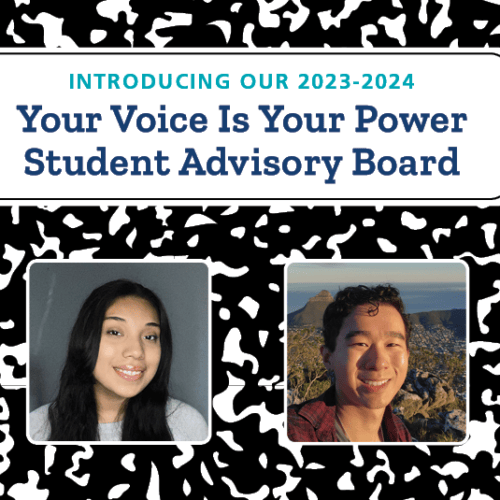
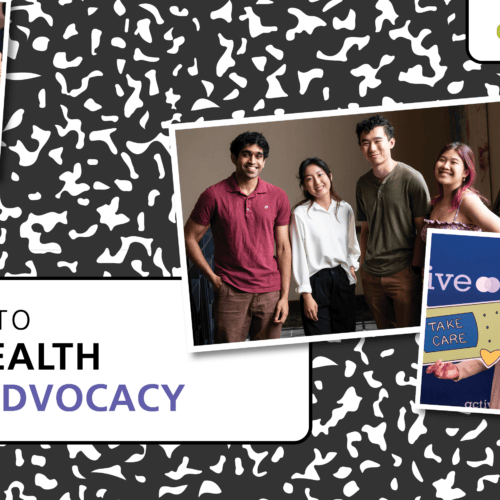
It’s no secret that youth and young adults across the United States are currently experiencing a mental health crisis, and BIPOC and LGBTQ+ young people are disproportionately affected. In 2021, the Centers for Disease Control and Prevention reported that 42 percent of high school students experienced persistent sadness or hopelessness — a 13.5 percent increase from 2019 and a 50 percent increase from 2011. At the same time, it was found that all 50 states had fewer than ten facilities with LGBTQ+ services per 100,000 children, and in 2020, “...Black and Latiné children were 14 percent less likely than White children to receive treatment for their depression.” Dedicated investments must be in safeguarding and caring for BIPOC and LGBTQ+ youth and young adults’ mental health — and now, in partnership with Urban Outfitters, Active Minds has created a space for the next generation to lead the way in cultivating those very resources. The 2023-2024 Your Voice Is Your Power (YVYP) Student Advisory Board comprises four young adults who will help Active Minds research and develop new mental health resources for college-aged BIPOC and LGBTQ+ young adults. The board members will receive training in research and content development, learn leadership and collaboration skills, have the opportunity to network with leaders in the mental health field, and participate in advocacy efforts that will reach the entire nation through the co-creation of new resources. Meet the new YVYP Student Advisory Board members below, and if you’d like to learn more about the program, please email communications@activeminds.org. Charles Ellis Charles (he/him/his) is 20 years old and originally from Reynoldsburg, OH. He currently attends Miami University of Ohio as a biomedical engineering major. In his free time, he loves to play the piano, go on hikes and runs, lift weights, volunteer in his community, and hang out with those closest to him. Charles is very passionate about destigmatizing mental health illnesses and currently serves as the co-president of Miami University's Chapter of Active Minds. He decided to join the YVYP Student Advisory Board because he wants to further contribute to making a change to destigmatize mental health illnesses in the Black community and foster safe spaces for BIPOC and LGBTQ+ people. Daby Ibegbu Daby Ibegbu (they/them/theirs) is 21 years old and originally from Lagos, Nigeria. They graduated from NYU this summer with a B.A. in music and a minor in film and new media. They are very passionate about social work and mental health advocacy, specifically working with and providing practical support to the Black, Immigrant, and Queer communities, and so they joined the YVYP Student Advisory Board. Daby is currently working toward a career in data analytics, hoping to focus on social work and non-profit organizations. They love music and filmmaking, and you can always catch them with headphones on! Daby loves making playlists and is always happy to share music recommendations (their current favorite album is JAMIE by Montell Fish, and their favorite song is Mnike by Tyler ICU). They love traveling and have spent the last few years hopping between Lagos, Abu Dhabi, and New York. In their downtime, they enjoy reading, journaling, and rewatching shows they will never get tired of (they’re currently on their fifth “New Girl” rewatch). They also love exploring arts and crafts. Jatzary “Jaz” Pérez Avitia Jatzary “Jaz” Pérez Avitia (she/her/hers) is 21 years old and a senior at the University of Central Arkansas. She is pursuing a degree in psychology with a minor in teaching English to speakers of other languages (TESOL). She is very passionate about staying true to her roots and helping her community. Self-care is really important to her, and she knows it may differ for everyone. She enjoys cooking, hiking, painting, journaling, exploring new places, and listening to all kinds of music. Jaz is very excited about this opportunity to work with the YVYP Student Advisory Board. Jaz believes having and creating accessible mental health resources for BIPOC and LGBTQ+ youth and young adults is extremely important. It is especially important to ensure that the resources available are tailored to benefit an individual's specific needs. Listening to everyone's individual story and understanding their background and identity is essential. Finally, she hopes that she can be a voice for her Latino community. Steve Wang Steve Wang (he/him/his) is a 21-year-old senior at Vanderbilt University in Nashville, TN, double majoring in cognitive studies and psychology with a minor in data science. Before moving to college, he was originally from Queens, NY. Steve is very passionate about mental health awareness and advocacy, based on his own experiences growing up with intersecting identities and clashing views of mental health. He hopes that through the YVYP Student Advisory Board, he can give back to his communities and help spread mental health awareness in traditionally underserved populations! Read More
The Active Minds Student Advisory Committee (SAC) is made up of fifteen young adult leaders who represent the Active Minds student voice nationally through media and other student forums. They also advise Active Minds national staff on student engagement, community building, program planning, Chapter engagement and management, National Conference planning, and program promotion. Powered by youth and young adults, the SAC is an integral part of the mental health work being done by thousands of Gen Z activists across the country. We’re excited for you to “meet” our 2023-2024 Student Advisory Committee cohort below. If you have any questions about how you can work with your community’s representative in taking action for mental health, please contact chapters@activeminds.org or connect with your 2023-2024 Student Advisory Committee representative one-on-one on the Active Minds Student Slack Network starting Aug. 30. Rachna Edalur Pronouns: she/her/hers School: Texas A&M University About: Rachna is an applied mathematics major with a concentration in biological sciences at Texas A&M University. Growing up in a small east Texas area where mental health is an unspeakable topic, Rachna wants to expand the idea of openness and end the silence surrounding mental health. As a member of the SAC, Rachna hopes to create a community of acceptance and safety by uniting mental health advocates from across the country. In her free time, Rachna enjoys reading and watching reality TV (especially “Survivor”). Adia Fadaei Pronouns: she/her/hers School: Point Loma Nazarene University About: Adia Fadaei is a senior psychology major at Point Loma Nazarene University and one of the co-founders of her school’s Active Minds Chapter. She introduced the organization to her campus shortly after participating in the MTV and Biden-Harris Administration’s first Mental Health Youth Action Forum at the White House. Active Minds has been integral to her college experience; bringing individuals together premised upon authenticity and action-based support has been uniquely special. Outside of Active Minds, Adia is a crisis counselor for the 988 Suicide and Crisis Lifeline, a policy advocate with the American Foundation for Suicide Prevention, a Rare Beauty Mental Health Ambassador for Selena Gomez’s Rare Impact Fund, an advisory board member for Lady Gaga’s Born This Way Foundation, and a youth council member for Love is Respect. She aspires to become a clinical psychologist while engaging in continued systemic advocacy and focusing on youth mental illness and suicidology. In her free time, she loves trying new coffee shops, being in the ocean, reading books, kickboxing, and attending concerts! Anushka Gupta Pronouns: she/her/hers School: New York University About: Anushka (she/her) is a student at New York University studying psychology and Child and Adolescent Mental Health Studies (CAMS) on the pre-med track. As a former Active Minds SAC member, student ambassador, and current co-president of her school’s Chapter, Anushka is passionate about normalizing conversations about mental health in her community through storytelling. During her freshman year, she spoke at her campus's TED x NYU event on "Destigmatizing Mental Health and Illness" amongst college students by sharing her own mental health journey. She also volunteers as a research assistant at the Social Cognitive Affective Neurodevelopment (SCAN) lab at NYU Lone, which aims to study the impact of the pandemic on child neurodevelopment. In her free time, Anushka enjoys exploring different cafes and bookstores around the city. Oliver Halliwell Pronouns: he/him/his/they/them/theirs School: Creighton University About: Oliver is a first-year law student studying business law and wealth management at Creighton University in Omaha, NE. In undergrad, Oliver served as vice president of Creighton’s Active Minds Chapter, where he helped plan events and initiatives on mental health advocacy. Through successful student leadership, Oliver was asked upon graduation to step in as the Interim Assistant Director of Creighton’s Violence Intervention and Prevention Center, where he oversaw all of their prevention education. Oliver’s passion for mental health is rooted in his struggle of growing up openly LGBTQ+ in rural Nebraska. He experienced bullying and harassment from his peers and his mental health suffered. Finding an affirming therapist made a huge difference in his ability to thrive. Outside of school, Oliver works as a songwriter and is restoring a 150-year-old Victorian house full of antiques, bats, and ghosts. Naomi Hines Pronouns: she/her/hers School: Bowie State University About: Naomi Hines is a sophomore at Bowie State University and a native of Prince George’s County, MD. She is majoring in psychology and has a strong passion for mental health advocacy. Her interest in Active Minds peaked after dealing with her own personal hardships with mental health. She is excited to be involved in the Active Minds SAC as she hopes to change the conversation about mental health. On campus, she is involved with clubs and organizations that serve as a platform to make a difference. Outside of school, she enjoys crafting, binge-watching shows, and having self-care Sundays! Emma Lamoreaux Pronouns: she/her/hers School: Temple University About: Emma Lamoreaux is currently in her senior year at Temple University in Philadelphia, pursuing a major in health studies alongside a minor in public health. Her unwavering passion and dedication to mental health have propelled her into her second consecutive year as the president of the university's Active Minds chapter. After finding Active Minds during her sophomore year, Emma recognized the power of sharing stories to create impact, motivating her to contribute further by joining the Student Advisory Committee, now serving her second term. In addition to her Active Minds involvement, Emma actively participates in various campus initiatives, such as serving on Temple's Student Mental Health Advisory Board and the board of her school's medical journal, "CommonHealth." As she approaches graduation, she looks forward to attending law school focusing on health law. D’Aubre Lewis Pronouns: she/her/hers School: North Carolina A&T State University About: D’Aubre Lewis is a rising sophomore at North Carolina A&T State University, majoring in psychology from Baltimore, MD. She is a youth mentor, mental health advocate, and entrepreneur who is interested in Active Minds because she wants to change the stigma surrounding mental health and how African-Americans feel about mental health and mental health resources. When she feels low and needs a reset, she enjoys reading, journaling, taking walks, meditation, yoga, and writing poetry for self-care. Blake Matthews Pronouns: he/him/his School: Ithaca College About: As a current senior at Ithaca College, majoring in psychology with a minor in counseling, and a future licensed marriage and family therapist, Blake joined Active Minds because he wholeheartedly believes in changing the conversation. He learned about Active Minds through Arizona State University and quickly became the advocacy coordinator and social media head for the 2021-2022 school year, before joining the Student Advisory Committee in 2022 and being awarded the 2023 Sue Cimbricz Spirit Award. Outside of Active Minds, Blake can be found volunteering for the Crisis Text Line, being a student advisor for Flourish Labs, working as an orientation leader, and YouTube content creator at Ithaca College, or enjoying music. He loves taking photos, traveling, knitting, and being active in his community. He is V-A-R® certified and believes that no one should be alone when they are hurting. Emily Muench Pronouns: she/her/hers School: Baldwin Wallace University About: Emily Muench is a graduate student pursuing a one-year MBA with a business analytics focus at Baldwin Wallace University. Five weeks into her first year of undergrad, she started an Active Minds Chapter on her campus. She is involved with Active Minds because of her struggles with mental health and her passion for mental health advocacy. In her free time, she enjoys painting and singing in her family band. Zafir Naseem Pronouns: he/him/his School: University of Maryland About: Zafir is a senior neuroscience major and a member of the QUEST Honors Program at the University of Maryland in College Park, MD. His passion for mental health advocacy began in high school, where, driven by the circumstances of his peers, he helped establish an Active Minds Chapter to promote mental health awareness and action-based support for students. Zafir continued his involvement with Active Minds in college, where he is currently the president of the Active Minds Chapter at the University of Maryland. Outside of Active Minds, Zafir supports children with neurobehavioral challenges and volunteers at his local emergency department. With his background in mental health awareness and program development, neuroscience, and leadership, Zafir aspires to become a psychiatrist to advance and expand mental health care services to as many people as possible. In his free time, Zafir finds pleasure soaking in the great outdoors through hiking and fishing and enjoys working on cars. Joanna Oommen Pronouns: she/her/hers School: University of California, Riverside About: Joanna is a junior at the University of California, Riverside, majoring in psychology with a minor in neuroscience. During her first year, she wanted to meet like-minded individuals passionate about mental health advocacy and eliminating mental health stigma, and so she joined her university’s Active Minds Chapter as a peer health educator. She is currently one of the Active Minds Student Directors of her Chapter. She loves seeing the joy and relief among students when creating a nonjudgmental space for them to be vulnerable, providing them with mental health educational resources, and encouraging them to seek help. On the side, she works as a Wellbeing Peer Coach who listens and works one-on-one with students to set wellness goals and connect them to campus resources. After graduating, she aspires to become a clinical psychologist who helps individuals that struggle with mental health and neurodevelopmental disorders. Outside of Active Minds, she loves any form of artmaking, especially painting, to shed light on mental health awareness. Hannah Rabbani Pronouns: she/her/hers School: De Anza College About: Hannah has consistently immersed herself in conversations centered around mental health both in her personal life and during her studies at De Anza College, where she is pursuing a degree in political economy. She facilitated workshops in high school and college, focusing on raising awareness about mental health. Additionally, she delivered a TED Talk addressing the issue of romanticizing mental illnesses. Hannah also held the position of head girl at her school, using her platform to destigmatize mental health conversations and prioritize well-being. At De Anza, she served as the college's Active Minds Chapter president. In her leisure time, Hannah finds joy in reading, discovering new facets of the Bay Area, where she currently resides as an international student, and experimenting with various cuisines! Zoe Tait Pronouns: she/her/hers School: University of California, San Diego About: Zoe is a student majoring in cognitive behavioral neuroscience and minoring in Spanish language studies at the University of California, San Diego (UCSD). Zoe formerly served as an Active Minds Student Ambassador and has been involved in Active Minds since her sophomore year of high school, currently serving as the co-president of the Active Minds Chapter at UCSD. In addition to her involvement in mental health advocacy, Zoe is currently the head research assistant at the Computational Psychology & Well-Being Lab at Stanford University. Zoe is particularly interested in leveraging computational methods to understand the behavioral factors that drive well-being and mental health, and to use them to develop a new generation of effective treatments. In her free time, Zoe enjoys singing, dancing, hiking, and exploring new places around the world. Fiona Wu Pronouns: she/her/hers School: Vanderbilt University About: Fiona Wu is a rising senior at Vanderbilt University, double majoring in neuroscience and medicine, health, and society. Originally from Taipei, Taiwan, she grew up in a not-yet-mature mental health system, and her journey of caring for herself and her mother inspired her passion for mental healthcare. Most of her time is spent on clinical research for Autism spectrum disorder (ASD), anxiety traits, and child emotional development, and advocacy for youth mental health policies in Tennessee, diversity, equity, and inclusion in college, and first-generation low-income student education. She even started her own nonprofit, Beyond Taiwan. These experiences reaffirm her belief that advocacy for equality is vital for youth well-being, and she hopes to dedicate her career to studying the social determinants of mental health. During her free time, Fiona loves to travel, read, try new recipes, explore farmer's markets, and look for the best-flavored latte in town. Stephanie Yau Pronouns: she/her/hers School: University of Pittsburgh About: Stephanie Yau is a sophomore at the University of Pittsburgh, studying neuroscience and global health on the pre-medical track. She is the Outreach Chair of her school’s Active Minds Chapter. She found a passion for mental health advocacy during the pandemic and has been looking into breaking the stigma, especially for children and teenagers. Outside of Active Minds, she is involved in many on-campus organizations including the Heinz Chapel Choir, Student Health Advisory Board, and Student Government Board. She is hoping to pursue a Masters in Public Health and go into medical school. Read More
Pencils? Check. Notebooks? Check. The planner you were obsessed with that you’ll use diligently for one week and then forget about? Also, check. As you prepare to head back to school this fall, it’s just as important to check in with your mental health (and the well-being of your friends and peers!) as it is to check off all the items on your back-to-school shopping list. The good news is that Active Minds is here to help set you up for success in creating a positive mental health culture to keep you feeling safe and happy this school year. Check out the upcoming events, new resources, and exciting opportunities we have below (for the individual, at your school, and in the community), and start planning for how you’ll make mental health part of your every day this year: Building Your Skills as an Advocate: Stay in the Loop: The Active Minds Newsletter has all the updates in the world of mental health you need, delivered straight to your inbox. From ways to get involved in advocacy to advice from national staff and more, signing up for our newsletter is the best way to make sure you don’t miss any of the exciting opportunities we have coming up. Get Mental Health Certified: Validate-Appreciate-Refer® (V-A-R®) is Active Minds’ simple and revolutionary tool that will help you learn how to navigate difficult conversations about mental health. If you are interested in becoming certified and learning the tools you need to support others, join us at our next training session on Sept. 13, taking place at 6 PM ET for students and 12 PM ET for everyone else. Learn How to Effectively Build a Movement: All high school and college students are invited to learn from fellow Gen Z advocates the best way to recruit and retain peers to be part of your mental health advocacy efforts. Whether you’re a regular on Capitol Hill or just getting started, this session will provide important insight into how to build a mental health movement that can create lasting change in your school, community, and country. High school students are invited to register here for a session on Sept. 28 at 5:30 PM ET, and college students here for a Sept. 15 session at 12:00 PM ET. Prioritizing Mental Health This School Year with Your Peers: Prepare Your Chapter For the New Year: Our wonderful Active Minds chapter members and leaders are invited to attend one of our fall orientation sessions, taking place Sept. 20 at 12 PM ET and Sept. 21 at 8 PM ET. At these virtual meetings, you’ll have the chance to connect with fellow advocates, learn about new resources and opportunities, and discover innovative ways to bolster engagement in your school or on your campus. Start a Dialogue with the Help of an Expert: Hosting an Active Minds speaker at your school is a great way to inspire others to speak up about their mental health. Additionally, if funding is an issue, consider applying for our Program Fund to help bring a mental health speaker to your community. Dive Into De-Stressing: Start planning your fall Stress Less Week® event (taking place across the country from Oct. 23 through Oct. 27!) with the help of our free downloadable toolkit. There you will find tips and resources to help you lead your friends and classmates in practicing self-care amidst even the busiest of midterms and finals weeks. Scaling Conversations to Your Community: Advocate for Systemic Change: This year, Active Minds’ unveiled our new policy platform, giving youth and young adults an easy way to find current legislation that promotes mental health and is in need of support. Familiarize yourself with the bills currently listed on our tracker, and voice your support for increased access to mental health resources and care by contacting your representatives. Learn About Lived Experiences (and Share Your Own!): Behind the Backpacks is the virtual accompaniment to the Active Minds traveling suicide prevention exhibit Send Silence Packing®. Learn more about suicide’s impact, find actions to take for suicide prevention in your community, and share your story to remind others that they are never alone. Engage Your Community in a Fundraiser: By creating a Team Active Minds fundraiser, you can show others in your community that their mental health matters and deserves support. Get creative — a fundraiser not only supports the work that Active Minds is doing across the nation, but it also gives your community a simple way to take part in mental health advocacy right in their neighborhood. There are many ways to get involved in taking mental health action this school year. Whether you’re new to advocacy or a seasoned veteran, you have the power to tackle mental health issues, in yourself, on your campus, and in your community. Start small and see how far you can go — Active Minds and the resources listed above will be here to support you. Read More
We’re so thrilled to have you contribute to the Active Minds blog!