Active Minds Blog
Sharing stories, actionable ideas, and topics on mental health
Sharing stories, actionable ideas, and topics on mental health
So you want to come to Active Minds Hill Day + Mental Health Conference 2026? That is amazing! Whether you're a first-time attendee or a returning advocate, the experience of being surrounded by hundreds of young people who care deeply about mental health is genuinely unlike anything else. However, we do recognize that a possible hurdle, especially as a student on budget, is having the financial resources to attend. The good news is that there are funding possibilities available to you that may not be on your radar. Here are four ideas for finding the resources needed to make the trip happen: 2. Tap Your School's Student Activity Fund Here's something a lot of students don't realize - your tuition might already include a student activity or co-curricular fee. That money goes into a fund specifically designed to support student development, including attending conferences. Most schools have a formal process for requesting these funds, often through a student government office or dean of students. You'll typically need to submit a short proposal explaining what the conference is, what you'll learn, and how it connects to your campus community. The Active Minds Hill Day + Mental Health Conference checks every one of those boxes. Start early, since these requests often have deadlines and review periods. 3. Ask Your Academic Department Your major department likely has a student development or professional development budget and attending a nationally recognized conference absolutely qualifies. Reach out to your department chair, academic advisor, or a faculty member you're close with. Frame it around how the conference connects to your field of study, whether that's psychology, public health, social work, education, or really any major that intersects with student wellbeing. You don't need to have it all figured out. A simple, genuine email asking about available funding goes a long way. 4. Connect With Your Campus Active Minds Chapter or Wellbeing Club If your campus has an Active Minds chapter, this is your first call. Campus organizations receive institutional funding, and many use it specifically to support members in attending conferences related to their mission. If there's no Active Minds chapter, reach out to any mental health, wellness, or advocacy club on your campus as the overlap is strong, and they may be able to sponsor your registration or co-fund your travel. This is also a great way to build relationships before you arrive and potentially coordinate a group trip (which comes with a 20% group registration discount for five or more people). 5. Look Into Crowdfunding and Community Support Don't underestimate the people around you. Platforms like GoFundMe make it easy to share your story and raise money from friends, family, and your broader community. If you explain why you're going and your passion for mental health advocacy, what you hope to bring back to your campus or community, people often want to help. You can also reach out to local businesses, community organizations, or mental health nonprofits in your area that might sponsor a student attendee. A brief, heartfelt pitch about your advocacy work and the impact of attending can open more doors than you would expect. Funding a conference trip takes a little effort and some planning, but the resources are out there. The Active Minds Hill Day + Mental Health Conference 2026 is worth it and we hope to see you there. To learn more about the Active Minds Hill Day + Mental Health Conference 2026, visit activeminds.org/conference.
Grief hit me like a wave that never went back out to sea. There were mornings I didn't want to get out of bed. Nights I wondered why I was still here when they weren't.
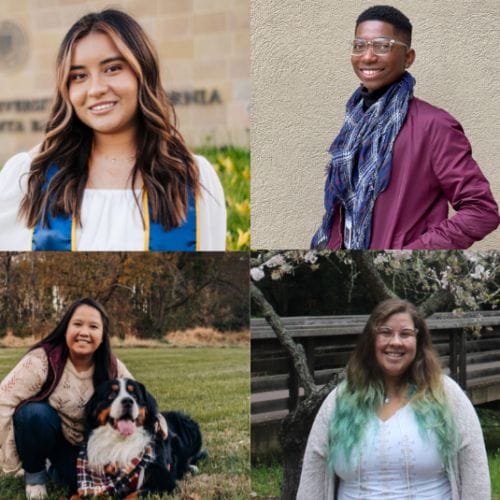
The Active Minds Student Advisory Committee (SAC) is made up of young adult leaders who represent the Active Minds student voice nationally through media and other student forums. They also advise Active Minds national staff on student engagement, community building, program planning, Chapter engagement and management, National Conference planning, and program promotion. Powered by youth and young adults, the SAC is an integral part of the mental health work being done by thousands of Gen Z activists across the country. We’re excited for you to “meet” our 2026-2027 Student Advisory Committee cohort below. Kailani Goggans (she/her) is a student at Salem College studying Psychological Science & Public Health. She is deeply passionate about community care, advocacy, and wellness. On campus, she serves as President of Active Minds Salem College, Students for Reproductive Freedom, & Siblings Demand Justice. Through her work, she supports, educates, and inspires her peers to get involved in their community and use their voices. Kailani's academic and professional interests include attending medical school and obtaining her MD & master's in public health to bridge medical practice with community policy and action. In her free time, she enjoys indoor cycling, playing with her animals, and playing video games Dionisio (Dio) Taitano-Samora (he/they) is a student at Colorado State University Pueblo majoring in Public Health with minors in Spanish and Leadership Studies. He strives to utilize his experience as a first-generation Chicano-CHamoru student and his background with advocacy organizations, such as Young Invincibles and The Hub for Youth Centered Engagement, to create a more just education system for students of color. As of now, he also serves on Young Invincibles’ Youth Advisory Board for Colorado to advance policies that support young adults' mental health, access to healthcare, and the workforce. In the future, he aims to conduct research on access to STEM education and its connection to public health to advocate for health equity. Outside of academics, he enjoys hiking, trying new recipes, and language learning. Rhea Makkuni (she/her) is a student at Johns Hopkins University studying Molecular and Cellular Biology and Computer Science. She conducts research in the PALS Lab at the Johns Hopkins School of Medicine, applying artificial intelligence to the study of mood disorders. On campus, she serves as President of the Johns Hopkins chapter of Active Minds, where she leads local, community-based mental-health efforts that offer insight into global mental-health challenges, including limited continuity of care, fragmented systems, stigma, and barriers to navigating available resources. In her free time, Rhea enjoys biking, chatting nonstop with her friends, singing, and dancing! Amy Senkerik (she/her) is a student at Barrett, the Honors College at Arizona State University, majoring in Biological Science and in Global Health with a certificate in Evolutionary Medicine. She is deeply passionate about advocacy, suicide prevention, mental health, and public health. On campus, she works closely with the American Foundation for Suicide Prevention and on the outreach team for ASU’s Counseling Services. Last year, she was in the Active Minds Mental Health Advocacy Institute and spoke at the Active Minds Congressional Briefing in May. In addition to mental health advocacy, she leads the Refugee Education and Clinic Team, works as an Emergency Medical Technician, and conducts cancer-neuroscience research at the Mayo Clinic and Cedars-Sinai. She has interned at Harvard Medical School and as a Fulbright Scholar at the University of Toronto in summer research programs. Amy has a passion for advocacy across individual, community, and systemic levels and hopes to work as a physician at the intersection of mental health, research, clinical practice, and policy. In her free time, Amy likes to run, rock climb, travel, and spend time with her loved ones. She ran the 2024 TCS New York City Marathon and has studied global health abroad in Australia. Arjun Nair (he/him) is a student at Virginia Commonwealth University studying Biology in the Guaranteed Medical Admissions Program. He serves as President of Active Minds at VCU, where he works to reduce stigma surrounding mental health, introduce students to self-care practices, and strengthen student engagement in mental health advocacy. Professionally, Arjun is interested in advancing compassionate care and support for people with substance use disorders, as well as HIV prevention within substance use treatment settings. He currently serves on the Student Advisory Board of the American Academy of HIV Medicine and is involved in research examining substance use, behavioral health, and access to HIV prevention and care. As a member of the Active Minds National Student Board, Arjun hopes to strengthen connections among campus chapters and empower youth and young adults to become mental health champions in their own communities. Ivanna Sintes-Klein (she/her) is a student at The University of Texas at Austin majoring in Health Promotion and Behavioral Science with a minor in Health Communication. She is deeply passionate about mental health, leadership, health advocacy, and creating communities where people feel supported, heard, and empowered. At UT Austin, she is the Chapter Founder and President of Teddy Bear Hospital USA at UT, a national non-profit that uses play to help children ease the anxiety that's associated with going to the doctor while promoting health education and empathy. She also serves as a Longhorn SHARE Support Specialist, where she leads a community centered around the belief that we do not have to carry the burdens of others alone, while completing training in peer support, mental health first aid, and connecting students with resources. Ivanna was also appointed through UT Student Government as a Student Government representative on the Student Health Advisory Committee, where she is excited to contribute a student perspective to conversations surrounding campus health and mental health. Before transferring to UT Austin, Ivanna attended Texas State University, where she founded and led Bobcat C.A.R.E. (Creating Awareness, Resiliency, and Empowerment), the first mental health advocacy organization, which was named Organization of the Year during her time as President. Through these experiences, she has developed a strong passion for making mental health support more accessible and creating spaces where students feel comfortable asking for help. In her free time, she loves to play pool and write poetry. If you have any questions about how you can work with your community’s representative in taking action for mental health, please contact chapters@activeminds.org.
In honor of Black History Month, we are excited to share with you ten leaders in mental health and psychology who helped to pave the way despite facing systemic barriers. Each of the individuals listed made extraordinary contributions to their field, and we are proud to share their contributions with you. Inez Beverly Prosser, Ph.D. (1895-1934) Dr. Inez Prosser was the first African American woman to receive her doctoral degree in psychology. She is most known for her integral work in the landmark case Brown vs. Board of Education. She found that Black students benefited more in segregated schools because they were more likely to receive affection, support, and a balanced curriculum versus an integrated school; however Black schools were highly under-resourced and inequitable funded. Dr. Prosser was very active in helping many Black students obtain funding for college and spent her last few years teaching at historically Black colleges. Francis Cecil Sumner, Ph.D. (1895-1954) Dr. Francis Sumner, known as the “Father of Black Psychology,” was the first African American to receive a Ph.D. in psychology in the United States. His work focused on equality and racial justice within the education system. While teaching at Howard University, he was able to help establish a psychology department and became head of that department. Many argue that his biggest impact was aiding the next generation of successful black psychologists, including Kenneth Clark. Joy Harden Bradford, Ph.D. Dr. Joy Bradford is a licensed psychologist with her Ph.D. from the University of Georgia. She focuses on mental health topics within the African American community and the importance of Black women setting boundaries to safeguard their well-being. Dr. Bradford currently has a popular mental health platform, Therapy for Black Girls, which includes a weekly podcast with millions of listeners. Her content varies from confronting racial injustice at work, to taking care of yourself during the pandemic, to personal development, and more. Claud Steele, Ph.D. Dr. Claud Steele has researched stereotypes for more than twenty years, with his findings suggesting that stereotypes are so powerful that they can change human behavior. His most famous work was on stereotype threats and their correlation with minority student academic performance. In 2010, he released a book “Whistling Vivaldi and Other Clues to How Stereotypes Affect Us,” which detailed years of research he completed on minority students in higher education. He suggested many strategies for reducing stereotype threats and enhancing academic performance. Claud holds a Ph.D. in social psychology and statistical psychology from the Ohio State University. Mamie Phipps Clark, Ph.D. (1917-1983) and Kenneth Bancroft Clark, Ph.D. (1914-2005) Doctors Mamie and Kenneth Clark were the first African Americans to receive their doctorate degrees from Columbia University after attending Howard University for their bachelor’s and master’s degrees. They’re most famously known for their revolutionary “doll studies,” which were developed from Dr. Mamie Clark’s master’s thesis. These studies highlighted the impact of racism and segregation on African American children. Because of their significant work regarding Black child development, the Clarks were expert witnesses in Briggs v. Elliot, one of the cases related to Brown v. Board of Education. Joseph L. White, Ph.D. (1932-2017) Dr. White spent most of his career at the University of California at Irvine as a professor, but he also contributed greatly as a dean, clinician, and consultant. His article “Towards a Black Psychology,” published in 1970 by Ebony Magazine, began a movement within psychology to encourage a better understanding of psychological approaches that cater to the Black experience. He also inspired the next generation of young leaders, by supporting the education of many students of color through the founding of the Educational Opportunity Program, which has supported thousands of first-generation, historically low-income students in the state of California. Beverly Greene, Ph.D. Dr. Beverly Greene is known as the “Pioneer of Intersectional Psychology,” and has taught countless students about cultural diversity and mental health. She completed her master’s and doctorate degrees at Adelphi University and then worked as a staff psychologist at Kings County Municipal Hospital’s Inpatient Child Psychiatry Division in Brooklyn. It was there that she eventually was asked to teach her predominantly white colleagues about the nuances they should consider when working with their predominantly Black patients. This led to her writing about her teachings, which eventually translated to the start of a career teaching at St. John’s University in 199. She still teaches on cultural diversity and its intersections with mental health at St. John’s today. Robert Lee Williams II, Ph.D. (1930-2020) Robert Lee Williams II earned his Ph.D. from Washington University in St. Louis and was a leading figure in psychology because of his work on the education of African American children. He was a founding member of the Association of Black Psychologists and served as its president from 1969-1970. He was also a professor at Washington University and helped to develop the African and African American Studies program. Dr. Williams II researched racial and cultural biases within IQ testing, and with that, created the Black Intelligence Test of Cultural Homogeneity which had context more common to African Americans. Herman George Canady, Ph.D. (1901-1970) Herman George Canady was a prominent Black clinical and social psychologist, and was the first to study the influence of rapport between an IQ test proctor and the subject, specifically researching how the race of the proctor can create bias in IQ testing. His research was able to provide suggestions for cultivating adequate testing environments. He was also a part of the American Teachers Association where he reached out to those working in psychology and suggested they should advance the teaching and application of psychology within black institutions. Dr. Canady earned his Ph.D. from Northwestern University. Jennifer Eberhardt, Ph.D. Dr. Jennifer Eberhardt received her Ph.D. from Harvard University and currently teaches psychology at Stanford University. She has conducted extensive research on implicit bias, criminal justice, and the education system, and is considered an expert on the consequences of the psychological association between race and crime. Her research has been used to educate members of law enforcement in hopes to improve policing and help maintain trust with the communities they serve. Read More
Welcome to our awesome group of spring 2022 interns! We're so excited to work with them to change the conversation around mental health. Ja’Mi Barnes 1. Where do you (or did you) go to school? What do you study? I am currently a senior at Abraham Baldwin Agricultural College in Tifton, GA. I am a rural studies major. 2. What got you excited about an internship at Active Minds? Promotional emails I received due to me signing up to learn more information about Active Minds and mental health. 3. What department are you interning for? I’m interning on the Social Media Team. 4. What are you most looking forward to this semester? I am looking forward to learning the ins and outs of the social media world. Not only that, but the demanding work it takes to run a huge organization such as Active Minds. I want to learn more about how to promote mental health on different platforms and grow both as a professional and a mental health advocate. 5. What is your favorite food? Anything vegan but if I had to pick, I would say fruit! 6. What are you currently binge-watching? I’m currently binge-watching “Euphoria.” 7. What are your three favorite things to do for fun? I’d have to say going to Universal Studios, going to concerts with my family/friends, and keeping up with all things pop culture. 8. If you could change one thing about the world, what would it be? There are so many things…. I would change the access to education. I would love to use any and all resources I had to make sure that everyone was given the chance to learn and better their minds so they can make a difference. Education is so important. 9. Describe your dream job. My dream job would be anything that allows me to blend public speaking, mental health, and helping people. That could be a professor, therapist, working in social media. The possibilities are endless. 10. If you could meet one famous person, living or dead, who would you want to meet? I’d like to meet Beyoncé Giselle Knowles-Carter. 11. If you could travel anywhere in the world, where would you want to visit? I’d like to visit New York City or Paris. Kaila Hembrook 1. Where do you (or did you) go to school? What do you study? I go to the University of Iowa and I’m studying communications with a certificate in nonprofit leadership and philanthropy. 2. What got you excited about an internship at Active Minds? Mental health has been an extremely important part of my college experience and without the services I have used, my schooling would have gone differently. I want to make sure other students have the same access to these services and I believe Active Minds is doing a phenomenal job at that. 3. What department are you interning for? I am working as a development intern. 4. What are you most looking forward to this semester? I hope to learn how to best manage my time in a remote setting and learn new development strategies that I have not yet been introduced to. I also hope to build my confidence when presenting new ideas. I am excited to gain hands-on experience before graduating and applying for full-time jobs! 5. What is your favorite food? I could eat pasta for every meal, no matter what sauce! 6. What are you currently binge-watching? My two binge-watching shows are “Euphoria” and “Ru-Paul’s Drag Race.” 7. What are your three favorite things to do for fun? I love to sing, crochet, and workout. 8. If you could change one thing about the world, what would it be? I would make healthcare free for all. Our health is the most important part of our lives because it keeps us alive. I think nobody should have to worry about money keeping them from maintaining their health. 9. Describe your dream job. My dream would be to become a Director of Development at a highly ranked University hospital, preferably on the East Coast. 10. If you could meet one famous person, living or dead, who would you want to meet? Taylor Swift! I have loved her since I was young and would do anything to just sit and listen to her talk about songwriting. 11. If you could travel anywhere in the world, where would you want to visit? I’ve never left the country but have always been extremely fascinated with Australia. If I ever get a lot of money, it would be the first place I’d go! Noeli Martinez 1. Where do you (or did you) go to school? What do you study? I recently graduated from the University of California, Santa Barbara, where I majored in communications and minored in applied psychology. 2. What got you excited about an internship at Active Minds? I’ve personally seen my peers struggle with mental health issues. I am thrilled to be part of an organization like Active Minds. I truly believe and stand by Active Minds’ mission to destigmatize the conversation about mental health especially within young adults who may be more vulnerable to these types of issues. 3. What department are you interning for? I’m interning with the social media team. 4. What are you most looking forward to this semester? This semester I am most looking forward to learning what it takes to manage social media platforms for an amazing organization like Active Minds. I hope to help Active Minds grow on emerging platforms like TikTok and Instagram Reels. Throughout the internship, I also hope I can assist in reaching out to Active Minds’ male audience through our social media content. 5. What is your favorite food? I love enchiladas. 6. What are you currently binge-watching? I’m currently binge-watching “Abbott Elementary.” 7. What are your three favorite things to do for fun? I love discovering new music on Spotify, catching up on Netflix shows, and going to concerts. 8. If you could change one thing about the world, what would it be? I would make college free for those who want to attend or get rid of student debt entirely. I know many young people can be burdened by the financial aspect of college and may not have the chance to attend due to financial restrictions. If I had the power to lift that burden off young people and their families, I wouldn’t hesitate to do so. 9. Describe your dream job. My dream job would be working as a Social Media Director for a nonprofit or a music/entertainment company. 10. If you could meet one famous person, living or dead, who would you want to meet? I would love to meet Justin Bieber. Growing up, he was one of the few celebrities I was consistently a fan of and his story seems so interesting to me. I would also like to meet Princess Diana. 10. If you could travel anywhere in the world, where would you want to visit? I have never been to Europe so I’d love to visit London or Spain. Shannon Regan 1. Where do you (or did you) go to school? What do you study? I go to the University of Iowa. I am finishing up my master’s degree in strategic communications, I will be graduating in May 2022. 2. What got you excited about an internship at Active Minds? I have a draw to this organization after seeing their work on my campus and having personal connections to the cause. I love the awareness Active Minds brings to mental health. Especially with COVID, mental health struggles have increased so I appreciate Active Minds being proactive and giving people the resources they need. 3. What department are you interning for? I am an intern for the Marketing and Communications Team! 4. What are you most looking forward to this semester? Besides networking and improving my writing skills with hands-on work, my goal is to gain more insight into corporate communications. Interning at a communications agency is different from interning for a specific company. I am excited to learn about how to effectively communicate accessible mental health resources. 5. What is your favorite food? I’d have to say either soup dumplings or watermelon! 6. What are you currently binge-watching? I’m currently watching “Euphoria” and “Real Housewives of Salt Lake City.” 7. What are your three favorite things to do for fun? I love spending time exploring new restaurants with my friends, listening to music/podcasts, and traveling to new cities! 8. If you could change one thing about the world, what would it be? I would change the world so that there’s less student debt. College is so expensive, and the majority of students have some sort of debt. Having debt is extremely limiting to young people, so student loan forgiveness will get rid of a huge burden for people. 9. Describe your dream job. I want to work within the PR/communications field. I love that it’s a fun yet challenging industry. It’s hard work with a lot of creative opportunities. It’s a great industry to have a variety of projects and see successful results. Ideally, I’d like to one day be an account director overseeing and implementing client PR campaigns. 10. If you could meet one famous person, living or dead, who would you want to meet? Emma Watson because she is so smart, inspiring, and charitable. She is an incredible activist for many different causes. 11. If you could travel anywhere in the world, where would you want to visit? I would love to visit the Hawaiian Islands or travel around the South of France in the summertime! Freddie Wandji 1. Where do you (or did you) go to school? What do you study? I attend the University of Maryland and study behavioral and community health with a specialization in special populations. 2. What got you excited about an internship at Active Minds? Mental health advocacy is important to me. I have personal connections and knowing ways to help is important to me. I think more people should become aware of preventative measures and ways that they could help others. I also think mental health awareness is important. 3. What department are you interning for? I am part of the Development Team. 4. What are you most looking forward to this semester? I am looking forward to enhancing my verbal and written communication skills, learning marketing strategies and how to properly present a message to a consumer. In addition, enhance my fundraising skills and get to meet individuals who care about an issue that is important to me. 5. What is your favorite food? I love pasta with shrimp or bolognese; I also love any Cameroonian food! 6. What are you currently binge-watching? I'm currently watching "90 Day Fiancé." 7. What are your three favorite things to do for fun? I like to cook, workout, and go out to eat with my friends. 8. If you could change one thing about the world, what would it be? I’d solve the problem of inadequate access to healthcare in low-income communities. 9. Describe your dream job. My dream job would be owning an organization that aids impoverished communities gain access to quality health care. Building clinics, health promotion, giving supplies, and addressing food insecurity. 10. If you could meet one famous person, living or dead, who would you want to meet? I’d like to meet Nelson Mandela. 11. If you could travel anywhere in the world, where would you want to visit? I’d love to travel to Seychelles or Greece. Aliana Whelan 1. Where do you (or did you) go to school? What do you study? I am currently a junior at New York University studying public policy and international relations. 2. What got you excited about an internship at Active Minds? As VP of my school’s Active Minds chapter, I am incredibly excited to see how Active Minds operates at the national level and how the organization creates and develops programs that best support its chapters. Also, being a public policy major and working in mental health advocacy is incredibly exciting because mental health is a very intersectional issue that overlaps with many other policy issues and themes. 3. What department are you interning for? I am a Programs Team intern, working specifically with the Speakers Team. 4. What are you most looking forward to this semester? This semester I am most looking forward to learning about how Active Minds researches, develops, and executes programmatic work to best serve our communities. As well, working on the Speakers Team, I hope to learn more about how Active Minds creates narratives around their work and how storytelling can be utilized as a tool for mental health advocacy. 5. What is your favorite food? I love Thai food or ramen. 6. What are you currently binge-watching? I just finished watching season three of "Succession." 7. What are your three favorite things to do for fun? I love discovering new places to eat, reading, and traveling (pre-Covid of course)! 8. If you could change one thing about the world, what would it be? I would make it so that everyone has access to clean water, food, housing, healthcare, and education. 9. Describe your dream job. My dream job would be to do policy and advocacy work for a mental health or criminal justice organization. 10. If you could meet one famous person, living or dead, who would you want to meet? I would most want to meet either Toni Morrison or Hayao Miyazaki. 11. If you could travel anywhere in the world, where would you want to visit? I’d like to visit Paris. Cassidy Wilkins 1. Where do you (or did you) go to school? What do you study? I am a community studies major at the University of California, Santa Cruz. I will be graduating in June 2022. 2. What got you excited about an internship at Active Minds? I have been previously involved with Active Minds and started a chapter at my community college (Skyline College, San Bruno CA). Now at UC Santa Cruz, I have had the opportunity to overlap my education with the incredible work of Active Minds. I was privileged to start my fellowship in June 2021 and continue through December 2021 for academic units, and finally returning to the classroom to write a capstone about my experience. I am honored that I was asked to stay on as the Chapters Team fellow through May. Completing a full-year fellowship is and has been an incredible learning opportunity for me. 3. What department are you interning for? I am working with the Chapters Team! 4. What are you most looking forward to this semester? I hope to continue to grow professional skills like how to communicate via email more professionally. I hope to gain a better understanding of how nonprofits are organized, workflow, the larger non-profit sector, and the field overall. I would also love to continue meeting with staff members to gain a better understanding of everyone’s roles and responsibilities. 5. What is your favorite food? I love avocado toast and coffee (coffee is like a main food group for me!). 6. What are you currently binge-watching? I’m not a major fan of TV. 7. What are your three favorite things to do for fun? Go on walks with my dog Willow, either in my neighborhood or West Cliff, at the beach. I spend as much time as I can at the beach, I could sit there all day! I also love going to concerts. I love music so experiencing my favorite bands live is always incredible. 8. If you could change one thing about the world, what would it be? I believe we would have a happier and healthier society if we had basic needs met, such as affordable and accessible health care (without the worries of money), access to healthy foods, and proper mental health care! The world would be a better place if people didn’t have to fight so hard to survive. 9. Describe your dream job. I really want to make an impact. Whether that be writing books, being a professional mental health speaker, or working at an incredible organization like Active Minds. I would like to do something I feel is impactful to lives directly, specifically with mental health education, awareness, and support. My current dream job is right here with Active Minds. I take huge pride in my fellowship and hope to stick around as an official staff member someday. I love working with the Chapters Team, but overall appreciate and admire the work of all our departments, and I can see the tangible and direct impact of our work daily. 10. If you could meet one famous person, living or dead, who would you want to meet? I’d love to meet Ruth Bader Ginsburg, rest in power. 11. If you could travel anywhere in the world, where would you want to visit? Greece! I would love to do a “Mamma Mia” inspired island trip. I would also stop in Sicily, where I have family (I am a full-blooded Sicilian!). Gabby Yaptinchay 1. Where do you (or did you) go to school? What do you study? I received my bachelor’s in kinesiology from the University of Maryland and I am currently enrolled in Tulane University’s MPH program with a concentration in community health. I’m looking forward to graduating this summer! 2. What got you excited about an internship at Active Minds? Coming from the Philippines, where mental health is stigmatized, especially learning quickly through the attitudes of my parents who “don’t believe in it”, I realized the importance of providing resources and being an active advocate for others. 3. What department are you interning for? I am interning for the Programs Team, supporting Higher Ed & Evaluation. 4. What are you most looking forward to this semester? I am looking forward to learning more about program development and evaluation in practice, especially since learning about it in my classes is different from doing it in practice. I am also excited to get to know the other amazing staff and interns at Active Minds. 5. What is your favorite food? Thai food is #1 in my book… If you need recommendations, try Pad See Ew! 6. What are you currently binge-watching? I’m currently binge-watching “Only Murders in the Building.” 7. What are your three favorite things to do for fun? I enjoy going on hikes or walking with our four-year-old Bernese Mountain Dog, doing fun crafts with my Cricut machine, and traveling with my husband! 8. If you could change one thing about the world, what would it be? I would change the world’s lack of equity on a variety of fronts, especially healthcare, which is increasingly relevant in our world today. If I had unlimited resources, third-world countries, such as the Philippines would have the same access to free vaccines and a better healthcare system. 9. Describe your dream job. My dream job would be to advocate for people with disabilities and provide them and their caregivers/families with the resources they need to live a high-quality life. This includes ensuring that places are ADA-compliant, healthcare facilities have sign language interpreters, caregivers/families are provided with a variety of options for their mental health/respite for some self-care, and more. I would also love to tie in physical activity and create more extracurricular programs for people with disabilities to reduce rates of obesity. 10. If you could meet one famous person, living or dead, who would you want to meet? I would have loved to meet Ruth Bader Ginsburg. She was influential in multiple areas, but she was very involved in advocacy for people with disabilities. I would love to have a conversation on how to handle criticism and holding one’s own, in a patriarchal society, and any other insights she would have in making a difference for those with disabilities. 11. If you could travel anywhere in the world, where would you want to visit? I would love to travel to Paris, France. I took French for 7 years and would love to test my knowledge of the language and culture! I would also love to visit the museums such as the Louvre or other historical places, such as the Palace of Versailles! I will say that we are headed to Italy, Germany, and Switzerland this summer, so Paris will have to wait a little longer. If you're interested in interning for Active Minds in the future, click here to learn more. Read More
Returning home from school is often characterized as being a joyful time, marked by the reconciliation of family and friends. College students that have moved away from home, whether it be by moving into an apartment down the street or to another city, have the opportunity to return to their loved ones after not seeing them for multiple days, weeks, or months. They have the chance to be present with the people that have been placed into their lives without having to worry about the stress of school. Sadly, this heartfelt reunion is not a reality for everyone returning home. Moving away from home for college is often the first chance a young adult has to foster their independence and live in an environment where they can take responsibility for their overall well-being. One major area that a person can work on while being away from family is their mental health. However, returning home after a few months of separation and independence can be difficult. For some, they may not even realize the complex feelings they have regarding returning home until they’re there. When we are born, we are placed into an environment that is essentially constructed by chance: the culture of the family, economic status, and location all play a part. The ancestors that were born before us, have taken on their own set of challenges that have gotten them to that particular moment in which the child is being born. Therefore, that child is raised with the capabilities and knowledge that their caregivers have accumulated from their own families and experiences. Although I would like to assume that caregivers have the best intentions with the practices that they impose onto their children, not all of those learned practices are adaptable once a child no longer lives with that immediate family. The young adult is then faced with the challenge of differentiating between practices that will either be dysfunctional or helpful as they develop into adulthood. This is essentially the basis of intergenerational trauma. College students moving away from home creates distance from the hardships that their family has gone, or currently go through, which in turn allows young adults to make these distinctions. However, reconciling with family can be a confusing time in the sense that people that have begun doing the internal work to move away from any harmful practices are reintroduced into the environment that initially taught them the practices. This has the potential of bringing up emotions such as resentment, anger, or hurt while spending time with loved ones. These emotions are in no way easy to deal with, especially during a time that is expected to be filled with joy. There is no one solution that I could provide for how to handle being faced with these difficult situations. However, I can acknowledge that these emotions are valid if you are someone that has faced, or is currently facing, difficult emotions when reconciling with family. It is also okay to seek help while experiencing these times. These types of emotions can oftentimes be dismissed, whether that be intentionally or unintentionally. It is important to acknowledge that there are hardships that happen during this time. An example of this is that I often hear among my peers that they have confusing relationships with “negative emotions,” such as sadness or hurt. Many of my peers are the children of immigrant parents that were faced with the hardships of moving to a new country and having to build a new life for themselves, so those parents did not have the chance to set aside time to attend to the negative emotions that they experienced. Therefore, the strategies to dissociate from negative emotions were taught to the next generation. We are newly discovering the importance of attending to all emotions. Therefore, as the new generation is working on reconciling their relationship with negative emotions while being distanced from family, it could be confusing when being made to ‘re-mask’ these emotions upon rejoining the family. Taking the steps to reflect and change dysfunctional practices is a difficult task in itself. The path towards healing comes with many challenges, whether that be by becoming aware of our faults, taking steps to actively change harmful behaviors, or facing environments in which the habits are emphasized. However, confronting these challenges is worthwhile to keep future generations from enduring the same pains. Whether you are returning to campus after time at home or remaining home to embark on a period of remote learning, know that having complex feelings is okay. Take time to feel those emotions, take care of yourself, and look forward to what’s next - it will get better. Read More
Content Warning: This piece contains mentions of suicide. In honor of Martin Luther King Jr. Day on Jan. 17, we share this message from Tuskegee University’s Active Minds chapter, a historically Black university, to both celebrate and honor the work and legacy of Dr. Martin Luther King, Jr., as well as shed light on the mental health advocacy being done on their campus. Adrianne Brown, Ph.D. Candidate, Integrative Biosciences (IBS) Ph.D. Program, at Tuskegee University and founding member of Active Minds at Tuskegee University. Adrianne is from New Haven, CT. Montessa Mitchell, Ph.D. Candidate, Integrative Biosciences (IBS) Ph.D. Program at Tuskegee University and founding member of Active Minds at Tuskegee University. Montessa is from Ormond Beach, FL. Terrance Platt, Ph.D. student, Integrative Biosciences (IBS) Ph.D. Program at Tuskegee University and founding member of Active Minds at Tuskegee University. Terrance is from Selma, AL. Dr. Deloris Alexander, Professor and Tuskegee University, advisor for AM@ TU, and the Director of the Integrative Biosciences Ph.D. Program. Why did you become involved in the Tuskegee University chapter of Active Minds? Dr. Deloris Alexander: I became involved in mental health advocacy when one of my students, that I thought was “fine,” shared with me that they had attempted suicide. I was stunned. Of all of the students I encountered, I never would’ve thought that this student would be struggling with suicidal ideation. I was especially struck by the fact that the attempt had happened months before and I had not noticed anything. The student had been walking around in pain and I hadn’t noticed. The next day, I opened up a conversation about mental health during one of my graduate classes and the room became silent, then filled with sobs as students shared that they were dealing with stress, anxiety, and in general, their mental health. It turned out that more than 40% of the students present that day were struggling with mental health challenges and, apparently, no one had ever allowed them to share how they felt. They were relieved to know that faculty cared and would listen and support them if they would only talk with us. The students next created a Safe Space workshop in which they shared, with the support of healthcare professionals, some of the common struggles they had. Out of this came our petition to have an Active Minds chapter at Tuskegee University. I agreed to be one of the advisors for TU’s chapter and, while the students did most of the work, faculty and staff members changed our posture to that which was supportive for students to talk about mental health. AM@TU students opened up conversations about mental health at national meetings and the university approved mental health days each semester to ensure that mental health was a priority on our campus. In 2021, AM@TU even got an award from the Alabama Department of Public Health to discuss and plan activities to improve mental health resources at our campus. Adrianne: I saw that there was a need for mental health advocacy for African Americans. At the graduate level, students are constantly dealing with real-life issues: bereavement, loss, grief, financial stresses, anxiety, and nobody knows how to discuss this. We were wearing our mental health issues on our sleeves. Active Minds helped us to communicate what we were going through to people who could help us, and so our peers could know that they were not alone. We didn’t need to try to go through this by ourselves. There was a need to remove the stigma associated with mental health and to create safe spaces where we could talk about mental health without being judged. This was especially important for international students, who are often not used to having places to discuss mental health. Montessa: I became involved with Active Minds because I didn't want anyone to ever feel alone, or like they had to be dishonest about how they are feeling. We're slowly but surely dismantling the stigma against mental issues, and fostering awareness about mental health on campus. What have been some of your favorite experiences with Active Minds? Adrianne: During the pandemic, we put forth efforts to maintain our presence virtually by hosting a session called "Journaling Through It" where participants had the opportunity to write out their feelings for forty-five minutes as a group. After the forty-five minutes were up, we were able to express to one another how the journaling session made us feel. During our “Mind, Body & Soul” series, we also had the opportunity to invite NASM-certified trainer and nutritionist Charli Harris to conduct a 30-minute workout session followed by a panel session. Clinical Psychologist Dr. Chanda Reynold, founder of Minds of the Culture, was also a guest speaker who talked with us about acquiring tools to achieve wholeness. Montessa: I have had too many experiences to recount! My favorite, however, is our Mental Health Day that we have hosted three times on Tuskegee's campus. We host a “Chalk-It-Out” event where students and faculty are encouraged to write positive notes for others to see and hopefully brighten their day. Each year the event gets bigger and better, culminating recently in a performance by the TU Crimson Pipers, and the distribution of face masks commemorating the event. By far my favorite memory! Terrance: During midterm and final exam weeks each semester, we make it a point to consistently aid with the assembly and disbursement of student care packages throughout our campus. These packages include snacks, toiletries, and positive notes/messages and affirmations to students to assist them with stress management. We also partner with our campus's student health center each year for the campus-wide health fair, during which time we highlight the importance of our campus organizations in bringing awareness about mental health and mental illness and we use the venue as an opportunity to continue to promote our presence for campus students. Last spring, on our campus, (with the help of the Tuskegee University Administration), Active Minds at TU successfully rolled out the 'You Good?' mental health t-shirt campaign. The t-shirts asked one simple question.....You Good? We felt that by asking this simple question (a question we ask our peers on a daily basis), we could create a comfortable, safe space for students to talk about their current mental health with their peers. The students wore the school colors-based shirt on Mental Health Awareness Day. This campaign was very well received by students and faculty alike as it also assisted with comradery and displaying school spirit! What are some challenges you've faced and feedback you would give? Terrance: Active Minds at TU continues to remain steadfast in tackling the many challenges faced by students and their mental health. We're continuing to find new, innovative platforms to make our presence known as a campus-wide, student-led organization and increase our membership. Our membership continues to increase each year. Montessa: Receiving consistent support and donations to this student-led and faculty-supported chapter has been a struggle until recent years. We pray that the support we have recently been given will continue, allowing us to continue to provide awesome events to break down the stigma and build up support! Final Thoughts? Adrianne: All Active Minds chapters need to reach out to each other. We are now living in a virtual world so why not reach out to have more frequent interactions with each other, bounce ideas off of each other. Everyone, at different periods during their lifetimes, deals with mental health. We could learn from each other. Dr. Martin Luther King Jr. was all about making sure that African-Americans had the same opportunities as other Americans. This includes mental health. Why not have predominantly white institutions work with HBCUs and other MSIs to talk about health disparities related to mental health? We could discuss our individual challenges and look for areas of common ground. All-in-all, my experiences with Active Minds have been memorable and the knowledge I've gained from being a member will last a lifetime. Montessa: Active Minds is not only wonderful, it is necessary. Just knowing that you're not alone, and not the only one to feel that way, helps students suffering from homesickness compounded with depression. It has helped me feel more at home by creating a family that I feel I can be honest with, and support in their honesty too. If you have a chapter near you, join. It can't hurt. It can only help. Terrance: Active Minds has been a breath of fresh air and welcomed by the student body. Students are excited to have a platform to talk about mental health and mental illness with their peers. It is certainly needed at minority-serving institutions, especially in the face of social issues like racial profiling, implicit bias, policing policies, etc. I am hoping AM continues to be a positive influence on college campuses. Read More
As a junior in college, I was fortunate enough to study abroad in Cape Town, South Africa over winter break. Getting out of the northern hemisphere provided me the chance to experience a second summer during January. Spending weeks seeing the sun reflecting off the white-sandy beaches of the Western Cape and feeding the beautiful foliage of Table Mountain was a harsh contrast to the cold, gray winter that greeted me upon my return to Milwaukee, Wisconsin for the spring semester. And although I had felt down in winter before, I had never experienced anything like this. The “winter blues” is a common phenomenon in January and February, and if you’ve lived up north as I have, sometimes this lull in mood can last even into March. If you are experiencing what feels like unexplained or random sadness during this time, know you are not alone. The lack of sunlight and cold weather does a number on mental health. This can be particularly challenging for college students, as you are expected to perform both academically and socially during this time despite any mental struggles. Some signs you may be experiencing the “winter blues” include feeling sad, bored, or down while still having the ability to feel other emotions. You may even shed a few tears, and it's totally normal. However, if you notice yourself feeling down for over two weeks you may be experiencing depression. More specifically, if over the years you have noticed a feeling of depression setting in during the late fall or early winter and resolving in spring, you may be experiencing Seasonal Affective Disorder (SAD). Signs and symptoms of SAD may include: Losing interest in activities you once enjoyed Having low energy consistently Oversleeping Drastic changes in typical eating patterns Difficulty concentrating Feeling hopeless, worthless, or guilty consistently Having thoughts of not wanting to live If you think you may be experiencing SAD, consider seeking help by going to your campus counseling center or talking to your primary care provider. In the meantime, whether you are experiencing SAD or a rough case of the winter blues, self-care tips can also provide a little ray of sunshine to your mental health this month: Keep as warm and cozy as you can: Cuddle up after class or while studying with a fluffy blanket, your favorite fuzzy socks, and maybe even a cup of hot chocolate or tea. Keep yourself warm and relaxed. Get some real rays of sunshine: Scheduling time to go outdoors and sit by a window when you can to receive exposure to natural sunlight can help boost your mood. Try a new form of exercise: When things seem dull, shake things up and keep your body moving. Let January 2022 go down in history as the month you tried yoga for the first time or took an ice skating class! Eat your fruits and veggies: Nutrition can make a big difference for not only your physical but also your mental health. Fruits and vegetables have nutrients that can help give you more energy. Food is fuel! Create things to look forward to during these months: The holidays provide a lot of things on the calendar to look forward to, whether it be a family dinner or a zoom party with friends. Keep the momentum going in January and February too, through planning activities, connecting with loved ones, and prioritizing self-care. This can be a tough time of year. Know that your feelings are valid and you’re not alone in what you may be experiencing. Hang in there - spring is coming. Read More
When thinking about returning to school for my second semester, I’ve experienced a rollercoaster of emotions in the last few weeks. At first, I was excited - the pandemic felt somewhat under control and I thought I’d be able to return to school normally. However, with the new variant, Omicron, that may not happen. I feel almost silly for not expecting that there would be more changes, but I was extremely hopeful about going back and having a sense of normalcy. That has all changed. Many universities have already announced that they are going to be online for the first two weeks returning from winter break. I’m from Texas so at this point, I'm not sure what my school will do. Texas is known to take limited precautions, however, after seeing some universities in Texas announcing they will be going online, a mixture of feelings started to arise. I was thankful and terrified all at once. While I saw universities doing the right thing by taking precautions, I was appreciative because I know it’s for the safety and well-being of everyone, especially professors, staff, and students. However, I was also nervous because I am not sure what my school will do, and I started to experience the anxiety of March 2020 all over again. March of 2020, when we all began learning about the possible implications of COVID-19, is also when many college students were given an extension on our spring break. We were all excited for an extra week of spring break, thinking things would somewhat quickly improve, but from there the pandemic only got worse. It is scary to think that we could potentially have another “two weeks online” because that can easily turn into another semester. All these feelings can be very overwhelming. I try to remind myself that it is valid to experience all these emotions and that it is an accomplishment to even be continuing my education, no matter the circumstances, especially in the middle of a pandemic. Regardless of what happens next, I am thankful to be in the Active Minds chapter at my university and have that community. I am currently the president of my chapter so my number one focus is to listen and adapt to everyone’s needs and comfort levels as much as possible. Currently, my chapter is planning an all-executive board meeting about the upcoming semester like we usually do, however this time we are going to focus on creating backup plans if we were to go online and thinking through how we can support all our members. Since it is such a confusing time it is important that we are doing whatever we can to prepare so we don’t become overwhelmed in the future. I encourage anyone else who is struggling with uncertainty and feelings of nervousness to also take the time to plan what they can. For chapter leaders, these preparations can be steps such as organizing all online general meetings if needed, inviting your chapter advisor to see what they can do to help us, and conducting mental health check-ins. For example, this past fall semester we offered general meetings in a hybrid model where we met in-person and online. Our chapter also has a business chat strictly for announcements from executive officers and a social chat where members can have conversations about mental health. This social chat is another thing that can be utilized to keep up communication and conversation between our members. We are also planning on having mental health check-in events where members can come and discuss how they are doing and what they need from us so we can have a better idea of how to help our members. Even if you’re not an Active Minds chapter leader, taking time to plan ahead with friends and classmates, doing regular mental health check-ins, and communicating your boundaries and comfort levels can help this semester feel a bit more manageable. It’s exhausting to know that we’re facing what may be yet another semester of uncertainty. A lot of things feel out of control. Despite this, I hope you’re able to cope in whatever way feels most helpful to you - whether that be planning, seeking advice from friends and mentors, or just taking things day by day. Read More
2022 is here at last! It’s a bit hard to process the new year, considering 2020 and 2021 have both felt like a continuous fever dream. You’d think we’d all want to take it easy given that the last collectively “normal” year was 2019, yet the pressure to make bold New Year’s resolutions remains. Goal-setting can help maintain a positive, growth-mindset, and a new year gives a proper benchmark for when to begin. Not all resolutions are harmful to your mental health, such as picking up a passion project, spending more time resting after a busy year, or setting on developing new study habits. With that in mind, some resolutions can quickly become detrimental, including a few of the more popular ones. Some of the trends to be careful with when making goals include: Over-productivity Maybe your aim for this year is to work harder or “accomplish more.” Measurable goals help track our progress, but they can also put pressure on us to overwork ourselves even when our bodies are screaming that they need rest. In peak quarantine, the internet pushed ideas of using the “extra” time for good, often coming in trending waves of baking fancies, at-home workout classes, or taking DIY crafting to an extreme extent. Similarly, New Year’s resolutions may make you feel as though you need to do something life-altering this year. It’s okay if all you do this new year is survive. Take risks, experience new and beautiful things, but do so to feel alive, because you truly want to. You do not need to push yourself past your breaking point in the pursuit of productivity. It is hard enough living through a pandemic and the typical stresses that come with being a human in this world. Instead of overwhelming yourself with intense resolutions, take steps to protect your mental health. Recognize where you may be overworking yourself, and find a self-care routine or coping mechanisms, like journaling, walking, listening to music, or talking with friends and family, that can give you moments of calm amidst pressures and stress. Comparing Yourself to Others Especially after Covid has shaken all our lives, you may catch yourself stalking your friends or influencers on social media, finding that their lives look seemingly perfect compared to your own. Remember, most social media serves as a highlight reel. Avoid competing with other people’s accomplishments, we all grow at our own pace. An alternative resolution for New Year’s may be spending less time on social media or reevaluating the way you use it. Unfollow accounts that don’t make you feel good, post what makes you happy. If social media isn’t compatible with your mental health, it’s okay to delete it or take a cleanse for however long you need to. Social media should be adding to your life, not taking away from it! Losing Weight or Starting a New Diet It is completely unnecessary to set weight loss or dieting goals for the new year. Not only can dieting have profoundly negative impacts on your mental health and encourage harmful behaviors around food, but they also aren’t sustainable. Instead of focusing on arbitrary diets, place your emphasis on making healthy changes in your routine, like eating nutritious foods or moving every day in a way that feels energizing for you. If you’re looking to make a change in your diet, New Year’s could be a good time to start working towards body neutrality and eating intuitively. Setting goals for the new year can be helpful; they can serve as a checkpoint to assess what you want to change moving forward and how you’d like to see yourself grow. However, know that when resolutions become toxic, it’s okay to just leave them behind. Read More
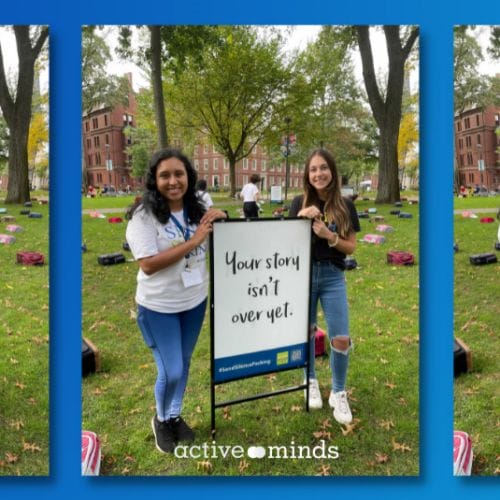
Content Warning: This piece contains mentions of suicide. I grew up thinking that showing vulnerability was a sign of weakness. That weakness would eventually be taken advantage of, so it was better to keep things locked up. For a long time, I had a hard time opening up. However, through taking a chance and traveling the country speaking to thousands of young adults about mental health for the past three months, I’ve realized that being vulnerable and open about my struggles is the main reason why I am alive. I was diagnosed with clinical depression during the pandemic, but I had been struggling with it for a long time before being officially diagnosed. As an international student, I felt really homesick and I was also being constantly triggered by past traumas. During my four years in college, I had also struggled with suicidal ideation. I attempted to take my own life twice. It made me feel ashamed and hopeless. Talking about suicide was so triggering for me that I just kept all those feelings inside. Thankfully I had loved ones who encouraged me to go to the counseling center on my campus. It took a lot of strength for me to go even with that support because I grew up in an environment where people looked at it as something shameful. It was so hard for me to take that step but once I did it, it felt good. Reaching out for help has been the best decision. When I finished college, I decided that I wanted to keep working with Active Minds because I know what it feels like to be at your lowest and I wanted to spread hope and let everyone know that they can do it. Not everyone has the same kind of support that I did, so I wanted to let people know that at least one person cared about what they were going through. I decided to apply to be a Send Silence Packing Display Coordinator and all I can say is that it has been such an amazing experience. Send Silence Packing is a display made up of 1,000 backpacks that travels the country sharing stories of those who have survived suicide, as well as those who have lost a loved one to suicide. It visits dozens of communities each tour, and the display coordinators spend that time interacting with those who come to see the display, listening to their stories, and sharing resources. As a display coordinator, I not only got to travel to different states and cities but I also got to do the work that I love to do and make a difference. Looking back at myself two years ago and how I wasn’t even able to say the word “suicide”, I feel great joy that I was able to help people that were silently struggling like I was for so long. Send Silence Packing has taught me so much, and it has shown me that while the choice to reach out and get help can be hard for people for a variety of reasons, it is ultimately always worth it. Personally, one of the most impactful parts of the tour has been talking to parents who have lost their children to suicide. Some of the parents have started foundations or joined a mental health awareness non-profit and are now spreading the word about the importance of mental health so that no other parent goes through the same thing. I found that admirable and it moved me. Looking at all the backpacks that we had and all the people who approached me and shared their stories, and thanked me for being there and making this event happen on their campus, has been so rewarding. Working on Send Silence Packing has changed my life. It inspired me to apply for a master’s program in public policy because I want to be able to help more people on a greater scale by creating policies and making long-lasting changes. If you want the chance to experience adventure while also getting the chance to change lives, I encourage you to apply as a Send Silence Packing Display Coordinator. The opportunity to work in mental health, on campuses and in communities, directly impacting thousands of lives, can’t be emphasized enough; it changed my life, and I’m sure it would change yours too. Read More
If you’re looking for a weekend of inspiration, education, and hope then you don’t want to miss the 2022 Active Minds National Conference this February. Being surrounded by over 600 students, chapter advisors, professionals, and advocates helped me feel less alone and helped me realize how much bigger our mission is and the impact we are all creating. It’s truly life-changing. But, in case you’re still on the fence about attending, here are the five the things I’m most excited about for this year’s conference: Meeting and learning from mental health advocates. From singing with Kai Roberts to telling our secrets with Frank Warren, the days were packed with fun. There was time to hear from multiple Active Minds Speakers and even opportunities to meet influential people in the mental health field like John Draper (from the National Suicide Prevention Lifeline), and Sam Brinton (from The Trevor Project). Attending breakout sessions that impacted my own chapter. The student-led roundtable session was my favorite opportunity to engage with chapter leaders from across the country because it allowed me to receive tips for my own chapter’s improvement. There were also plenty of programming events where I found engaging activity and event ideas that I can now say I have used at UW-Whitewater. During the Here to Stay: Mental Health in the Post-2020 Culture conference, I found myself screaming at my TV “I AM ENOUGH” during Ivy Watts’s session. I had never been more focused during a Zoom call - you really will not want to miss these sessions. Discovering how I can be involved with Active Minds and the mental health field. The Active Minds National Conference is where I first learned about the Active Minds Student Advisory Committee, a leadership opportunity that I now take part in and love. Through attending the conference, I got to learn more about what my fellow students were doing as mental health advocates, and discover new ways I could become involved. Getting exclusive access to keynotes, presentations, and more. From Alyssa Milano to Justin Bieber, Active Minds always brings amazing speakers to share their stories of mental health and inspire the attendees to continue their own advocacy. One of the best experiences I’ve had at Conference was by far meeting and hearing from Active Minds’ founder, Alison Malmon. Alison’s hard work made it so that I can have a safe space to talk about mental health. Through her passion and caring heart we now have an incredible non-profit that has inspired me beyond words. Seeing all of you! There’s nothing like being gathered together with hundreds of teens, young adults, students, and workplace professionals who all share one thing in common: they care about mental health. While we stay connected throughout the year virtually, having the ability to come together in-person, share our successes, discuss our future goals, and cheer each other on is unparalleled. I sincerely hope you’ll join us - we want you there! The connections built, the vulnerability shown, and the insights shared are something I will carry with me throughout my advocacy work forever. With the conference back in-person this year, I can only imagine the amazing content that Active Minds has planned for us. Each day I keep refreshing the agenda to see which speakers and sessions will be offered. I am looking forward to engaging discussions, meeting new people who share my same passions, creating memories, learning, and amplifying mental health in our culture. So what are you waiting for? Come Turn it Up in Washington D.C. this February! You won’t want to miss it. Read More
For many, Thanksgiving is marked by eating a lot of food, doing a hefty amount of shopping, and just taking time to spend the day with loved ones you may not see often. Growing up, I’ll admit that I always thought that going to the mall and shopping would be the highlight of my Thanksgiving weekend. However, now, I’m most thankful for the time to recharge and take care of myself. It took me a while to learn that the time and energy I devote to myself is irreplaceable and that it is something simple that I can be thankful for. As I’ve spent time reflecting on all the other things I’m thankful for I’ve realized how much practicing gratitude and giving thanks not only during the holidays but every day, can benefit your mental health. Something I’ve tried to implement in the past few weeks is practicing daily gratitude, and writing down five things each night that I’m thankful for from that day. Some days are easier than others to fill the list, but the beauty of that is that it allows us to search for the good things in all our days, not just the fun or memorable ones. Here’s an example of one of my lists: Yummy food and the ability to eat three meals a day. Chill movie night with roommates that I enjoy spending time with. Time spent helping my advisor with a project that made me feel good. The strength to go to class even when I was feeling anxious. Getting some mail I’ve been eagerly waiting for. Your list doesn’t have to be long, or detailed, or even different from day-to-day. As long as you’re taking intentional time to reflect on what made you happy that day, and what you’re thankful for in your everyday life, you’ll see a difference in how you treat each day and how you feel going about your daily routine. Practicing daily thankfulness has taught me a lot. I first learned that some days are harder to find positive things than others. There are days when all I can find myself being thankful for are things as simple as a nice breakfast or good weather. I also learned that we can be thankful for small things, things that others might not even think twice about. Some days, I’m thankful for getting out of bed since I battle with depression. Thankfulness is meant to be unique to you, and your list doesn’t have to look like anyone else’s. You don’t even need to share your items of gratitude with anyone else. This practice is for you and you alone. There are so many more things I am thankful for each day than I truly realize. Through practicing gratitude, I’ve learned that writing down these little parts of my day makes me more present in the moment, more attentive to the good in life, and more optimistic about the future. Life can pass by so fast that it is easy to forget the good parts of it. Thankfulness is one way to slow it down. Some days will be harder than others to find the good, and that’s normal. However, that also allows us to sit down and truly think about all the little things in life we can appreciate. The simple act of writing five things I am thankful for every day has changed my mindset on everyday life, allowed me to be proud of my small/big accomplishments, and encouraged me to search for positivity in places I didn’t expect to find it. I encourage you to practice gratitude not only this Thanksgiving but in your daily life as well. There’s no better time to start - it truly can change the way you view the good, the bad, and the ordinary in your life. Read More
How can you make the transition from high school to college easier? Simple: focus on mental health. Understand what you need to succeed both academically and in taking care of yourself. Prioritize finding mentors, professors, and friends to aid the transition. Okay, maybe it isn’t that simple, but learning about your mental health, understanding your needs, and having mentors to support you can definitely aid in the transition. I began to invest in my own mental health at the beginning of my junior year in high school. As I was becoming more interested in focusing on my mental health and learning more about what causes various mental health illnesses, I discovered Active Minds at my high school. I didn’t know much about Active Minds, but I knew I was interested. I decided to attend a meeting to learn more about how I could support my own and others' mental health. What I didn’t know at the time was that this involvement would continue throughout my high school career. I also didn’t know I would eventually hold the position of president of the Active Minds Chapter at the John Cooper School during my senior year of high school, and that I would now, in my second year of college, be the president of the Active Minds chapter at the University of California, San Diego. All because of one decision I made to simply learn more about mental health. When I first joined Active Minds, I didn’t know much about mental health. My knowledge regarding the implementation of mental health-related programs and events for high school students was even more limited. So, as I continued as a member and eventually entered leadership roles with Active Minds, having someone to help lead me was crucial. The guidance that came from my high school counselor Dr. Diego Estrada at the John Cooper School was invaluable to me during my first few years with Active Minds. It allowed me to understand more about not only mental health concepts in general but how I could learn to decrease the stigma behind mental health across my community. With guidance from Dr. Estrada, I was able to organize events such as World Suicide Prevention Day, National Day without Stigma, World Kindness Day, and Stress Less Week. I know that these events had impacts on countless numbers of my peers and that alone makes all the difference in realizing the importance of mental health communities and supportive leadership. As a senior in high school, I had the opportunity to attend the Active Minds National Conference and gain important knowledge on different mental health topics and see how Active Minds chapters from various universities and high schools were promoting mental health advocacy. This is where I realized how truly important my experiences in Active Minds were, which influenced my choice to again join a chapter in college. Active Minds had become a home for me and I knew it would be best for me and my mental health to seek out that community again, no matter where I ended up for college. When I began my first year of college at the University of California, San Diego during 2020, the height of the pandemic, I was both hopeful and fearful. After starting classes, my next priority was clear: I found the Active Minds chapter at UCSD and signed up. I applied for a position as a social media intern and was accepted. Joining this chapter gave me a greater sense of community and purpose on campus amid a pandemic. I had new friends, responsibilities that I enjoyed, and I truly felt like I was making a difference. Throughout my short time so far at UCSD, I have been able to consistently rely on my fellow members of Active Minds as we continue to strive to have an impact on our community, better understand and share the importance of mental health, and support each other throughout our college careers. Without my experience in learning how to prioritize mental health and lean on the support of my Active Minds community and mentors, the transition to college would not have been nearly as smooth for me as it was. So, maybe the answer is really that simple. You can make the transition from high school to college through mental health. Through focusing on your mental health, getting involved in conversations about mental health, and relying on those around you who can uplift and advise you, you can conquer challenges that you didn’t think were possible. Read More
Mental health issues have risen among young adults globally for the last decade. As this terrible trend continues to incline, exacerbated by the COVID-19 pandemic, it is clear that to turn the tide on this issue, we need new ideas, strategies, and out-of-the-box thinking. Those innovations tend to come from the communities most impacted - in this case, students. In the particular case of student Veterans, the impact they can have as mental health leaders has been overlooked. In many instances, when higher ed institutions and other organizations focus on student Veterans, it's with a negative lens rather than a positive one. This focus is typically with a view of student vets as a community to act on, not with. Stereotypes of student Veterans as at-risk populations, riddled with PTSD and other traumas, run rampant. So do assumptions that student Veterans are poor academic performers or “ticking time bombs.” Often, we approach student Veterans from a place of deficit, not strength, as a population in need of intervention, rather than as leaders in driving cultural change. Indeed, there are specific mental health challenges for student Veterans. Challenges from PTSD, TBI, and depression can plague up to one-third of student Veterans. However, it is well-documented that anxiety and depression have been on the rise for students globally over the past decade. Recent research suggests that their risk for mental health issues may be more closely associated with factors such as sexual assault trauma and transition stress than military experience. The stressors exacerbating these conditions or affecting those student Veterans with no known mental health condition often align with those of traditional students: financial issues, courseload, time management. In other words, the experiences of student Veterans with mental health often look more like traditional students than different. This distinction from the stereotypical cause of mental health issues to the true causes for student Veterans calls for a new approach for engaging them in mental health efforts and a new paradigm in how we view student Veterans overall. It suggests that mental health efforts will be more effective if they leverage existing mental health supports on campuses available for all students in addition to leaning on Veterans-specific mental health awareness campaigns. Like most students, student vets tend to be intensely passionate about helping friends who may be struggling with their mental health. Thus, resources would be better spent making a campus both veteran-inclusive (i.e. involving Veterans in student leadership roles, as equal partners, and as gatekeepers for struggling students) and veteran-friendly (i.e. creating mental health benefits and services specifically for Veterans to access). Student Veterans feel a stronger sense of belonging when they are acknowledged for their strengths in initiative, management, and intelligence rather than viewed as people with deficits. When we engage student Veterans as leaders in mental health promotion, we will be more effective at reaching students in the ways they need to be approached, removing the stigma associated with Veterans’ experiences, and hopefully curbing the rise in mental health challenges among young adults. Read More
We’re so thrilled to have you contribute to the Active Minds blog!