Active Minds Blog
Sharing stories, actionable ideas, and topics on mental health

Sharing stories, actionable ideas, and topics on mental health
So you want to come to Active Minds Hill Day + Mental Health Conference 2026? That is amazing! Whether you're a first-time attendee or a returning advocate, the experience of being surrounded by hundreds of young people who care deeply about mental health is genuinely unlike anything else. However, we do recognize that a possible hurdle, especially as a student on budget, is having the financial resources to attend. The good news is that there are funding possibilities available to you that may not be on your radar. Here are four ideas for finding the resources needed to make the trip happen: 2. Tap Your School's Student Activity Fund Here's something a lot of students don't realize - your tuition might already include a student activity or co-curricular fee. That money goes into a fund specifically designed to support student development, including attending conferences. Most schools have a formal process for requesting these funds, often through a student government office or dean of students. You'll typically need to submit a short proposal explaining what the conference is, what you'll learn, and how it connects to your campus community. The Active Minds Hill Day + Mental Health Conference checks every one of those boxes. Start early, since these requests often have deadlines and review periods. 3. Ask Your Academic Department Your major department likely has a student development or professional development budget and attending a nationally recognized conference absolutely qualifies. Reach out to your department chair, academic advisor, or a faculty member you're close with. Frame it around how the conference connects to your field of study, whether that's psychology, public health, social work, education, or really any major that intersects with student wellbeing. You don't need to have it all figured out. A simple, genuine email asking about available funding goes a long way. 4. Connect With Your Campus Active Minds Chapter or Wellbeing Club If your campus has an Active Minds chapter, this is your first call. Campus organizations receive institutional funding, and many use it specifically to support members in attending conferences related to their mission. If there's no Active Minds chapter, reach out to any mental health, wellness, or advocacy club on your campus as the overlap is strong, and they may be able to sponsor your registration or co-fund your travel. This is also a great way to build relationships before you arrive and potentially coordinate a group trip (which comes with a 20% group registration discount for five or more people). 5. Look Into Crowdfunding and Community Support Don't underestimate the people around you. Platforms like GoFundMe make it easy to share your story and raise money from friends, family, and your broader community. If you explain why you're going and your passion for mental health advocacy, what you hope to bring back to your campus or community, people often want to help. You can also reach out to local businesses, community organizations, or mental health nonprofits in your area that might sponsor a student attendee. A brief, heartfelt pitch about your advocacy work and the impact of attending can open more doors than you would expect. Funding a conference trip takes a little effort and some planning, but the resources are out there. The Active Minds Hill Day + Mental Health Conference 2026 is worth it and we hope to see you there. To learn more about the Active Minds Hill Day + Mental Health Conference 2026, visit activeminds.org/conference.
Grief hit me like a wave that never went back out to sea. There were mornings I didn't want to get out of bed. Nights I wondered why I was still here when they weren't.
The Active Minds Student Advisory Committee (SAC) is made up of young adult leaders who represent the Active Minds student voice nationally through media and other student forums. They also advise Active Minds national staff on student engagement, community building, program planning, Chapter engagement and management, National Conference planning, and program promotion. Powered by youth and young adults, the SAC is an integral part of the mental health work being done by thousands of Gen Z activists across the country. We’re excited for you to “meet” our 2026-2027 Student Advisory Committee cohort below. Kailani Goggans (she/her) is a student at Salem College studying Psychological Science & Public Health. She is deeply passionate about community care, advocacy, and wellness. On campus, she serves as President of Active Minds Salem College, Students for Reproductive Freedom, & Siblings Demand Justice. Through her work, she supports, educates, and inspires her peers to get involved in their community and use their voices. Kailani's academic and professional interests include attending medical school and obtaining her MD & master's in public health to bridge medical practice with community policy and action. In her free time, she enjoys indoor cycling, playing with her animals, and playing video games Dionisio (Dio) Taitano-Samora (he/they) is a student at Colorado State University Pueblo majoring in Public Health with minors in Spanish and Leadership Studies. He strives to utilize his experience as a first-generation Chicano-CHamoru student and his background with advocacy organizations, such as Young Invincibles and The Hub for Youth Centered Engagement, to create a more just education system for students of color. As of now, he also serves on Young Invincibles’ Youth Advisory Board for Colorado to advance policies that support young adults' mental health, access to healthcare, and the workforce. In the future, he aims to conduct research on access to STEM education and its connection to public health to advocate for health equity. Outside of academics, he enjoys hiking, trying new recipes, and language learning. Rhea Makkuni (she/her) is a student at Johns Hopkins University studying Molecular and Cellular Biology and Computer Science. She conducts research in the PALS Lab at the Johns Hopkins School of Medicine, applying artificial intelligence to the study of mood disorders. On campus, she serves as President of the Johns Hopkins chapter of Active Minds, where she leads local, community-based mental-health efforts that offer insight into global mental-health challenges, including limited continuity of care, fragmented systems, stigma, and barriers to navigating available resources. In her free time, Rhea enjoys biking, chatting nonstop with her friends, singing, and dancing! Amy Senkerik (she/her) is a student at Barrett, the Honors College at Arizona State University, majoring in Biological Science and in Global Health with a certificate in Evolutionary Medicine. She is deeply passionate about advocacy, suicide prevention, mental health, and public health. On campus, she works closely with the American Foundation for Suicide Prevention and on the outreach team for ASU’s Counseling Services. Last year, she was in the Active Minds Mental Health Advocacy Institute and spoke at the Active Minds Congressional Briefing in May. In addition to mental health advocacy, she leads the Refugee Education and Clinic Team, works as an Emergency Medical Technician, and conducts cancer-neuroscience research at the Mayo Clinic and Cedars-Sinai. She has interned at Harvard Medical School and as a Fulbright Scholar at the University of Toronto in summer research programs. Amy has a passion for advocacy across individual, community, and systemic levels and hopes to work as a physician at the intersection of mental health, research, clinical practice, and policy. In her free time, Amy likes to run, rock climb, travel, and spend time with her loved ones. She ran the 2024 TCS New York City Marathon and has studied global health abroad in Australia. Arjun Nair (he/him) is a student at Virginia Commonwealth University studying Biology in the Guaranteed Medical Admissions Program. He serves as President of Active Minds at VCU, where he works to reduce stigma surrounding mental health, introduce students to self-care practices, and strengthen student engagement in mental health advocacy. Professionally, Arjun is interested in advancing compassionate care and support for people with substance use disorders, as well as HIV prevention within substance use treatment settings. He currently serves on the Student Advisory Board of the American Academy of HIV Medicine and is involved in research examining substance use, behavioral health, and access to HIV prevention and care. As a member of the Active Minds National Student Board, Arjun hopes to strengthen connections among campus chapters and empower youth and young adults to become mental health champions in their own communities. Ivanna Sintes-Klein (she/her) is a student at The University of Texas at Austin majoring in Health Promotion and Behavioral Science with a minor in Health Communication. She is deeply passionate about mental health, leadership, health advocacy, and creating communities where people feel supported, heard, and empowered. At UT Austin, she is the Chapter Founder and President of Teddy Bear Hospital USA at UT, a national non-profit that uses play to help children ease the anxiety that's associated with going to the doctor while promoting health education and empathy. She also serves as a Longhorn SHARE Support Specialist, where she leads a community centered around the belief that we do not have to carry the burdens of others alone, while completing training in peer support, mental health first aid, and connecting students with resources. Ivanna was also appointed through UT Student Government as a Student Government representative on the Student Health Advisory Committee, where she is excited to contribute a student perspective to conversations surrounding campus health and mental health. Before transferring to UT Austin, Ivanna attended Texas State University, where she founded and led Bobcat C.A.R.E. (Creating Awareness, Resiliency, and Empowerment), the first mental health advocacy organization, which was named Organization of the Year during her time as President. Through these experiences, she has developed a strong passion for making mental health support more accessible and creating spaces where students feel comfortable asking for help. In her free time, she loves to play pool and write poetry. If you have any questions about how you can work with your community’s representative in taking action for mental health, please contact chapters@activeminds.org.
The #ImStillGraduating series shared on our Instagram account features graduating chapter members of Active Minds Western. The line art graphics were created by our VP Creative Anika In’t Hout. We wanted to provide our graduating members with the opportunity to share their thoughts on the current situation in a fresh and engaging way. Keep scrolling to meet our seniors and read their takes on virtual graduation. Angela “Since I was young, I felt like my life was culminating to graduating from university. Up until university, each step of your life is planned for you, but after that, nothing is. While having a pandemic impact your graduation is a *bit* more unplanned than anticipated, I’m trying to make the best out of this new normal. Some days are harder than others, but having so much free time has been an unanticipated opportunity to reconnect with so many people before we each go our separate ways. Despite its unceremonious end, I’m so grateful for everything I’ve learned and everyone I’ve met during my undergrad experience. I can’t wait until all of this is over so we can properly celebrate together. Until then, hang in there everyone! And congrats to the graduating class of 2020!” View this post on Instagram “Graduation is something that many look forward to when they’re in university. Walking across a stage to pick up a degree in a fleeting moment of glory may not sound like much, but it is a celebration of countless hours of hard work, sleepless nights – and let’s be honest – some tears. It is a moment of recognition most grads await in their academic career, but one that unfortunately many of us lost to the pandemic. Above all, the unprecedented changes and pressures we faced in our last few weeks challenged our hopes of successfully finishing the year. It was hard and it continues to be hard, dealing with so much change and graduating into the unknown. But we are not alone, and we did it. I know that everyone has been touched by this pandemic in more ways than one, and I know that we will all make it through this. In a world of uncertainty, I am confident that the class of 2020 will come out of this stronger, brighter, and more resilient.” -Jasmine #ImStillGraduating A post shared by Active Minds Western (@activemindswestern) on May 11, 2020 at 9:24am PDT Ozzie “My perception of Graduation has always been a little bit gloomy. I used to see it as one big sad goodbye, as opposed to the celebration of an achievement. Since the pandemic hit, I wanted to try and take advantage of the circumstances and change my perspective. Not only by taking the time to celebrate, but also by doing so on my own schedule, instead of during a designated time slot. And I encourage you to do the same. Take your time, find the silver-lining in all of this. Say goodbye when you’re ready, celebrate when it feels right, and close this chapter on your own terms.” The idea for the campaign was developed by our President, Saba Siddiqui, having come across the Her Campus #ImStillGraduating virtual event that supported Active Minds. Once a strategy for the campaign was established, Saba and the VPs of each portfolio reached out to interested graduating members. As the graphics and blurbs were prepared for each graduate, our VP Communications Bahar Rafinejad shared them on the Active Minds Western Instagram throughout the duration of the campaign. View this post on Instagram “When the pandemic hit, it felt like so many things were suddenly taken away from me. I guess without thinking about it, I had put some hope in my “finals” at Western - my final classes, my final exams, a final good bye to all the people I’d met, grown with, and loved. Yet, I finished my degree in the basement of my home, by myself, feeling somewhat disillusioned - homesick for a place that had been my home. There are so many things I wish I had done, things I thought I still had time for, and suddenly all that time I thought I had was gone. It’s a hard thing to cope with - having all your plans derailed in what feels like the blink of an eye. It’s frustrating and scary and worrying, but the only thing left to do is to keep going. We always have the choice to keep going, to keep growing, even when our plans in life change. I, for one, am still incredibly grateful to be able to graduate, something that seemed like a far away dream, that has actually come true, no matter the circumstance it’s been in.” -Carole #ImStillGraduating A post shared by Active Minds Western (@activemindswestern) on May 14, 2020 at 10:27am PDT Katherine “To say the least, graduating feels weird this year. I finished my undergrad at the kitchen counter. For someone who’s always bouncing between meetings and classes, it’s been a massive change with social interaction levels (and motivation) going from 100 to 0, rushed goodbyes, and rebuilding new routines and sleep schedules to adapt. For many including myself, the next year or so of our lives have been turned upside down in every context. There are always a lot of mixed emotions with graduating regardless, but wrapping up the year in a pandemic leads us to find different ways of closure and staying in touch - and I’m beyond grateful that we have the technology to stay connected digitally! To those who have yet to graduate, soak up every moment, because even the longest semesters will fly by. Even though this isn’t how I expected to graduate, I’m still incredibly excited for what lies ahead, and to eventually see my friends in person!!” Kieran “What’s next?” — “As a graduating student, we hear this from our friends, we hear this from our family, and most of all we hear this from ourselves. Although we may anticipate it years in advance, you may be like me and far from a definite answer. For now, I am trying to be okay with this, however, on some days more successfully than others. Graduating in a pandemic has brought on a new level of uncertainty no one could have predicted and yet provoked discussions around this question unlike I have ever experienced before. This period of instability, although difficult in numerous ways for many, has brought unanticipated comfort in uncertainty for me. I have been able to (re)connect with loved ones and gain a level of clarity around my priorities in isolation. While this ending has been unconventional, I have full faith in the resilience of the graduating class of 2020, and I am grateful for the opportunities I have had to grow alongside everyone.” View this post on Instagram “When news surfaced that classes had been cancelled for the year and students were encouraged to head back home, I was hit by a tremendous wave of dread. I had attended the last class of my undergrad without even realizing it. I think it hurt the most for those who might never be students again. I began to catastrophize a long list of regrets and what-if’s if this hadn’t happened, because suddenly the best four years of my life had been cut short. Life’s simple pleasures were replaced by social distancing and a post-apocalyptic world outside. In essence, graduating during a pandemic is a tough, confusing, and lonely time. I found peace in the notion that losing 4 extra weeks with my best friends could never take away from the unforgettable memories I had made here. It could never minimize or invalidate the lessons I had learned and the person I had grown up to be. Those regrets and what ifs could be framed in to new, spontaneous and ambitious plans for the future. I had forgotten how much of a life achievement completing your undergrad was because I submitted my last assignment home alone. I hope that everyone who was supposed to graduate this year can acknowledge deep down that they deserve all the happiness, love and congratulations for their accomplishment. Those sleepless nights, tears, and hours and hours of dedication should not go unnoticed. All good things come to an end, but this can also be applied to the bad ones, too. Eventually the world will open up and we can celebrate our achievements, hug our friends and family even tighter, but for now I’d like to wish everyone good luck in staying happy, healthy and hopeful during this uncertain time. It’s okay to have bad days but do your best to accomplish the small wins. My time at Western has been the best four years of my life, but I also know that there’s so much more beyond that to look forward to. Of course, leaving the nest is scary, but it’s also a transition into the next chapter of a life you can build for yourself, and I think that’s the best part of growing up.” -Yasmina #ImStillGraduating A post shared by Active Minds Western (@activemindswestern) on May 15, 2020 at 9:00am PDT It is incredibly important to share these #ImStillGraduating messages as the current dynamic situation has impacted the mental health of university students greatly. Through sharing these messages, a sense of community is established and allows other graduating students, who may be feeling a sense of loss, know that they are not alone. It provides us with the opportunity to empower graduating students and celebrate their accomplishments. Read More
Active Minds firmly condemns racism and the racist systems that create and perpetuate the oppression of black people and other marginalized communities. Systemic racism is a mental health and public health crisis, linked with depression, anxiety, and post-traumatic stress, among other negative impacts. We stand with those who are uplifting their communities, using their voices, and exercising their rights to change these unjust systems. The ongoing violence against black individuals and communities highlighted in recent weeks evokes feelings of anger, fury, anxiety, fear, grief, and helplessness. These feelings are valid and important to address. We also recognize the mental health toll is not the same for everyone. The black community needs space to process and grieve these incidents, in addition to pandemic-related trauma and injustices. If you are struggling for any reason, please contact the Crisis Text Line by texting “BRAVE” to 741-741, or call the National Suicide Prevention Lifeline at 1-800-273-TALK (8255). We encourage you to follow our partners at The Steve Fund, Each Mind Matters, and the Healthy Minds Network, all of whom are leading efforts in mental health equity. Advocates, educators, parents, young adults, and all humans should find means to advocate for justice and equal opportunities for health. An emotionally healthy world is not possible without a just world. And as we work to change the world, let’s not forget to take care of ourselves and each other. This is a tumultuous time and we will continue to be here for you, the Active Minds community, and beyond. The world needs you here. Read More
American Public University System (APUS) is composed of American Military University (AMU) and American Public University (APU). Our students, faculty, and staff reside around the world. Our online-only university has a brick and mortar campus in West Virginia, but students attend classes online as well as run their "social" university lives virtually. Despite this, APUS still manages to offer most of the same aspects of student life as other universities. Here are some of the ways our chapter managed to stand up in late 2016 and accomplish so much in such a short amount of time. We hope these recommendations are helpful as you collaborate and find ways to support your campus community! Leadership The first step in forming and maintaining a solid online student organization is to have a stellar leadership team who truly believes in the heart and mission of the organization. Free and open communication between the faculty advisors and student officers supports a successful organization or club. To that note, it is invaluable when the officers openly communicate in order to coordinate and collaborate. Connection & Events Encouraging, empowering, and educating members through technology may seem simple in today's tech-dependent world. As we know, virtual connection is not comparable to real connection. With that obstacle before us, we simply must push past, around, over, and under and continue with our mission. The major perk of being online only is the world-wide reach we have due to our membership being spread throughout the world. There is a good reason that our very own advisor received the prestigious honor of "Advisor of the Year" from Active Minds in 2019 followed by our chapter receiving the esteemed honor of "Chapter of the Year" from our university and even had a featurette made to promote our chapter! Check out our video and article here: https://bit.ly/2019_apusam_video. Event details: Annual Suicide Awareness & Prevention Symposium In September 2020, we will host our 3rd Annual Suicide Awareness and Prevention Symposium. It is an honor to coordinate this 2-day event every year. We host our symposium in a webinar-style with guest speakers presenting for about an hour including a Q&A session and facilitated by Active Minds chapter officers. Virtual 5K - Miles for Mental Health The concept is to promote a walk-and-talk event which can include babies in buggies, children, pets, etc. The goal is to possibly have a light conversation about mental health as the walk-and-talk proceeds. On the other side, some members throw on some headphones, choose some good music, and run the 5k in peaceful solitude. The message is always the same - mental health is okay to talk about, and we are here for you. We even send out fancy medals! Stress Less Week(s) Stress Less Week reminds us that we do have permission to (re)take control, (re)prioritize, (re)organize, or simply (re)focus some of our mental energy each day. We love to share and promote self-care as the cornerstone to mental health that it is. We host an SLW once in spring and again in autumn and often have graphics contests inviting members to share their stress less ideas. Cards of Kindness The original thought was simple: make or buy a card; write encouraging messages, phrases, quotes inside; and, physically mail the card to another member. The beauty of it is the all-inclusive nature of it. Children can help write notes. Knowing a fellow chapter member (in our case a perfect stranger somewhere around the world) will feel special, loved, needed, encouraged, seen, etc. all because of a little card… well, that is priceless and sends my heart over the moon. There is something invaluable about a tangible moment of kindness from a stranger that can last a lifetime. #APUSAMCED To encourage positive focus, we started #APUSAMCED which stands for APUS AM Celebrate Every Day. This is another simple concept which highlights the National Day Calendar for inspiration. We choose themes for each day, week, and month to highlight. These seemingly silly "National Day of ...." highlights allow for a low-stakes focus which often brings about smiles, connection with others, and are great conversation starters. I mean, who doesn't love national pancake day? We have the #APUSAMCED corner of each monthly newsletter, we share them on our social media, and we have them within our Slack work space. We often have members thank us for providing a quick re-focus for the day or reminding them to smile. Member Conference Calls Another way we maintain contact with our members is through member meetings. We generally hold these once per quarter on either Adobe Connect or Zoom. It is a great way to come together quarterly since we cannot meet in person. Another fabulous way to connect and empower your communities is through presenting information: e.g. Active Minds' V-A-R, or a lunch-and-learn event. Just recently, our chapter among others, had the honor of presenting the Validate-Appreciate-Refer tool to some fellow students, staff, and faculty in early 2020 (Click here). V-A-R represents a technique and life skill for all to have readily available since it is for everyday people in everyday life. It does not require you to be certified, degreed, credentialed, or any other kind of recognized professional status. It simply requires you to be willing to listen and practice empathy; it requires you to listen and be human along with others. If you have not had the experience of learning V-A-R, we highly recommend it. Using it helps you create an open and safe space for others to be interpersonal or confide in you in their time of need - mild or intense. The most non-threatening aspect of V-A-R is that it works well in non-crisis situations and provides low-pressure opportunities for empathetic support. I even use it at work with colleagues. Communication As an online-only university, we have to be creative on many fronts and expose any and all methods for reaching and connecting with our members and communities. Naturally, one of our main sources of connection is social media. We have both a closed Facebook group for our members who have signed up through APUS and a public page to share events and awareness information publicly for anyone to see. This way, our outreach is wide and more realistic. We also have a Twitter and Instagram account which we use to share events, challenges, encouragement, and general information. And even more exciting, coming June 2020: www.apusactiveminds.com! Blogs are a GREAT way to communicate, share, raise awareness, and virtually connect with others. Our Vice President recently wrote a great article – check it out here. In addition to all of this, we enjoy hosting events to bring our members together for no real reason at all other than to check in with one another. One example is what we call, Social Hour. This is an opportunity to simply chat - no real agenda - just be together to discuss life, mental health, self-care, etc....just doing life together. Having much of our student population in the military and spread throughout the world, we must have other ways to reach our members. We do that by sending out a monthly newsletter to inform our membership of forthcoming events, report on events passed in the previous month, and a highlight of our #APUSAMCED corner. Last but not least, the now archaic method of email never lets us down as a sure-fire way to open communication lines. As much of our connection with our members is one-way, we must be visually creative and as engaging as possible. Email marketing platforms that offer free plans, such as MailChimp, are useful in managing membership rosters and sharing information quickly and efficiently. Also, surveying members regularly is critical! Finding out what our chapter members and leaders are interested in doing and how those ideas align with the chapter’s goals and mission helps keep the chapter moving forward. This is also a great way to increase participation for events and fundraising. The APUS Active Minds Chapter will continue to innovate to further progress and encourage mental health in our communities. Happy Virtual Connecting from all of us to all of you! Read More
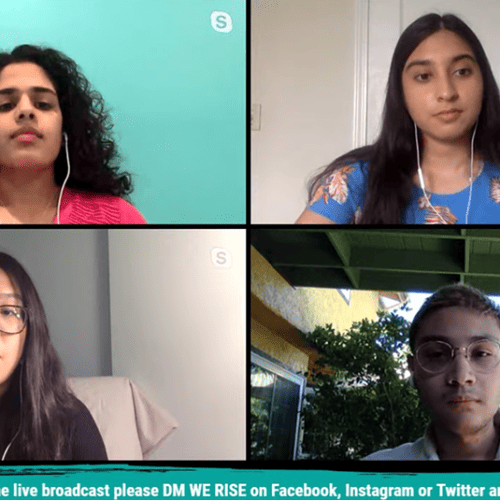
This past weekend a panel of four young adults convened to discuss the impact of the COVID-19 pandemic on their mental health and what they are hearing among their peers. Organized by We Rise, a Los Angeles-based mental health advocacy organization, this event was intended to elevate the voices and perspectives of young adults as they navigate these tumultuous times. Two of the panelists - Meera Varma (UCLA ‘22) and Aerex Narvasa (Occidental College ‘22) - are leaders of their campus’ Active Minds chapters. I found myself struck by their advice and so grateful to hear their perspectives and suggestions. Read on to learn the three central themes of the discussion: Balance and Self-Care Several of the students expressed the real challenge to practice self-care and balance with an unknown future and so much that feels out of control. Working to prioritize mental health with pressures around accomplishment and achievement is a pronounced experience of these past few months, according to these young adults - they find themselves wondering if and how they can continue down the paths they’ve worked so hard to lay for their futures with the pandemic in their way. When they find themselves feeling overwhelmed by the sense of helplessness, they work on acceptance and focus on what they can control through this time of chaos. Meera shared one of her tools: “Being my own advocate is really important for me. When I’m having a challenging time, I try to reach out to my mom or my brother and let them know that I don’t need advice, I just need them to spend time with me.” This is a sentiment affirmed by the recent Active Minds study that surveyed over 3,000 young adults - most are spending a great deal of time with their parents while sheltered-in-place. They report the best thing their parents can do to support their mental health is to spend time together. Virtual Connection Meera reflected on the importance and challenges of virtual connectivity. Where connection with friends was previously a given, built into their day-to-day lives, now there's a need to be intentional and consistent about being in touch, which isn’t always easy. “I miss my friends every single day. Some days I reach out to them and some days I don’t feel totally mentally up for [virtually connecting]. It helps me to remember that I’m not alone in that.” Letting someone know you are here for them and hearing they are here for you can be incredibly uplifting through our days of sheltering in place. The panelists expressed that sometimes they feel a sense of being a burden or asking too much. Meera helps mitigate that feeling by asking herself what it feels like when someone reaches out to her to let her know that they are struggling. “How would it feel if someone reached out to me? I would feel honored! Know that you are not a burden. People want to be there for you.” Seeking Support Aerex explained that he’s working to raise awareness about how and where to seek mental health support. He’s noticed that misconceptions and lack of understanding of what services are available to students have been exacerbated by our current circumstances. “A barrier to seeking mental health services is a misconception of what is currently available to students. Partially that’s to do with how that’s advertised on campus, especially in the time of this pandemic. We need to make sure that students know how to access help, even though it’s all online.” This sentiment is supported by the student study conducted by Active Minds that demonstrated that more than half of young adults do not know where to go if they need support right now. Aerex also expressed how, when he reached college, he had to reconcile his personal and culturally reinforced stigma around asking for help when he needed it. Not only did he learn that asking for help isn’t about failure, it’s about strength and that people want to be there for you. “When I got to college, and now especially during this pandemic, I’ve learned that asking for help is not a sign of failure or overcommitment and that most people, including professors, are willing to help.” He further elaborated that “this isn’t the time to be apathetic or put off our mental health, no matter how bad I feel or how much I have to do. Reach out to friends, family, professors when you need time, don’t put it off.” In closing, Meera said it best. “You’re not in this alone. What you’re feeling is 100% valid. Take it one day at a time. It starts with your mental health.” If you are struggling, reach out to someone around you, the Crisis Text Line, or the National Suicide Prevention Lifeline. Active Minds is #HereForYou. ________ Active Minds is a proud partner of Each Mind Matters: California’s Mental Health Movement, through CalMHSA - the California Mental Health Services Authority. This We Rise event and many others are made possible by funding from California counties through the Mental Health Services Act. Connect with Each Mind Matters and learn more about innovative mental health prevention and early intervention work happening throughout the state. Read More
Students, especially college students, were hit hard by the fallout of the COVID-19 pandemic. We know from Active Minds’ recent survey of over 3,000 students that 91% of young adults say that COVID-19 has caused stress and anxiety and over 80% say they’ve experienced isolation, loneliness, sadness, and disappointment. Students have been working diligently to maintain their communities, support their peers, and advocate for policies and structures they need at this moment. Active Minds’ weekly Student Chats have highlighted the creativity, positive attitude, and engaged advocates of student mental health leaders. We are so impressed with their resilience and motivation and want to share some of what we’ve learned in the last few weeks: Member and Peer Engagement Student mental health leaders are making additional efforts to connect with their members and engage them in meaningful ways. One of the top recommended tips from students was to continue to have regularly recurring meetings so members could develop a sense of routine and have something to look forward to. How can we stay connected to each other and feel like we know what’s happening week-to-week? Send weekly or bi-weekly emails to communicate upcoming events or meetings, updates from your school, and ways to be in touch with each other. Update social media accounts and develop a strategy for how often you want to post which kinds of messages on what platforms. Work with your chapter advisor to develop a direct pipeline of information that can be shared through your chapter. How can we support individual student leaders? Plan dedicated “office hours” or coffee chats either one-on-one or in small groups. Provide space in meetings for people to talk about their days or weeks. Try to find the right balance of giving people space to be open and honest and making sure students who need additional support are connecting with resources. Give members buy-in on what happens next, whether that means hosting a few meetings over the summer, planning a kick-off event in the fall term, or having a hand in social media content strategy. Celebrate your graduating members and leaders by hosting a virtual graduation or thank you ceremony. Leadership Transition Continued student mental health leadership at schools is more important than ever. For many student organizations, leadership transition happens in the late spring term as some people head towards graduation and help transition new people into their roles. Many students have adapted their traditional, in-person, leadership transition to a virtual format to make sure their new leaders are trained and prepared to go into this summer and fall. Identifying and finding potential leaders Invite chapter members and your student body to contribute to a blog or social media page and ask some potential chapter leaders to help you maintain an active social media presence. Ask leaders and members to contribute to and lead discussions or activities during your meetings. Reach out directly to students who have shown interest in your work but may not have been able to attend regularly scheduled meetings or programs on campus to see if there are ways they can take on leadership during remote learning. Holding elections or designating roles Work with your current leadership team and advisor to look at your chapter’s constitution and any requirements from your school around elections or leadership transition. Ask candidates to record a short video of them giving a speech or you can ask that they submit a paragraph that you put into a voting or survey site (ex: Survey Monkey) to send to your membership for voting. Be as transparent about the process for elections and to ensure anonymity for votes, ask if your advisor might be willing to tally the votes or have the login information for your survey collection account. Planning for and training your new leaders Put all the documentation for your chapter in a Dropbox folder or Google Drive folder to share and pass on to your new leaders. Make sure your advisor has administrator access to these folders. Plan a meeting for your current leadership team, advisor, and the incoming leaders to meet and discuss each person’s role and to discuss any planning that’s already taken place for the summer and fall term. Continue to support your incoming student leaders after your graduation for an amount of time to make sure they have a resource if they run into problems or have questions. Be sure that your chapter leader’s contact information is up to date with your student activities office and the Active Minds National Office. Active Minds is #HereForYou Active Minds is working hard to make sure you have the data, resources, communication avenues, and support through this pandemic. Visit our COVID-19 Hub for resources, stories, live content, and more. Connect with your fellow student mental health leaders on the Active Minds Student Network Slack team. Our Slack network is normally reserved for Active Minds chapter leaders but, thanks to our friends at just., we’ve been able to open our network to any student who wants to join! Be in touch with Chapter Manager, Robyn Suchy, during his weekly office hours, on slack (message robyn_nationalstaff), and via email (robyn@activeminds.org). And don’t forget to register to participate in our weekly Student Chats on a variety of topics and have conversations like these with your fellow student leaders and the Active Minds National team! Read More
Let’s be real - for a long time, making trips from my bed to the refrigerator was the most exercise I got in college. As school began to wind down my senior year, I was inspired to focus on my physical health and convinced my aunt to take daily trips to the gym with me. Slowly but surely, I began to incorporate small, but healthy changes to my lifestyle. Stories like mine are not all that conducive to social media - the likes, follows, and numbers always seem to reward the most dramatic body changes or the most healthy/picturesque diets. Now that most students are under lockdown and spending more time on social media (I know I am!), it’s become even more important to be able to filter and internalize healthy messaging. Extensive research, including those cited by the National Eating Disorders Collaboration, has linked consumption of social media to unhealthy body images. During these unprecedented times, when there is an increased focus on maintaining physical health, I remind myself of the importance of maintaining mental health, too! These last few weeks have been difficult to say the least. People find themselves uprooted from support networks and now face the challenge to acclimate to a new work and/or school environment. As we all navigate these ups and downs together, here are some tips and techniques that have helped me prioritize my health, both physically and mentally: 1. Set small, realistic goals for yourself. It can be overwhelming to see all the resources now available online (whether it’s Zoom fitness classes or Youtube workouts). My friends and I have personally loved Chloe Ting workouts. You can also check out FitnessBlender for free cardio and strength videos! However, fitness is very personal, so make sure to put the focus on your health and your body. Sometimes, the goal can be to finish the whole circuit; other days it can be simply getting out of bed :) 2. Limit social media intake. Setting phone-time limits for Instagram and Snapchat has been super helpful for me in the past. Don’t be afraid to lose connections on certain apps. You can still keep in touch with friends via Facetime, text, Zoom, Whatsapp calls. Sometimes, these one-on-one conversations can be even more rewarding! 3. It’s okay to not be okay. Whether you’re a student, a stay-at-home mom, or a healthcare worker, quarantine is stressful. Whenever I feel overwhelmed, I remind myself of this Active Minds’ mantra. Take a breather. Don’t be afraid to reach out if you need help and remember to be there for each other. At Active Minds, we are #HereForYou. You got this! Read More
Last week marked the end of our time at Active Minds, and to say that our experience this semester has been unique would be an understatement. When we accepted our offers, none of us were expecting a global pandemic to occur in the middle of the semester, but that’s exactly what happened. Despite having to abruptly pack our things and leave DC, it did not mean goodbye; it meant “See you on Zoom,” and we continued on with our internship. Before the end of the semester, we took some time to reflect on our experience amidst this unprecedented time. Read on to learn how each of us will remember our Spring 2020 Active Minds Internship: Brella I had no idea what to expect when I accepted an offer as a graphic design intern at Active Minds, but I had never been more excited for anything in my life. I am a fine artist; I had only taken graphic design for the first time the semester before, so I was nervous that I might not be experienced enough for the position I had so quickly jumped at. I am so glad I stepped out of my comfort zone to broaden my artistic abilities and simultaneously had the privilege to learn so much about mental health, which is something that is so important in my own life. Active Minds has the most supportive and friendly staff and they made all of us interns feel so comfortable and welcome. They always let us know that our opinions mattered and they were always willing to teach us anything we did not know how to do. Although we had those amazing DC moments in the office and at National Conference, these last few weeks working remotely have been equally inspiring and I have learned just as much as I had in person. Sticking with my internship has provided a lot of stability in my transition back home. It has helped me keep a consistent routine and really pushed me. I’ve been able to create graphics that other people can relate to and see that what they are feeling is okay and they are not alone. This semester has changed my life in a very positive way and I cannot wait to implement what I have learned back at home when this all passes. I cannot thank the Active Minds team enough for the impact they have had on my life. Guthrie Coming into college as a business student, I soon realized the work my classes were setting me up to do wasn’t as fulfilling as I was hoping it would be. By the time I realized that, it was too late to change my major, so I got involved with student organizations and took internships that aligned more closely with my career goals and passions. Mental health awareness is something that’s always been important to me, and when classmate and former Active Minds intern Ilana Davis introduced me to the organization during the fall of my senior year, I knew I couldn’t pass up the opportunity to intern here. Through my work on the communications team, I was able to further develop my content-writing skills, and I got to do that while reading many stories from my fellow students and sharing my own via the blog. We like to say that “your voice is your power” at Active Minds, and I saw that firsthand with both my work and that of students all across the country. When our National Conference was nearing, I enjoyed being a part of the preparation for it, and those two days genuinely changed me. I finally got to put faces to names of some of the students whose work I had edited, as well the Active Minds remote staff from across the country, and I learned so much from all of the breakout sessions I attended. Hearing the keynotes from Frank Warren and Zachary Levi, two important male voices in mental health advocacy, was especially important to me and I’m really glad that I got to hear them, especially with what was ultimately in store just three short weeks later. I always felt like I was part of the Active Minds family, but I truly felt that as we had to make the sudden transition to working remotely because of COVID-19. Throughout the process, the entire staff was very supportive, and I never felt like they didn’t have my back as I watched everything I was looking forward to about my senior year disappear. Our weekly lunches over Zoom helped me maintain the connections I had made before we went remote, and were the highlight of each week for me. While it was sad to have to leave the office and go remote for the rest of the semester, continuing my internship was one of the most important parts of keeping some sense of normalcy and staying positive through all of this, especially since our work has helped and will continue to help so many people like me navigate this time we’re in. Although the semester and my college career as a whole didn’t end the way I wanted them to end, I couldn’t be more thankful that Active Minds was a part of it. I want to thank everybody, from the office staff to the remote staff to my fellow interns for making this semester the awesome experience it was, and for making Active Minds the organization it has been and will continue to be! Kaia As a public policy and political science major, I was eager to explore the federal government in the flesh during my semester in DC. As a typical college student studying government might, I toured the Senate, participated in a foreign affairs simulation at the State Department, and took classes taught by renowned political science professors in the nation’s capital. I checked these activities off my bucket list, but I did so much more than that. I wanted to intern at a non-profit organization to understand the U.S. government from the perspective of interest groups. Interning at Active Minds has certainly facilitated this goal of mine: it’s shown me the critical impact of collective action on those vulnerable to social injustice; the power of individuals uniting to make a widespread difference in Americans’ lives; and the way that passion is spun into action, which not only brings people together but lifts them up. As an incoming Programs intern at Active Minds, I did not honestly know what to expect. I couldn’t visualize the tasks I would be given, the people I would be working with, and, most importantly, the impact that I as an intern could help make on others. From day one, I was welcomed with open arms by the entire staff at the national office. Ever since that first day, I have encountered nothing but friendliness, thoughtfulness, cooperation, and genuineness. From the careful guidance of my supervisors, I gained ample experience working with spreadsheets, digital platforms, communication, and general professionalism. I had the opportunity to help prepare for and attend the Active Minds National Conference, which allowed me to put faces to the names I had been contacting and make new connections with students from across the country. I got to hear from students how Active Minds changed their lives, and in those moments, I realized that I was not only learning about government through the lens of a non-governmental organization, but the value of the type of work I had the opportunity to contribute to at Active Minds. Even in my own short lifetime, the culture around mental health has changed drastically. Elementary school health class taught me the importance of eating whole, balanced meals and exercising regularly. Never did it teach me the vitality of emotional and mental wellbeing. Growing up, I had thought of mental health as affecting a subset of the population that did not include me or the people close to me. My mom is a psychologist and clinician who works with veterans affected by post-traumatic stress disorder (PTSD), which somehow reinforced to me my notion that mental health affects people unlike me, such as those who serve our country in combat--a feat I have never experienced. But as I entered high school and college, I realized that mental health affects everyone--directly or indirectly--including me. I do believe that the culture around mental health has evolved in the past twenty years, but I also know that it has a long way to go before the public perceives it as deserving the same level of attention as physical health; I’m still waiting for the day when the words “depression” and “anxiety” don’t spur any judgement or negative connotations whatsoever. I’m glad that my internship experience at Active Minds has broadened my perspective in this regard. It has shown me that many people share this longing for promoting discourse on mental health, and even devote much of their lives to removing the stigma that lingers around it. I’ve fulfilled my goal and curiosity of experiencing non-profit work, but much more than that, I’ve learned how lucky I am to be part of a caring community that dedicates their livelihoods to improving the lives of others. Even in the midst of COVID-19 that has led us to remote work, I continue to be grateful for my opportunity to help others, particularly during these stressful and difficult times. So here’s a big THANK YOU (in all caps!) from me to everyone who makes up Active Minds: the amazing office staff and my wonderful supervisors, my incredible fellow interns, and all of the students and faculty across the nation and around the world who have shown me hope, encouragement, and love over these past few months. I wish everyone health and safety during this unprecedented time, and I know that by continuing to work together and support one another, we will make it to the other side of this pandemic, stronger and more united than ever. Kendall This past January, I arrived in Washington D.C. with an amalgamation of busy thoughts— bursts of excitement, curiosity, and underlying anxiety were most strongly felt. I made the decision to spend my last semester of my undergraduate career thousands of miles away from my college home in Berkeley, California… and frankly, I didn’t know what to expect. This was my first time leaving a place of familiarity without a crutch, without someone I knew beforehand going with me. I love the potential for exploration, the hustle-and-bustle culture, and the daily demonstrations of city life (like subway-riding); these are aspects of life that my small-town self was not raised with. I came to Washington with the expectation that I would indulge in a place that felt like mine— a beloved place to add to my growing list of temporary homes. I quickly learned the difference in atmospheres when comparing our nation’s capital to my home in California. These changes, however, were embraced with open arms. It still surprises me how smooth this transition was for me. When I reflect, I know that a tremendous factor in my acclimation to D.C. was the community my coworkers in our National Office had established. From the first day I walked into the office, I felt nothing but warmth and support from the Active Minds team. My coworkers were quick to introduce me to the productive yet fun environment that exists in our workspace. I remember when I met Robyn, our Chapters Manager, and instantly felt comfortable with him as my internship supervisor. Robyn and others eased my inevitable anxiety with beginning a new internship in a new city, and valued my many questions and ideas. I never felt belittled or shut down because of my role as an intern; rather, my student perspective was always appreciated. This rang true even despite our challenges with the interns’ abrupt departure from D.C. I have gained so many tangible skills through my time working with the programs department that I know I will incorporate in my future as an educator. The experiences I shared with my team, however, are what I value the most. The collaboration to host an incredible national conference, the weekly Chipotle Thursdays during lunch hour, the trips to the storage unit in Maryland in preparation for Send Silence Packing… reminiscing about these moments brings me so much joy. This experience has become a reference point for my future in many ways. I hope to find the same sense of familial bonding not only in my future workplaces, but within other social circles of my life, too. I hope I can bring the same positivity and light to these communities, just as all of my coworkers did for me. I feel so privileged to have experienced so much kindness, guidance, and love the past few months. I cannot thank the Active Minds Team enough for making me feel so welcomed and heard. While I am sad to be leaving, I couldn’t be more grateful to have been part of this team. Thank you to the office staff, remote staff, and fellow interns for giving me a senior term I will never forget! Read More
More than half of students say they do not know where to turn for mental health support amid the impacts of COVID-19, according to Active Minds’ nationwide Young Adult Mental Health Survey. This is concerning given that 20% report the COVID-19 pandemic has significantly worsened their mental health. After a traumatic event such as this, a campus community often engages in an intervention, or a series of interventions, typically described as “postvention.” Effective postvention responses include communication, reflection, stabilization, coping, and advocacy. But it should also engage students as equal partners in the work. This quick guide is intended to assist students in leading or engaging in a campus-wide response in alignment with their campus’s postvention plan for COVID-19 or in place of such a plan if none exists: What students can do to support their campus community RIGHT AWAY: Communication: Help spread the word about your university’s mental health and academic resources through the campus newspaper, social media, and other outlets. Equip yourself and other student leaders to refer other students to the appropriate resources and services, especially resources for help-seeking. Programming and Partnerships: An effective way to help the campus cope with the impact of COVID-19 is to help them feel heard and supported through mindful programming and advocacy efforts. Recruit other student organizations to join you. There is strength in numbers! See Active Minds’ recommendations for moving programming online here. Practice Self-Care: It is important to practice individual and group-based self-care on a regular basis. Examples include reaching out to your support network, seeking therapy when needed (affordable teletherapy options may be available for you during this time), recruiting many student leaders to share the load with you, and regularly taking a break from your efforts. Check out our self-care tips and join us at the Active Minds Student Slack Network to talk about all things self-care, as well. What students can do to support a healthy campus LONG-TERM: Review Existing Policies: What policies and protocols are being developed by your campus to support the mental health of students both in the short-term and in the long-term? Is your campus providing any academic accommodations or leniency in grading? You can start by reaching out to the administrative staff of your school’s wellness center and/or counseling center to find out. Most Active Minds chapters have established relationships with counseling/wellness staff; partnering with the chapter to initiate this research may be advantageous. Ask to Join COVID-19 Taskforces: Some schools are starting to put COVID-19 taskforces in place to determine the impact of COVID-19 on students and plan for the future. Find out if one exists and, if so, whether the committee includes a student representative. If not, work with the staff to add a student leader with an interest in and knowledge of mental health who can articulate the needs, desires, and expectations of the student body. Access Your Campus’s COVID-19 Postvention Plan: Every campus should have or be working towards a concrete postvention response plan to support students in the long-term and to apply lessons learned to future high-impact incidents. The plan should include steps for providing student support, maintaining responsible communications, and providing resources to grieving students. Students can assess their campus’s plan and consider: → Is the school’s plan adequate? → Are all students included (especially students of marginalized identities most at-risk for negative impacts of COVID-19)? → Does the plan communicate the importance of seeking mental health support? Does the school have resources readily available to students? If the answer to these questions is “no” more often than “yes,” students can request an opportunity to provide student input to bolster the plan. Know the Facts: Administrators want to create a better environment for students. They will be most likely to listen to students and implement change when students present evidence to support their claims along with potential solutions and ideas for improvement. Campus mental health statistics are the foundation for inspiring new ideas and building momentum for implementing change. Students can research and use these statistics as evidence to corroborate their claims. Some schools have this information available through their campus counseling/wellness centers, but if not, using national statistics to describe student mental health concerns can be effective as well. It is also important to determine students’ attitudes towards their campus’s efforts to provide appropriate and accessible resources for students seeking help. Are students aware of the resources available to them on campus? Students can find out if a survey is planned to collect this information, and if not, it may be time to conduct one. COVID-19 has put students’ mental health at risk. Your voice is more important than ever! For more information about researching campus policies and collecting information from the student body, visit activeminds.org/transform. If you are working on COVID-19 related policy changes with your campus, please let us know at transform@activeminds.org! Read More
As many students leave their residential campuses and the world hunkers down into shelter-in-place “normality,” industries scramble to quickly transition to remote methods. This includes traditionally in-person therapy, and -- many of us have questions! Where do you find a private space to have your online therapy session when you’re in close quarters with family or roommates, for example? One of the core components to effective in-person therapy is creating a safe space to be vulnerable. Typically, we focus on creating this emotionally safe space by finding a therapist we trust and can connect with. However, many--myself included--have taken for granted the inherent private nature of a therapist’s office. When this pandemic hit last month, I was very lucky: I was seeing a consistent therapist every week who already had structures in place to immediately shift to therapy via video. However, even then, it wasn’t a seamless transition, since both of my roommates were also in weekly therapy. Without any forewarning, the three of us had to find a way to discover a semblance of privacy in our tiny DC apartment. Here are some tips I’ve learned personally, as well as what we’ve been hearing from our students: 1. Get creative From bathrooms, to walk-in closets, to the back seat of their car, we are hearing that people are getting creative to find space that provides the privacy they need. Everyone's options will be unique to their home and their neighborhoods. While some may be able to find a quiet spot outside, others may live in a large city where they could be interrupted by passersby. Whether it’s a garage or a backyard, we hope you can create a new, safe physical space for yourself. 2. If you feel safe doing so, communicate with your family or roommates Be open and honest about your concerns if those you’re staying with know you’re in therapy, or you feel comfortable telling them. Express these concerns early in case you can't come to a consensus right away. If you have a good relationship with your quarantine housemates, maybe they would be OK with choosing that hour to go grocery shopping for the week, or to walk the dog and be out of the house. Due to the private nature of therapy, they have a lot more options of where to go than you do! Work together to find a solution you all are happy with. Maybe you just need a tiny bit of extra background noise that can be solved with a white noise app or leaving a TV on in another room. Once you all agree, send them a calendar invite and go into your session feeling confident that your privacy is protected and valued. 3. Communicate with your therapist Communicate openly with your therapist about what works and what doesn’t in a distanced setting. This might be new for them, too! Discuss with them any privacy concerns you have, and talk through potential changes or solutions. Since you’re likely not used to therapy in these new and creative locations, ask to start your session with grounding exercises to help you assimilate to your environment. My therapist and I have incorporated various breathing and grounding techniques to the beginning of our sessions, and sometimes my dog participates in them, too! I thought it would be distracting to have my dog in the room, and for some it may be an experiment based on your pet’s temperament, but I have found having her there to be very calming and comforting. She stays nearby and cuddles up close (not always willingly, but still!) when I get emotional or anxious about the topics we’re discussing. 4. Look for “out of the box” solutions If worries of being overheard continue to be an issue after trying the recommendations above, ask your therapist if they can try something more traditionally “out of the box.” Could you utilize a chat function? Or schedule outside of their traditional office hours to a time when others in your household aren’t there? There are also many services that specialize in texting or web-based therapy you could experiment with. Students, connect with your counseling center to see what they’re offering. If they aren’t equipped with these services, they can help point you in the right direction within your community. If you are in crisis, please reach out to the Crisis Text Line. It’s confidential and fully text-based if you’re in close proximity to others; text BRAVE to 741741 to be connected to a trained crisis counselor in minutes. We want you to know that it takes great strength to ask for help. There is no right way to do so--especially now. You are so brave for navigating these challenging times, and you are not alone in this. Read More
Insights from Healthy Campus Awardees Last month, COVID-19 left campuses scrambling to move operations online, including efforts to support the health and wellbeing of students. We recently spoke with five campuses that have earned the Active Minds Healthy Campus Award distinction to learn about how their campus teams are addressing student mental health in the short-term and in the long-term during and after COVID-19. Read on for the key emerging themes: Moving services online Most Healthy Campus Awardees are offering some form of telehealth during COVID-19. California State Long Beach (CSULB), The University of Texas at Austin, Santa Monica College, Kent State University, and the School of the Art Institute of Chicago (SAIC) have all quickly pivoted to move typically in-person services (i.e. intakes, individual counseling, group counseling, medication management, etc.) to phone and video counseling. The counseling centers at UT Austin and Penn State University collaborated to help address the national confusion around licensure laws related to providing telehealth services to student clients who are out-of-state. The resource “For Mental Health Professionals: State-by-state guide to the rules/laws about telehealth services across state lines” provides information about each state’s laws regarding delivering telehealth for psychologists, social workers, professional counselors, marriage and family therapists, and psychiatrists. In its first week it has been downloaded over 5,000 times. Meeting students’ basic needs Santa Monica College has a significant food security program, delivering seven meals weekly to several hundred students and doing a weekly food giveaway for over 250 students who are food insecure. Their case manager and food security social worker are in full swing getting services to students where they are. The Dean of Students office at Kent State has put together emergency resource funds for their students that are in need of immediate help with food, clothing, shelter and safety issues. The call for applications launched just last week and within hours, completed applications flooded in. The university continues to pay all student employees even if they are not able to perform their jobs remotely, preventing them from losing those financial resources, and they refunded more than $14 million in housing, meal plans, and parking fees to their students. Providing workshops and discussion groups Several campuses are also providing or working towards providing weekly mental health workshops. CSULB also has a robust workshop and group therapy program, including their weekly online workshops are focused on skill-building for getting unstuck, managing anxiety, and building healthy relationships. Their Disability Services office also continues to provide group support for students on the autism spectrum. Kent State offers daily virtual meditation to more than 50 students via video. The University of Texas at Austin is offering several COVID-19-specific discussion groups for students who are looking for a supportive environment to discuss the impact that COVID-19 is having on their lives. Campuses are exploring online platforms and external consultants to provide closed captioning services for these offerings. Clearly communicating the college/university’s response Kent State University has put together a number of resources to help their students and their community and displayed them on one webpage for all vital information and links. Supporting marginalized students CSULB emphasized the importance of supporting certain populations such as international students and LGBTQ students who have a need for continuing support and a sense of community. They provide drop-in facilitated online spaces for Latinas, LGBTQ students, pregnant and parenting students, international students, first generation students, dreamers/DACA students, and Black women. Infusing wellbeing into the curriculum Because all courses are now being taught online at UT Austin, the center created health and well-being modules that faculty can imbed into their online courses. These modules provide education and strategies for students to help manage social connections, mental and physical health, and relationships all specific to this moment in time. Faculty are able to copy an entire module including video presentations, resources, readings, activities and discussions into their already-existing courses in any discipline. Elevating student-led organizations’ activities At Santa Monica College, Active Minds and other student groups continue to meet regularly on video and participate in activities together. Showing empathy and compassion to students SAIC stressed that they are working to remain available to students and to provide empathic and compassionate support and care in the same ways they always have: by providing counseling and psychotherapy, crisis response, consultation, and mental health outreach and programming. The challenge continues to be learning how to show empathetic support remotely, across state and national borders and time zones. Join us on April 23 to learn from more campuses! On April 23, Active Minds will host a webinar with Healthy Campus Awardees on: Supporting a Healthy Campus Community during COVID-19. Join us to learn more about how campuses are planning for student mental health during COVID-19 both in the short-term and in the long-term. Register here. Read More
Millions of students have been affected by the COVID-19 pandemic. This is especially true for student-athletes. Rehab from injuries may be put on hold, structured schedules and routines are now gone, and for many of these athletes, their careers have been cut short prematurely. Earlier this week, Active Minds hosted a panel featuring mental health professionals and student-athletes from ACC schools to discuss student-athlete mental health amidst the COVID-19 pandemic. Here are four key take-aways from the Q&A: 1. Stay connected. One of the big things you may be missing is that camaraderie with your teammates and coaches with whom you spent almost every day back on campus. While nothing can truly replicate those in-person interactions, use those team Zoom calls as a way to stay in touch. Better yet, have calls to talk about things that have nothing to do with school, COVID, or any athletic business and enjoy each other’s virtual company. 2. Keep up relationships with those you trust. As mentioned in the webinar, these people can be folks who are totally outside your team, such as academic support staff or anyone else in the department. They can assist in connecting you to help if you need it. If your school has a student-athlete council, finding community with members of that council can also be helpful as a way to voice concerns to those in higher positions within the department. 3. Find ways to take mental breaks. Now that everything’s done from home, the line between your work and relaxation spaces is probably blurred to some extent, if not nonexistent. Another thing you may be missing are those shorter moments to unwind right after class or practice, such as the walk back to your dorm room. One thing you could do is try and replicate those breaks by taking a walk around the block after class, or setting the boundary of not starting something new immediately after finishing an online class or project. Just because you may have more time on your hands doesn’t mean that you have to make use of every single second. 4. Grieve what you can’t control. Focus on what you can control. It’s more than okay to grieve those things that you no longer have control over; in fact, it’s human nature to feel that way. But what you can control is what you do in this moment. As mentioned in the panel, there is no best way to go about a pandemic, but there are things we can do to make it easier and keep some sense of normalcy, given the circumstances. Whether that’s focusing more on academics, finding creative ways to stay connected with friends and teammates, or just surviving, you are doing the best you can. Watch the recorded webinar: Panelists: Kristen Mackel, LCSW, Lead Clinical Counselor, University of Pittsburgh Athletics Dr. Bailey Nevels, Coordinator of Psychological Health Services for Student-Athletes, Clemson University Courtney Jones, student-athlete, Clemson University Moderator: Laura Horne, MPH, Chief Program Officer, Active Minds Sponsored by: Atlantic Coast Conference (ACC) Read More
April is Sexual Assault Awareness Month, and while many students across the country are away from campus due to COVID-19, there are still many ways to take action and show support for survivors in your communities during this time. This is especially important amidst the COVID-19 outbreak, as many survivors may have had to return to an unhealthy environment at home, or may feel disconnected from the community they may have built on campus. Here are some ways you, as students, can show support for survivors from wherever you are: › Support anti-violence organizations in your community and nationwide Many communities across the country have a rape crisis center or similar organization that provides counseling, shelter, and pro bono legal assistance at little to no cost for survivors, which is very crucial in times like these when survivors may have had to return home to an unhealthy environment. If you’re able, you can donate to these organizations, as well as national ones like RAINN, to make sure that they’re able to continue to provide these resources. If your birthday falls during April, you can even start a fundraiser on Facebook so your friends can donate as well! There are other ways to support these organizations, such as donating old clothes and other supplies, but be sure to check the extent to which they’re operating at the moment. › Organize virtual events with your fellow students One great way to do this is by taking part in RAINN Day on April 14th with your peers, RAINN’s annual campaign dedicated to getting college students involved. Other ideas include: hold a virtual art display or poetry contest by and for survivors, or a letter-writing campaign. Encourage students to submit their work and post it to social media–just make sure you have clear guidelines for what’s appropriate to share and what isn’t. For example, avoid including identifying information or specific details about particular events that may be triggering. › Join your school’s sexual violence advocacy group when you get back in the fall You may be away from campus now, but many colleges have student organizations specifically geared towards sexual violence advocacy on campus, with the needs of each specific campus in mind. I’ve been active in my college’s group for the past three years, and it has been a life-changing experience. We hold general body meetings where we discuss topics related to sexual violence, host peer education workshops for student organizations and Greek chapters, advocate for better policies at the university level, and help connect survivors to on-and-off-campus resources. This is a great way to bring students together on campus who share the passion of changing the culture around sexual violence, so use this time at home to brainstorm what that might look like for you and your peers. › Let your peers know that you’re there for them When someone discloses trauma to you, your reaction matters so much, and can often be a factor in whether they seek further help. Keep V-A-R in mind when responding to someone who shares their experience with you. “I believe you,” “I support you,” “You are not alone,” and “What happened to you was not your fault” are some simple yet powerful phrases for that, as is “Thank you for sharing that with me” to appreciate that this is often very hard for survivors to do. It may be especially hard for survivors who have had to return to an environment where it is tougher to ask for help, so there are some extra things to consider with that. While you may not be able to do everything to help, you can refer them to professional resources such as RAINN and/or your school’s Title IX office or counseling center. Organizations such as End Rape on Campus, Know Your IX, and It’s On Us have more student-specific resources as well and they have done a lot of webinars so far this month. And if a survivor discloses to you, don’t forget to take care of yourself as well; these are difficult topics and it’s valid to have a hard reaction. › Change the way you look at these issues in your everyday life SAAM may only last the month of April, but the conversation shouldn’t end come May. We all have a role to play in this, and there are things we can do in our everyday lives to make these changes, starting with how we talk about it. If you hear someone joke about sexual violence, or mention one of many harmful misconceptions known as “rape myths,” call it out and explain why these statements are harmful. If you see one of your friends in a potentially dangerous situation at a party, help them out by being an active bystander. And most of all, talk about these issues as if there are survivors who are currently listening, because chances are, they are listening, whether you realize it or not. So while we may be apart from each other physically, we can still do our part in coming together to educate ourselves and change the culture surrounding sexual violence. We all probably know someone who’s been affected by sexual violence, and by doing things like these, we’re making a positive impact on their lives and on the culture at large. Read More
We’re so thrilled to have you contribute to the Active Minds blog!